Owner’s manual
 Error Codes


How do I tell what model Kenmore fridge I have?
To tell what model Kenmore refrigerator you have, we look for the model and serial number label (rating plate) on the cabinet walls or door area. For Kenmore model 79572493611, the exact label locations and format are shown in the 79572493611 owner's manual.
Where to look for the model number label
Check these common spots first (use a flashlight and look for a white or silver sticker/plate):
- Inside the fresh food compartment on a side wall (often upper left or right)
- On the ceiling of the fresh food compartment near the light housing
- Inside the freezer compartment on a side wall or back wall
- Along the door frame (hinge side) when the door is open
- Behind the lower crisper drawers on the back wall
- Behind the toe grille (kick plate) at the bottom front
What the model number looks like (and why it matters)
Kenmore model numbers are usually a string of numbers; for this refrigerator, it will read 79572493611. The 795 prefix is important because it helps match the correct Kenmore parts diagrams and compatible items like a refrigerator water filter, air filter, door gasket, or ice maker.
Quick ID checklist
- Model number: identifies the exact refrigerator design
- Serial number: identifies production run details
- Revision suffix (if shown): helps match updated parts
If the label is missing or unreadable
Use these practical workarounds to narrow it down:
| What you can check | What it helps identify |
|---|---|
| Door style (bottom freezer drawer vs. swing door) | Product type and parts family |
| Dispenser on the door (ice/water) | Dispenser and ice system parts |
| Filter location (inside vs. base grille) | Correct filter style |
| Existing filter part number | Confirms filter compatibility |
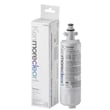
If you find a filter part number, we can often confirm the match; for example, this model commonly uses the genuine Kenmore refrigerator water filter 9690 AGF80300801.
Why it matters
Using the exact model number prevents ordering the wrong Kenmore parts, especially for fit-critical items like a door gasket, water inlet valve, or electronic control board.
Last updated: February 2026
How to lower wheels on Kenmore refrigerator?
To lower the wheels (leveling legs) on your Kenmore bottom-mount refrigerator model 79572493611, turn the front leveling screws to raise the front of the cabinet until the refrigerator feels solid and does not rock. Use the exact adjustment points shown in the 79572493611 owner's manual.
What you are adjusting (wheels vs. leveling legs)
Most bottom-mount refrigerators roll on wheels for moving, but they sit on front leveling legs (sometimes called leveling feet). Lowering the “wheels” usually means:
- Turning the front leveling screws to extend the leveling legs downward
- Raising the front slightly so weight comes off the rollers
- Stabilizing the cabinet so doors seal correctly and the unit does not wobble
Step-by-step: lowering and leveling the front
- Empty heavy items from the doors so the cabinet is easier to stabilize.
- Pull the refrigerator forward just enough to access the front leveling points.
- Using a wrench or screwdriver (varies by design), turn the leveling screw:
- Clockwise typically raises the front (extends the leveling leg down)
- Counterclockwise typically lowers the front
- Adjust a little on each side, then check for rocking by gently pushing on the top corners.
- Stop when the refrigerator is stable and the doors close smoothly.
Quick checks that confirm it is set correctly
- Refrigerator does not rock when you press on the top front corners
- Doors self-close the last few inches (common target on many models)
- Door gaskets contact the cabinet evenly (no gaps)
Common symptoms and what they usually mean
| Symptom | What to adjust | Why it matters |
|---|---|---|
| Refrigerator rocks | Raise one front corner slightly | Prevents vibration and noise |
| Doors swing open | Raise the front a bit | Helps doors close and seal |
| Uneven gasket contact | Re-level side-to-side | Reduces frost and warm spots |
Why it matters
Proper leveling helps the door gaskets seal, keeps the ice maker and water dispenser working more reliably, and reduces compressor run time from warm air leaks.
Last updated: February 2026
How to tell if a Kenmore refrigerator compressor is bad?
A bad compressor on Kenmore model 79572493611 usually shows up as poor cooling with the refrigerator running a lot, repeated clicking as it tries to start, or a compressor that is extremely hot to the touch after running. Confirming failure typically requires electrical tests.
Quick symptoms checklist (what you can observe)
- Fridge and freezer temperatures stay warm even though the unit runs
- You hear a repeated click-hum-click cycle every few minutes (start attempt then shutdown)
- The compressor runs almost constantly but cooling does not improve
- The compressor is very hot after it has been trying to run
- You do not hear the normal low steady compressor sound at all (and lights/fans may still work)
Safe checks before you assume the compressor is bad
- Verify airflow and heat removal: clean dust from the condenser area and make sure the unit has clearance.
- Listen for the evaporator fan inside the freezer; if it is not running, cooling can fail even with a good compressor.
- Check the start components: a failed relay can mimic a bad compressor.
- Rule out sealed-system frost issues: heavy frost behind the freezer panel can point to airflow/defrost problems.
Parts that commonly relate to “compressor not running” symptoms
| What you notice | Common cause | Example part for this model |
|---|---|---|
| Clicking, compressor will not stay on | Start device issue | Refrigerator compressor start relay EBG60663230 |
| Runs but does not cool well | Sealed system or compressor issue | Refrigerator compressor TCA38091801 |
Why it matters
Replacing a compressor is a major repair; checking the start relay, airflow, and fan operation first prevents unnecessary cost and downtime. When the compressor is truly failing, continued operation can lead to worsening cooling and food spoilage.
Where to find model-specific guidance
Use the 79572493611 owner's manual for operating checks, control settings, and any model-specific diagnostics that apply to your refrigerator.
Last updated: February 2026
What does DH mean on Kenmore Elite refrigerator?
On Kenmore model 79572493611 bottom-mount refrigerators, dH (often shown as Er dH) points to a defrost heating problem: the refrigerator is not sensing normal warming during the defrost cycle. This commonly relates to the defrost heater circuit, wiring, or the main control’s defrost operation.
What to do first (safe checks)
- Power reset: Unplug the refrigerator (or turn off the breaker) for 5 minutes, then restore power.
- Confirm door closure: Make sure doors fully seal; warm air leaks can worsen frost and defrost issues.
- Look for heavy frost on the freezer back wall; thick frost supports a defrost-system problem.
- Check airflow: Make sure vents are not blocked by food packages.
- Verify temperatures after 24 hours: freezer near 0°F, fresh food near 37°F.
Likely causes and what they affect
| Likely cause | What you may notice | Typical next step |
|---|---|---|
| Frosted evaporator area | Weak cooling, warmer fridge section | Defrost-system diagnosis |
| Defrost heater circuit issue | dH/Er dH returns after reset | Test heater and wiring |
| Control not initiating/finishing defrost | Intermittent cooling, recurring code | Control and sensor checks |
| Door gasket leak | Excess frost, moisture | Inspect/adjust door seal |
Parts that are commonly involved
We match parts by model to avoid ordering the wrong component. Depending on your symptoms, these model-listed parts are often checked during diagnosis:
- Refrigerator electronic control board EBR74796448
- Kenmore elite refrigerator evaporator ADL73762004
- Refrigerator compressor start relay EBG60663230 (only if you also have compressor start/clicking symptoms)
Why it matters
A defrost heating fault can let frost build up on the evaporator, restricting airflow. That leads to warming temperatures, poor ice production, and longer run times that stress the compressor.
Where to find model-specific display and reset steps
Use the 79572493611 owner's manual for the exact display behavior, control panel functions, and any model-specific troubleshooting steps.
Last updated: February 2026
Why is the bottom of my Kenmore refrigerator leaking water?
Water at the bottom of your Kenmore 79572493611 bottom-mount refrigerator is usually caused by a clogged or frozen defrost drain, a mispositioned or cracked drain pan, or a door gasket that is letting warm air in and creating excess condensation. Use the steps below to pinpoint the source.
Quick checks that solve most leaks
- Look for ice or debris in the freezer floor or under the crisper drawers; this often points to a blocked defrost drain.
- Check the drain pan underneath for cracks, overflow, or being knocked out of position.
- Inspect door gaskets for gaps, tears, or areas that do not seal flat.
- Confirm the refrigerator is level; a forward tilt can cause water to run out instead of into the pan.
- If the leak is near the dispenser area, check for slow drips from the filter housing or water line connections.
Step-by-step troubleshooting (in order)
- Unplug the refrigerator and remove items from the bottom of the fresh food section.
- Check for a clogged defrost drain: if you see water pooling inside, clear the drain opening and flush it with warm water (a turkey baster works well).
- Inspect the drain pan: slide it out (if accessible) and look for cracks or warping; reseat it fully.
- Check the door seal: close a dollar bill in several spots; if it slips out easily, the gasket is not sealing.
- If you have an ice maker/water dispenser, inspect the filter and valve area for seepage.
Parts that commonly relate to bottom leaks
| Symptom you see | Most likely area | Related part for this model |
|---|---|---|
| Water pooling inside fridge/freezer | Defrost drain path | (Clean first; parts usually not needed) |
| Water on floor under front | Drain pan overflow or cabinet tilt | (Level unit; inspect pan) |
| Drips near filter/dispenser | Filter head, tubing, or valve | Lg refrigerator water inlet valve AJU72992601 |
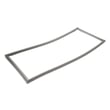
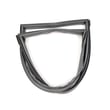
| Moisture and sweating around doors | Door gasket not sealing | Lg refrigerator door gasket, left ADX73550621 or lg refrigerator door gasket, right ADX73550624 |
Why it matters
A recurring leak can lead to ice buildup, poor cooling, and water damage to flooring. Clearing a defrost drain and restoring a tight door seal usually prevents repeat puddles and helps the compressor run less.
For model-specific access panels, drain locations, and care instructions, follow the 79572493611 owner's manual. For door-seal tips, use how to fix a fridge door seal.
Last updated: February 2026