Owner’s manual
 View engine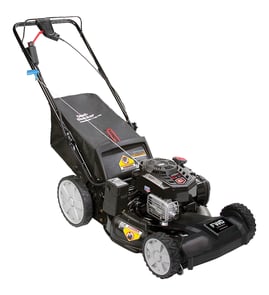




How old is my mower by serial number?
For an MTD gas walk-behind lawn mower model 12A-764M799, the serial number can indicate the manufacturing date, but the exact format varies by production run. We use the model’s identification label plus the date-code pattern shown in the 12A-764M799 owner's manual to match the serial number to a month and year.
Where to find the serial number
On most MTD walk-behind mowers, the model and serial label is on the mower deck or frame (not on the engine). Check these common spots:
- Top of the deck near the rear discharge area
- Side of the deck near a rear wheel bracket
- Rear of the deck behind the engine
- Frame area near the height adjuster
- Under the handle mounting area
How to decode the serial number (what to look for)
MTD serial numbers often include a date code embedded in the first several characters. When you write the serial number down, look for:
- A 2-digit year (YY) or 4-digit year (YYYY)
- A 2-digit month (MM) or a Julian day (001 to 365)
- A block of digits that looks like a date (for example, MMDDYY or YYMMDD)
Quick pattern guide
| What you see in the serial | What it usually means | Example interpretation |
|---|---|---|
YYMM... |
Year then month | 2304... = April 2023 |
MMDDYY... |
Month, day, year | 041523... = April 15, 2023 |
YYDDD... |
Year then Julian day | 23120... = 120th day of 2023 |
Confirm you are reading the correct label
A common mix-up is using the engine numbers (often Briggs & Stratton, Tecumseh, etc.) instead of the mower serial number.
- Mower serial number: dates the mower assembly
- Engine model/type/code: dates the engine build
Why it matters
Knowing the build date helps us match the correct illustrated parts list and revisions for items like the blade, belt cover, and control cables, so you get parts that fit your exact production version.
Last updated: January 2026
What kind of gas do I put in my lawn mower?
For the MTD gas walk behind lawn mower model 12A-764M799, use fresh regular unleaded gasoline; avoid fueling while the engine is hot or running, and clean up any spills right away. For storage longer than 30 days, drain the fuel system so old gas does not cause starting and running problems.
What to use (and what to avoid)
- Use fresh regular unleaded gasoline from a busy station.
- Use fuel with up to 10% ethanol (E10) if that is what is commonly available.
- Avoid stale gas (more than about 30 days old in the mower).
- Avoid overfilling; leave room for fuel expansion.
- Avoid fueling indoors or near flames, sparks, or pilot lights.
Safe fueling steps
- Shut the mower off and let it cool.
- Fuel outdoors, away from ignition sources.
- If you spill gas, wipe it off the mower and move the mower away; wait 5 minutes before starting.
- Start the mower only after vapors have cleared.
Storage guidance (30 days or longer)
The manual for this mower calls out that fuel should be removed before long storage to prevent fuel-system damage.
| Storage time | What we recommend | Why |
|---|---|---|
| Under 30 days | Use fresh gas and keep the cap tight | Reduces evaporation and moisture issues |
| 30+ days | Drain the tank, then run the engine until the carburetor is empty | Prevents gum and varnish buildup |
Why it matters
Gasoline breaks down and can turn acidic during storage; that can clog the carburetor and fuel lines, leading to hard starting, surging, or stalling. Using fresh fuel and following the storage steps helps protect the fuel metering system.
For model-specific operating and safety notes, follow the 12A-764M799 owner’s manual.
Last updated: January 2026
Is it cheaper to repair or replace a lawn mower?
For the MTD 12A-764M799 gas walk-behind lawn mower, it’s usually cheaper to repair when the problem is routine maintenance or a single worn part (blade, belt, fasteners). It’s usually smarter to replace when the repair involves major drivetrain or engine work and the total cost approaches about half the price of a comparable new mower.
Quick rule of thumb we use
- Repair if it’s a wear item or simple adjustment (blade, belt, cable, loose hardware)
- Repair if the mower still starts easily and runs smoothly after basic tune-up steps
- Replace if the engine has low compression, severe internal damage, or repeated no-start issues after fuel and ignition checks
- Replace if the deck or key safety components are badly damaged and multiple parts are needed
- Replace if the repair estimate plus downtime is more than the value you get from keeping the mower
Typical repair costs vs replacement value
Costs vary by area, but these ranges help you decide.
| Scenario | What it usually involves | Typical direction |
|---|---|---|
| Basic maintenance | Blade, spark plug service, oil change, tightening fasteners | Repair |
| Drive system issue | Belt, pulley, idler arm, cable | Repair |
| Major mechanical failure | Engine internal repair, major drivetrain rebuild | Replace |
Model-specific checks that often make repair worthwhile
Your mower’s manual emphasizes routine safety and maintenance steps that prevent bigger failures.
- Stop the engine, disconnect the spark plug wire, and ground it before maintenance
- Inspect the blade for bends, cracks, or heavy wear; replace if damaged
- Check blade and engine mounting bolts for tightness at frequent intervals
- After hitting a foreign object, inspect for damage and repair before operating
- Service the spark plug at least seasonally; set the electrode gap to 0.030 in.
For the correct procedures and maintenance intervals, use the 12A-764M799 owner’s manual.
Why it matters
Repairing a mower that has a damaged blade, loose fasteners, or impact damage can create unsafe cutting conditions and lead to more expensive failures. Keeping up with inspections and tune-ups helps you get the lowest cost per season.
Last updated: January 2026