Owner’s manual




How do I reset my Samsung dryer?
For the Samsung DV45K6500GV dryer, the most reliable reset is a power reset: turn the dryer off, unplug it (or switch the breaker off) for 1 to 5 minutes, then restore power and start a cycle. This clears many temporary control glitches and display errors.
Reset steps (DV45K6500GV)
- Turn the dryer Off.
- Unplug the power cord (or turn the dryer breaker Off).
- Wait 1 to 5 minutes.
- Restore power.
- Press Power, select a cycle, then press Start/Pause.
- If the panel is unresponsive, try the reset again after a full 5 minutes.
For control and feature details specific to this model, use the DV45K6500GV manual.
What a reset can and cannot fix
A reset helps when the electronic control board is “stuck” from a brief power fluctuation or a software hiccup. It will not correct a failed part or a recurring safety shutdown.
| Situation | Reset likely helps? | What to do next |
|---|---|---|
| Display frozen, buttons lagging | Yes | Power reset, then retry cycle |
| Random beeping or cycle won’t start after outage | Yes | Power reset, confirm settings |
| Error code returns immediately | Sometimes | Diagnose the code and the related circuit |
| No power at all | No | Check breaker, outlet, cord, terminal block |
If an error code comes back after the reset
If the same code reappears right away, treat it as a troubleshooting clue (not a “reset problem”). We recommend using a Samsung-specific code list such as Samsung dryer error codes to narrow the likely causes (wiring, thermistor, heating circuit, moisture sensor, door switch, or control).
Why it matters
Resetting the dryer is a fast first step that can save time and avoid unnecessary part replacement. If the issue repeats, the pattern usually points to a specific component or airflow/heating problem that needs diagnosis.
Last updated: January 2026
What does CL stand for on a Samsung dryer?
On the Samsung DV45K6500GV dryer, CL typically indicates Child Lock (control lock) is turned on. The dryer may beep and ignore most button presses until you turn Child Lock off using the correct button combination shown in the DV45K6500GV user manual.
What CL means and what you’ll notice
When Child Lock is active, it’s designed to prevent accidental changes to cycle settings.
Common symptoms include:
- The dryer beeps when you press buttons
- Most controls do not respond
- You may still be able to press Power (behavior varies by cycle/state)
- The display may show CL or a lock indicator
- The cycle may continue running, but settings can’t be changed
How to turn CL (Child Lock) off
For DV45K6500GV, the exact steps depend on the control panel layout and which keys Samsung assigned to Child Lock on your version.
Use this process:
- Look for a Child Lock label printed above/between two buttons
- Press and hold the labeled button(s) for about 3 seconds
- Wait for the beep and confirm CL disappears
- If it doesn’t clear, power the dryer off, then try again
Quick reference: CL vs error codes
| Display | Meaning | What to do |
|---|---|---|
| CL | Child Lock is on | Disable Child Lock using the manual’s button combo |
| Code like “HE”, “TE”, “dE” | A fault or condition | Use an error code guide to troubleshoot |
For non-CL codes, we recommend using Samsung dryer error codes to identify the issue and next checks.
Why it matters
Child Lock can look like a control failure, but it’s usually a normal feature. Clearing CL first can save time before you troubleshoot parts like the user interface, door switch, or main control board.
Last updated: January 2026
What is the most common problem with Samsung dryers?
For Samsung dryers like model DV45K6500GV, the most common complaint we see is no heat or poor heating, which is usually tied to a failed heating component (electric models), a safety cutoff opening, or restricted airflow from lint buildup or a crushed/blocked vent. See the troubleshooting and safety notes in the DV45K6500GV manual.
Most common issues (and what they usually point to)
- Dryer runs but won’t heat: heating element (electric), thermal fuse/thermal cutoff, thermostat, thermistor, control issue
- Takes too long to dry: clogged lint screen, blocked vent, weak airflow, overloaded drum
- Stops mid-cycle: overheating from poor venting, moisture sensor issues, control board or motor protection
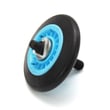
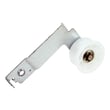
- Loud thumping/squealing/grinding: worn drum support rollers, idler pulley, drive belt, blower wheel
- Won’t start: door switch, start switch, belt switch (if equipped), control board, power supply issue
Quick triage: what to check first
- Airflow basics: clean the lint screen; confirm strong airflow at the outside vent hood.
- Cycle and settings: test on a timed dry cycle to rule out sensor-cycle behavior.
- Power (electric dryers): verify the dryer is getting full 240V (a tripped breaker can leave it running with no heat).
- Error codes: if a code appears, use our Samsung dryer error codes guide to narrow the circuit to test.
Symptom-to-likely-cause table
| Symptom | Most likely cause | First action |
|---|---|---|
| Runs, no heat | Heating element or thermal fuse/cutoff | Check venting; then test heat circuit parts |
| Long dry times | Vent restriction or lint buildup | Clean vent path end-to-end |
| Loud noise | Rollers, idler pulley, belt, blower wheel | Inspect drum support and belt path |
| Starts then stops | Overheating or motor protection | Check airflow and lint housing |
Why it matters
A restricted vent can cause no-heat symptoms, long dry times, shutdowns, and repeated safety fuse failures. Fixing airflow first prevents repeat repairs and helps the dryer dry faster with less wear.
Last updated: January 2026