 Installation guide
 Owner’s manual


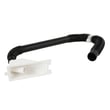
Are Whirlpool washer parts interchangeable?
Many Whirlpool washer parts are not interchangeable across models, even when the washers look similar. For your Whirlpool GSW9650LW0 direct-drive washer, we recommend matching parts by model number and using the diagrams and specifications in the GSW9650LW0 owner's manual to ensure correct fit and safe operation.
What “interchangeable” really means
Parts interchangeability depends on more than brand. Whirlpool often uses different revisions of the same system (drive, drain, lid switch, suspension), and small differences in mounting, wiring, or shaft size can prevent a correct repair.
Common reasons a “similar” part will not work:
- Different electrical connectors or switch style (for example, lid switch harness variations)
- Different shaft sizes or splines (agitator and drive block interfaces)
- Different pump port orientation or hose routing
- Different transmission or clutch design changes over production runs
- Model-specific hardware (bolts, clamps, brackets) that must match
Best way to confirm fit for GSW9650LW0
Use your model number as the filter, then verify the part ID and description before ordering.
Checklist we use:
- Confirm the full model number: GSW9650LW0
- Match the part by function and location in the exploded view
- Compare the part ID and part number (not just the name)
- If the repair involves moving parts, replace worn mates together when applicable
Examples of model-matched parts for this washer
| Repair symptom | Common matching part for GSW9650LW0 | What it affects |
|---|---|---|
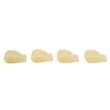
| Agitator slips or “ratchets” | Agitator dog 80040 | Agitation direction and grip |
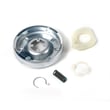
| Won’t spin or loud grinding after overload | Washer motor coupling 285753A | Motor-to-gearcase drive |
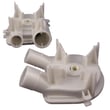
| Won’t drain or drains slowly | Washer drain pump WP3363394 | Water removal during drain |
Why it matters
Using the wrong part can cause leaks, noise, poor spin, or repeat failures. On a direct-drive Whirlpool washer like GSW9650LW0, correct fit is especially important for the drive system (coupling, clutch, gearcase) and water handling (pump, hoses).
Last updated: February 2026
What does E01 and F09 mean on a Whirlpool washer?
On Whirlpool washers, the E01 F09 error means the washer is taking too long to drain (a long-drain condition). On your Whirlpool GSW9650LW0 direct-drive washer, this points to a drain restriction, a drain pump problem, or a water-level sensing issue that keeps the washer from recognizing the tub is empty.
What to check first (fast, no parts)
- Unplug the washer before inspecting hoses or wiring.
- Make sure the drain hose is not kinked, crushed, or pushed too far down the standpipe.
- Confirm the standpipe or laundry tub is draining freely (a slow house drain can trigger long-drain symptoms).
- If you use a floor drain setup, confirm the drain configuration meets the siphon-break and height guidance in the GSW9650LW0 installation guide.
- Run a drain and spin cycle with the tub empty to see if draining improves.
Likely causes and the most common fixes
In a direct-drive Whirlpool washer like the GSW9650LW0, long-drain complaints usually come from a blockage or a weak pump.
- Clogged pump or hose: Coins, socks, lint, or debris can restrict flow.
- Failing drain pump: The pump may hum, drain slowly, or stop under load.
- Drain hose routing issue: Incorrect height or siphoning can cause drain problems.
- Water-level pressure system issue: A pinched or leaking pressure hose can prevent the washer from “seeing” the empty tub.
Parts that commonly apply to long-drain symptoms
| Symptom you notice | Most likely area | Example part for GSW9650LW0 |
|---|---|---|
| Hums but drains slowly | Pump or blockage | Washer drain pump WP3363394 |
| Drains sometimes, stalls on heavy loads | Pump getting weak | Washer drain pump WP3363394 |
| Long drain after moving/installation | Hose routing/standpipe | Follow GSW9650LW0 installation guide |
Why it matters
A long-drain condition can leave clothes soaking wet, prevent the washer from spinning out properly, and increase strain on the drive system. Fixing the drain path and pump performance restores normal cycle timing and helps prevent repeat errors.
Last updated: February 2026
What is the most common problem with Whirlpool washers?
The most common Whirlpool washer problem is a no-drain or no-spin condition. On the Whirlpool GSW9650LW0 direct-drive washer, this is usually caused by a drain restriction, a worn drive connection, or a safety switch issue that prevents the washer from spinning.
Most common symptoms and what they usually point to
- Washer won’t drain: clogged drain hose, blocked pump, or a failing drain pump
- Washer won’t spin: lid switch not closing, worn motor coupling, or clutch/drive wear
- Loud grinding or rattling: pump obstruction, worn coupling, or gear case wear
- Shakes or bangs: unbalanced load, weak suspension springs, or leveling problems
- Won’t start: power/grounding issue, timer/cycle switch problem, or lid switch issue
Quick checks we recommend first (fast, no parts guessing)
- Confirm safe power and grounding: use a properly grounded 3-prong outlet and do not modify the plug (see the GSW9650LW0 installation guide).
- Check for drain hose problems: kinks, clogs, or a loose standpipe connection.
- Rebalance the load: bulky items can stop or slow spin.
- Verify the lid closes firmly: a lid switch problem can stop spin.
- Listen during drain: a humming pump with little water flow often indicates a blockage.
Parts that commonly fix no-spin or no-drain on this model
These are frequent wear items on direct-drive Whirlpool washers like the GSW9650LW0:
| Symptom | Common cause | Example part for this model |
|---|---|---|
| Won’t spin, motor runs | Drive connection slipping | Washer motor coupling 285753A |
| Won’t drain, water left in tub | Pump jammed or worn | Washer drain pump WP3363394 |
| Won’t spin (intermittent) | Lid safety circuit not made | Washer lid switch WP8054980 |
Why it matters
A washer that cannot drain or spin leaves clothes soaking wet and can strain the drive system. Catching a restriction early also helps prevent pump damage and reduces vibration and noise.
Last updated: February 2026





