Owner’s manual
 Error Codes


How to reset a GE side by side fridge?
To reset your GE GSC23KSWASS side-by-side refrigerator, we recommend a power reset first: unplug the refrigerator (or switch off the breaker) for about 2 to 5 minutes, then restore power and allow the controls to reboot.
Quick reset methods that work on most GE side-by-side models
- Power cycle reset: Unplug for 2 to 5 minutes, then plug back in.
- Breaker reset: Turn the refrigerator circuit breaker OFF for 2 to 5 minutes, then ON.
- Control lock reset (if the dispenser is locked): Press and hold the LOCK pad for 3 seconds.
- Wait out a defrost cycle: If it seems “dead” but has power, wait about 30 minutes; it may be in defrost.
For control locations and model-specific features, use the GSC23KSWASS owner's manual.
What a reset fixes (and what it does not)
A reset clears minor control glitches such as an unresponsive touch panel, dispenser lock confusion, or odd cycling after a power flicker. It does not fix failed parts like a defrost heater, temperature sensor, or fan motor.
| Symptom after reset | Most likely cause | What to check next |
|---|---|---|
| Lights work but cooling is weak | Airflow or defrost issue | Listen for evaporator fan; check for frost buildup |
| Dispenser won’t dispense water/ice | Lock enabled or filter/line issue | Hold LOCK 3 seconds; check filter and water supply |
| Unit won’t run at all | Defrost cycle, OFF setting, or power issue | Wait 30 minutes; confirm controls not OFF; check outlet/breaker |
Why it matters
Resetting is the fastest safe first step because it restores normal control operation without replacing parts. If symptoms return quickly, that points to a cooling, defrost, or dispenser component problem rather than a one-time “bug.”
Parts that commonly relate to “won’t cool” complaints
If the refrigerator still struggles after a reset, these model-matched parts are often involved:
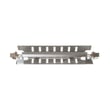
- Refrigerator defrost heater WR51X10055 (defrost system)
- GE profile refrigerator temperature sensor WR55X10025 (temperature feedback)
- Refrigerator evaporator motor WR60X10307 (freezer airflow)
Last updated: February 2026
What is the most common problem with a GE refrigerator?
The most common GE refrigerator complaint is poor cooling (fresh food too warm, freezer not holding temperature). On GE model GSC23KSWASS, the most frequent causes are restricted airflow from dirty condenser coils, a failed fan, or a defrost problem that lets frost block the evaporator. See the troubleshooting section in the GSC23KSWASS owner's manual.
Quick checks that fix many cooling complaints
- Make sure both temperature controls are not set to OFF.
- Confirm the refrigerator is fully plugged in and the breaker is not tripped.
- Wait 24 hours after plugging in or changing settings for temperatures to stabilize.
- Avoid overpacking; keep air vents clear so cold air can circulate.
- Listen for normal defrost sounds (sizzling, dripping, gurgling) during the defrost cycle.
Parts that commonly affect cooling on this model
If basic airflow and settings look good, these model-matched parts are common suspects:
- Refrigerator condenser fan WR60X10220 (moves air across the condenser)
- Refrigerator evaporator motor WR60X10307 (circulates cold air inside)
- Refrigerator defrost heater WR51X10055 (melts frost off the evaporator)
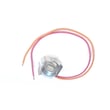
- Refrigerator defrost bi-metal thermostat WR50X10069 (helps control defrost heating)
- GE profile refrigerator temperature sensor WR55X10025 (reports temperature to controls)
Symptom-to-cause guide
| Symptom | Most likely area | What to do first |
|---|---|---|
| Freezer cold, fridge warm | Airflow/damper or evaporator fan | Check vents, listen for evaporator fan, reduce overfilling |
| Both sections warm | Condenser airflow or sealed system | Clean coils, verify condenser fan runs |
| Frost buildup on back wall/freezer | Defrost system | Check defrost heater and defrost thermostat |
| Runs a long time | Dirty coils, warm room, door not sealing | Clean coils, confirm doors close and seal |
Why it matters
When airflow is restricted or frost builds up, the compressor has to run longer to maintain temperature. Fixing the underlying airflow or defrost issue helps protect food quality and reduces wear on major components.
Last updated: February 2026
Why is my GE side by side refrigerator not dispensing ice?
If your GE GSC23KSWASS makes ice but will not dispense it, the most common causes are a jammed ice chute or bin, a mis-seated ice bin drive, or a dispenser control lock. Clearing the chute and reseating the bin usually restores dispensing.
Quick checks to do first
- Make sure the dispenser is not locked; press and hold the LOCK pad for 3 seconds (on models with a lock feature).
- Remove the ice bin and break up clumped ice; “snow” or frost in the chute can happen after repeated crushed-ice use.
- Reinstall the bin firmly; if it will not go all the way back, rotate the drive mechanism 1/4 turn and try again.
- Try both CUBED and CRUSHED; a few cubes left in the crusher from the previous setting is normal.
- If crushed ice dispenses and water drips from the chute afterward, that can be normal.
What to inspect if it still will not dispense
Mechanical (bin and chute)
| Symptom | Most likely area | What it points to |
|---|---|---|
| Motor sound but no ice moves | Ice clump in bin or chute | Ice is bridged or jammed |
| No motor sound when pressing paddle | Switch or wiring issue | Dispenser not being commanded |
| Bin will not seat fully | Drive coupler alignment | Bin drive not engaged |
Electrical (common dispenser-side failures)
- Dispenser switch not closing when you press the paddle
- Broken or damaged wiring at the freezer door hinge area
- Failed dispenser drive components (auger/crusher motor depending on configuration)
If you are testing electrical parts, use the procedures and wiring diagram references in the owner's manual.
Parts that commonly relate to ice dispensing issues
These parts are on the GSC23KSWASS parts list and are often involved when dispensing is weak or stops:
- Refrigerator ice container assembly WR17X12079 (bin can jam, crack, or fail to engage the drive)
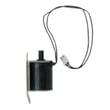
- Refrigerator solenoid arm assembly WR62X23154 (can affect dispenser door operation on some setups)
- GE profile refrigerator dispenser ice chute door crank WR17X10706 (door linkage issues can contribute to chute problems)
Why it matters
A non-dispensing ice system is usually a simple airflow and movement problem (ice clumps, frost, or a bin that is not fully engaged). Fixing it quickly helps prevent repeated jams, stripped drive couplers, and excess frost buildup around the chute.
Last updated: February 2026
Are GE side by side Refrigerators good?
GE side-by-side refrigerators like model GSC23KSWASS are a solid choice for everyday use because they are designed for consistent cooling, convenient door storage, and common features such as an ice and water dispenser. Long-term satisfaction usually comes down to correct setup, clean airflow, and keeping key cooling parts in good condition (fans, sensors, and the defrost system).
What “good” means for a side-by-side
A side-by-side is typically a good fit when you want easy access to both fresh food and frozen items without bending as much, plus lots of door-bin storage.
Common strengths:
- Adjustable shelves and door bins for flexible organization
- Dispenser convenience (water and ice) on many configurations
- Strong freezer performance for frequently accessed frozen foods
Common tradeoffs:
- Narrower shelf width than many French-door models
- More moving parts around the dispenser and ice system
- Normal operating sounds can be more noticeable (defrost sizzling, water dripping during defrost, and occasional gurgling from pressure equalization)
How to keep performance strong (what we recommend)
Use these habits to get the best reliability and temperature stability:
- Give the refrigerator time to stabilize after plugging in; many units need up to 24 hours to fully cool.
- Keep doors closing and sealing fully; this model style can “self-close” when only partially open.
- Avoid blocking vents with tightly packed food so air can circulate.
- Replace the water filter on schedule if you use the dispenser; see the GSC23KSWASS owner’s manual for the correct procedure.
- If temperatures swing, test common culprits first (sensor, evaporator fan, condenser fan).
Parts that most often affect “how good it feels” day to day
If you are troubleshooting cooling, noise, or dispenser performance, these model-matched parts are often involved:
| Symptom you notice | Common area to check | Example part for GSC23KSWASS |
|---|---|---|
| Warm fresh food section or uneven temps | Temperature sensing and airflow | GE profile refrigerator temperature sensor WR55X10025 |
| Frost buildup, warming, or defrost issues | Defrost system | Refrigerator defrost heater WR51X10055 and refrigerator defrost bi-metal thermostat WR50X10069 |
| Weak airflow or noisy fan | Evaporator or condenser fan | Refrigerator evaporator motor WR60X10307 or refrigerator condenser fan WR60X10220 |
| Dim or out interior light | Lighting | Refrigerator light bulb 40A15 |
Why it matters
A side-by-side can seem “bad” even when nothing major is wrong if airflow is restricted, doors are not sealing, or the defrost system is struggling. Keeping temperatures stable protects food quality and reduces compressor run time.
Last updated: February 2026