Owner’s manual


How do you fix F3 E1 error on a whirlpool dryer?
On Whirlpool dryer model GGW9250PW3, treat an F3 E1 code as a control sensing fault and start with a safe reset plus the basic checks Whirlpool calls out for “code message” and “won’t heat” conditions. Use the troubleshooting steps in the GGW9250PW3 manual to guide what to check next.
Step-by-step fixes we recommend
- Unplug the dryer (or switch off the breaker) for 5 minutes, then restore power and try a cycle.
- If the console is locked, press and hold End of Cycle Signal for 3 seconds to unlock (this is a common “won’t start” cause).
- If you see PF (power failure), press and hold Hold to Start to restart.
- Confirm the door is fully closed and the dryer is plugged into a grounded 3-prong outlet.
- Check the house fuse/circuit breaker.
If the dryer runs but does not heat (gas model checks)
The GGW9250PW3 manual’s heat test is the fastest way to separate a “code/reset” issue from a heating issue:
- Start a full heat cycle (not Air).
- Let it run 5 minutes, then open the door and feel for heat.
- If there is no heat, make sure the gas supply shutoff valve is open.
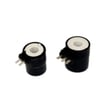
If the burner lights briefly and then stops relighting, a common repair is replacing weak gas valve coils using the dryer valve coil kit 279834.
What to check based on symptoms
| What you observe | What it usually indicates on a gas dryer | What to do next |
|---|---|---|
| Dryer will not start | Control lock, power interruption, door switch issue | Unlock controls, clear PF, verify power and door closure |
| Runs but no heat | Gas supply off, ignition system not operating | Open shutoff valve, then check igniter and coils |
| Long dry times | Restricted airflow | Clean lint screen, inspect vent for kinks or clogs |
Why it matters
Clearing the easy causes first (control lock, PF, power, door closure, gas shutoff) prevents unnecessary parts replacement and helps you pinpoint whether the problem is a heating failure or a control condition.
Last updated: February 2026
Is GGW9250PW3 a washer or dryer?
GGW9250PW3 is a Whirlpool gas dryer model, not a washer. You will see dryer-specific requirements in the documentation, including gas supply and venting to the outdoors; those are features of a dryer installation for this model.
How we know it is a dryer
The Whirlpool GGW9250PW3 documentation and setup requirements are written for a dryer, including:
- Gas supply requirements (washers do not use a gas burner)
- Venting requirements (a gas dryer must exhaust outdoors)
- Dryer installation clearances and dryer dimensions
For the model-specific details, use the GGW9250PW3 owner's manual.
Quick comparison: washer vs. dryer identifiers
| What you see | Usually indicates | What it means for GGW9250PW3 |
|---|---|---|
| Gas supply requirements | Gas dryer | Confirms it is a gas dryer |
| Venting to the outdoors | Dryer | Confirms it is a dryer |
| Drum, blower wheel, igniter | Dryer | Common dryer components |
Parts that reinforce it is a dryer
If you are shopping parts for GGW9250PW3, these common dryer components are listed for this model:
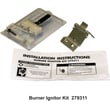
- Igniter 279311 (used to light the gas burner)
- Dryer valve coil kit 279834 (opens the gas valve during heating)
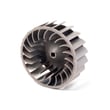
- Dryer blower wheel WP697772 (moves air through the drum and vent)
Why it matters
Washer and dryer parts are not interchangeable. Confirming GGW9250PW3 is a dryer helps you choose the correct parts (like an igniter, gas valve coils, or drum support rollers) and follow the right safety steps for gas and venting.
Last updated: February 2026
What are common GGW9250PW3 problems?
Common Whirlpool GGW9250PW3 dryer problems fall into three buckets: won’t start, no heat or not enough heat, and noisy operation. We see many of these traced to airflow restrictions (lint and venting), normal wear parts in the drum drive system, or gas-heat ignition components; the GGW9250PW3 owner’s manual troubleshooting section walks you through the quickest checks.
Most common symptoms and what to check first
- Won’t start: confirm power is present; if the display shows PF (power failure), restart by pressing and holding HOLD TO START.
- No heat or not enough heat: verify strong airflow at the outside vent hood; a clogged lint screen or crushed/kinked vent is a top cause.
- Noisy: thumping, squealing, or rumbling usually points to drum support rollers, the idler pulley, or the blower wheel.
- Long dry times: almost always venting or lint buildup in the exhaust path.
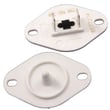
- Door won’t latch: the dryer may not run if the door switch is not being engaged properly.
Quick diagnostic guide (symptom to likely cause)
| Symptom | Most likely causes | Best first action |
|---|---|---|
| Won’t start | Power interruption (PF), door not closed, control lock | Reset cycle; check door closure; restart with HOLD TO START |
| No heat / weak heat | Lint screen clogged, vent/hood clogged, crushed vent, gas ignition issue | Check airflow outside; clean lint screen and venting |
| Noisy | Worn rollers, idler pulley, blower wheel | Inspect drum support and belt path |
| Clothes still damp | Restricted airflow, wrong cycle selection | Verify venting; use an appropriate heat cycle |
Parts that commonly solve these issues
When noise or poor tumbling is the problem, these model-matched parts are frequent fixes:
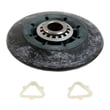
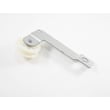
- Support WPW10314173 (drum support roller)
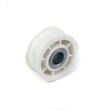
- Dryer idler pulley 279640 (belt tension and tracking)
- Dryer blower wheel WP697772 (air movement and rumble noise)
For heat complaints on a gas dryer, ignition components are common suspects:
Why it matters
On the GGW9250PW3, airflow is everything. A clogged lint screen or restricted exhaust vent can cause long dry times, overheating symptoms, and repeated cycling issues. Fixing airflow first prevents unnecessary part replacement and restores normal drying performance.
Last updated: February 2026
What is the average lifespan of a whirlpool dryer?
A Whirlpool dryer typically lasts 10 to 15 years with normal household use. For your Whirlpool GGW9250PW3 gas dryer, regular lint removal, proper venting, and timely replacement of wear parts (rollers, idler pulley, blower wheel) are what most often determine whether it reaches the high end of that range.
What most affects dryer life
- Airflow and venting: restricted venting overheats components and shortens life.
- Lint removal: clean the lint screen every load; remove accumulated lint from the cabinet and vent periodically.
- Load size: chronic overloading strains the drive motor, belt, and drum supports.
- Heat system health (gas models): ignition and flame-sensing issues can cause repeated cycling and extra wear.
- Wear parts condition: rollers and idler pulleys wear gradually and get noisy before failing.
Maintenance schedule we recommend
Use the GGW9250PW3 owner’s manual for the exact care steps and safety guidance.
| Task | How often | Why it matters |
|---|---|---|
| Clean lint screen | Every load | Keeps airflow strong and drying times normal |
| Check vent hood flap outside | Monthly | Confirms the dryer is exhausting outdoors properly |
| Clean exhaust vent run | About every 2 years (more with heavy use) | Reduces lint buildup and overheating risk |
| Internal lint removal (cabinet) | About every 2 years (qualified service) | Protects motor, burner area, and wiring |
Parts that commonly extend the life of this model
If your dryer is squealing, thumping, or taking longer to dry, these model-matched parts are common fixes:
- Support WPW10314173 (drum support roller)
- Dryer idler pulley 279640 (keeps belt tension correct)
- Dryer blower wheel WP697772 (restores airflow)
- Dryer thermistor WP8577274 (helps regulate temperature)
Why it matters
A dryer that runs hot or has weak airflow can still tumble but will dry slowly, stress the gas burner system, and wear out the motor and drum supports faster. Keeping airflow strong is the simplest way to protect performance and lifespan.
Last updated: February 2026
Why did my whirlpool dryer stop?
Your Whirlpool dryer model GGW9250PW3 can stop mid-cycle because the cycle was paused/canceled, the door switch opened, Control Locked prevented a restart, or airflow and heat safety controls shut the dryer down. Start with the quick control checks in the GGW9250PW3 owner's manual.
Quick checks (most common)
- Press PAUSE/CANCEL twice to fully stop and clear the cycle, then reselect a cycle.
- Close the door firmly; a slightly open door can stop tumbling.
- If the dryer stops and will not restart, unlock Control Locked (press and hold END OF CYCLE SIGNAL for 3 seconds).
- Press and hold HOLD TO START for about 1 second to restart.
- If the cycle was interrupted for more than 5 minutes, select a new cycle before restarting.
- Clean the lint screen; residue buildup can cause longer dry times and can make the dryer stop before clothes are dry.
Airflow and overheating protection
Poor airflow is a top reason a dryer shuts down or stops heating correctly. The manual notes the dryer area must stay clear for proper combustion and ventilation air, and lint screen residue can affect performance.
What to do
- Clean the lint screen every load; deep-clean it with a nylon brush and detergent if you see residue.
- Check the vent path for crushing, kinks, or heavy lint buildup.
- Make sure the outside vent hood opens freely.
| Symptom | Most likely area | What we check first |
|---|---|---|
| Stops and won’t restart until later | Overheating/airflow restriction | Lint screen and venting |
| Stops when you press buttons | Control Locked or cancel sequence | Unlock and reset cycle |
| Runs but dries poorly | Airflow or sensor issue | Screen, vent, moisture sensor |
When it points to a part
If the dryer stops tumbling, squeals, or struggles to turn, a worn drum support or belt drive component is common on dryers like this.
- For rumbling or thumping: inspect the support WPW10314173.
- For squealing or a loose belt: inspect the dryer idler pulley 279640.
Why it matters
A dryer that stops due to airflow restriction can overheat, shorten component life, and increase dry times. Resetting the controls and restoring airflow usually fixes the issue faster than replacing parts.
Last updated: February 2026