Owner’s manual


Is it worth repairing a Kenmore washing machine?
Yes; repairing a Kenmore washer is usually worth it when the fix restores reliable washing and spinning for less than the cost of replacing the machine. For Kenmore model 11022922100, common wear items (like the drive coupling, drain pump, or agitator parts) are often straightforward repairs that can extend the washer’s life.
Use this quick checklist before you spend money:
- Confirm the symptom: no spin, no drain, leaking, loud noise, or poor agitation.
- Estimate the repair scope: one part vs. multiple major components.
- Compare cost: parts plus labor vs. a replacement washer.
- Check safety basics: unplug power and shut off water before any inspection.
- Use model-specific guidance: follow the procedures and safety notes in the owner's manual.
These are frequent, high-value fixes on many Kenmore direct-drive top-load washers:
| Symptom | Common cause | Example part for this model |
|---|---|---|
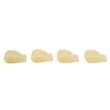
| Agitator moves poorly or “ratchets” | Worn agitator dogs | Agitator dog 80040 |
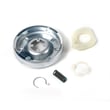
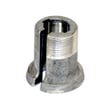
| Washer won’t spin or agitate | Worn motor coupling | Coupling 285753A |
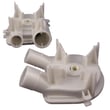
| Won’t drain or drains slowly | Failing or jammed pump | Washer drain pump WP3363394 |
Replacement is typically the better choice when:
- The gearcase is leaking heavily or the washer has severe internal noise and multiple worn drive parts.
- The basket/tub area is badly damaged (rust-through, major structural issues).
- You are stacking multiple big-ticket repairs at once (for example, gearcase plus basket plus motor).
If you suspect a major drive-train issue, compare the cost of a gearcase repair using the gear case 3360629 price as a reference point.
A targeted repair keeps a proven Kenmore washer running, reduces downtime, and often costs far less than replacing the appliance. It also helps you avoid “guessing” by matching the symptom to the correct part and procedure.
We recommend ordering by the full model number 11022922100 and matching the symptom to the part category on the parts list for this model. For broader model searches and ordering, use Sears PartsDirect.
Last updated: February 2026
What does F-22 mean on a washing machine?
On a Kenmore washer like model 11022922100, an F-22 code points to a drain problem: the washer is not pumping water out as expected, so the cycle may stop with water left in the tub. Use the troubleshooting steps in the owner's manual to confirm the exact checks for your control.
- Make sure the lid is fully closed (some cycles will not advance if the lid is open).
- Verify the drain hose is not kinked, crushed, or pinched behind the washer.
- Confirm the drain hose is installed at a proper height; a standpipe that is too high can prevent draining.
- Check for excessive suds; too much detergent can slow draining and leave wet loads.
- If the home hot water has not been used for 2 weeks or more, run hot water at a faucet for several minutes before doing laundry (a normal safety step noted in the manual).
Most F-22 drain faults come down to one of these issues:
- Clogged pump or hose (coins, lint, small socks)
- Restricted drain path (standpipe blockage or tight hose fit)
- Failing drain pump
If the washer hums but does not move water, the pump is often jammed or worn. For this model, the replacement pump is the washer drain pump WP3363394.
| What you notice | Most common cause | What to do |
|---|---|---|
| Tub full of water, no drain sound | Pump not running | Check power, lid closed, then test pump |
| Hums but drains slowly | Pump jam or partial clog | Clear obstruction; inspect hoses |
| Drains but clothes are very wet | Suds or spin issue after drain | Reduce detergent; choose higher spin cycle |
A drain fault can leave water sitting in the tub, cause odors, and prevent the washer from reaching spin. Fixing the drain path early also helps protect the drive system and reduces repeat error codes.
Last updated: February 2026
What is the average lifespan of a Kenmore washer?
Most Kenmore washers average 10 to 15 years of service life in normal household use. Your Kenmore washer model 11022922100 was designed for years of dependable operation; routine care and avoiding overloads are the biggest factors in reaching the upper end of that range (see the 11022922100 owner's manual).
A washer’s life is mostly driven by load size, cycle frequency, and how well the drive and drain systems are maintained.
- Light use (1 to 3 loads/week): often closer to 15 years
- Average use (4 to 7 loads/week): typically 10 to 15 years
- Heavy use (multiple loads/day): often closer to 8 to 12 years
- Overloading or chronic unbalance: shortens life by stressing the clutch, gearcase, and suspension
- Good habits (leveling, correct detergent, periodic cleaning): extends life and reduces repairs
On many Kenmore top-load designs like model 11022922100, wear items in the drive and drain systems commonly determine whether the washer is worth repairing.
| Symptom | Common wear area | Example part on this model |
|---|---|---|
| Agitator moves poorly or “ratchets” | Agitator dogs | Agitator dog 80040 |
| Washer won’t spin or agitates weakly | Motor coupling or clutch | Coupling 285753A |
| Won’t drain or drains slowly | Drain pump or hose restriction | Washer drain pump WP3363394 |
| Loud grinding, oil leak, no spin | Gearcase/drive components | Gear case 3360629 |
These steps reduce strain on the basket, agitator, and drive system.
- Keep the washer level so the basket spins smoothly
- Avoid overloading; heavy loads accelerate clutch and gearcase wear
- Use the correct water level for the load size
- Do not wrap items around the agitator when loading
- Check pockets and reduce debris that can reach the drain pump
Knowing the typical lifespan helps you decide whether to repair a single failure (like a drain pump or coupling) or plan for a replacement if multiple major drive components are wearing out. For parts that fit Kenmore 11022922100, use the parts list for this model or search by model number on Sears PartsDirect.
Last updated: February 2026
What is the cubic feet capacity of a Kenmore washer model 11022922100?
The Kenmore washer model 11022922100 capacity in cubic feet is found in the model’s specification information in the 11022922100 owner's manual. If the spec listing is not shown, you can still determine capacity accurately by measuring the wash basket and calculating cubic feet.
Measure the inside of the wash basket (not the outer tub), then calculate the basket volume.
- Unplug the washer for safety before measuring
- Measure the inside diameter of the basket (inches)
- Measure the inside depth from the bottom to the top rim (inches)
- Convert inches to feet (divide by 12)
- Use the cylinder volume formula to get cubic feet
Use this formula after converting measurements to feet:
| Item | Formula | Notes |
|---|---|---|
| Radius | Diameter ÷ 2 | Use feet |
| Volume (cu. ft.) | π × radius² × depth | π is about 3.1416 |
Example setup (use your measurements):
- Diameter (ft) = diameter (in) ÷ 12
- Depth (ft) = depth (in) ÷ 12
- Capacity (cu. ft.) = 3.1416 × (diameter (ft) ÷ 2)² × depth (ft)
Knowing the true cubic feet capacity helps you load the washer correctly. Proper loading improves cleaning, reduces out-of-balance spinning, and helps prevent extra wear on drive and suspension components.
Capacity questions often come up when loads are not turning over or the washer struggles in agitation or spin. Common wear items on this model include the agitator dog 80040 and the coupling 285753A. You can order parts from the model 11022922100 parts list on this page, or search by model number on Sears PartsDirect.
Last updated: February 2026