Owner’s manual
 Error Codes


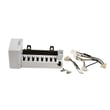
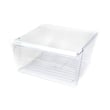
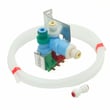
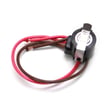
Where is the model number on a Kenmore side by side refrigerator?
On Kenmore side-by-side refrigerator model 10659792990, the model number is printed on the model and serial number label located on the inside wall of the refrigerator compartment. For the exact label location and what the tag looks like, use the owner's manual.
How to find it quickly
- Open the fresh food (refrigerator) door, not the freezer door.
- Look along the inside side walls near the front edge.
- Check around the crisper area and the lower side wall.
- Use a flashlight; the label is often small and easy to miss.
- Write down both the model number and serial number exactly as shown.
What you should record (and why)
The manual recommends recording these details so you can match parts and service information correctly.
| Item to record | What it’s used for |
|---|---|
| Model number (example: 10659792990) | Ensures parts diagrams and replacement parts match your exact refrigerator |
| Serial number | Helps identify production details that can affect part compatibility |
| Purchase date | Useful for maintenance history and warranty paperwork |
Why it matters
Kenmore 106-series refrigerators can look similar across multiple model numbers, but parts like the water filter housing, inlet valve, ice maker assembly, and door gaskets can vary by model. Using the exact model number from the inside label helps us point you to the right refrigerator parts the first time.
Last updated: February 2026
How to tell if a Kenmore refrigerator compressor is bad?
If your Kenmore side-by-side refrigerator model 10659792990 is warm and you hear repeated clicking, long run times with poor cooling, or unusual high-pitched/pulsating compressor noise, the compressor or its start components may be failing. Use the owner's manual to separate normal operating sounds from true no-cool symptoms.
What you can check first (no tools)
- Confirm the refrigerator and freezer temperatures are rising (not just one section).
- Listen for a repeating click every few minutes (often the overload/start device cycling).
- Check whether the evaporator fan is running (you should hear airflow in the freezer area).
- Clean dusty condenser coils; restricted airflow can mimic compressor failure.
- Note that some clicking, gurgling, and sizzling during defrost can be normal per the manual.
Normal sounds vs. warning signs
The manual describes several normal sounds (defrost timer clicking, refrigerant gurgling, water valve buzzing, sizzling during defrost). Use this quick guide:
| What you notice | Often normal | More likely a problem |
|---|---|---|
| Single click as it cycles | Yes | No |
| Gurgling/popping | Yes | No |
| Buzzing during ice maker fill | Yes | No |
| Repeated click with no cooling | No | Yes |
| Compressor very hot and shuts off | No | Yes |
| Runs constantly but temps stay warm | No | Yes |
Quick troubleshooting path (most common causes)
Before condemning the compressor, we recommend checking these common no-cool causes:
- Dirty condenser coils: vacuum coils and restore airflow.
- Defrost system failure: heavy frost on the freezer back wall points to a defrost issue; parts like the refrigerator defrost bi-metal WPW10225581 and refrigerator heater WP2323198 are common suspects.
- Airflow/damper issues: poor airflow between sections can cause warm refrigerator temps.
- Sealed system/compressor issue: if fans run, coils are clean, and cooling is still weak or absent, a sealed system diagnosis is next.
Why it matters
A weak compressor can look like a simple airflow problem, and a defrost failure can look like a bad compressor. Sorting these out first prevents replacing expensive parts unnecessarily.
Last updated: February 2026
What are the most common problems with Kenmore refrigerators?
The most common problems we see with Kenmore refrigerators like model 10659792990 are cooling issues, ice maker and water dispenser problems, water leaks, frost buildup, and door sealing or closing problems. Many of these trace back to airflow restrictions, water supply issues, or normal wear on key components.
Most common symptoms and what usually causes them
- Not cooling or warm refrigerator section: blocked air vents, dirty condenser coils, evaporator fan issues, or a defrost problem.
- Ice maker not making ice: water supply shutoff closed, kinked water line, clogged filter, or a failing ice maker.
- Water dispenser slow or dripping: clogged or misinstalled filter, air in the water lines after filter changes, or a water inlet valve issue.
- Water leaking: dispenser drip (cup removed too soon), filter housing leaks, or supply line problems.
- Frost buildup / freezer icing: defrost heater or defrost thermostat (bi-metal) problems, or door not sealing.
- Door not closing smoothly: worn closer cam or hinge-related wear.
Quick checks we recommend first (fast, no parts)
- Confirm temperature settings and allow 24 hours after a new install or major adjustment.
- Make sure food packages are not blocking return vents between freezer and fresh food sections.
- Check the home water line for kinks and confirm the shutoff valve is fully open.
- If the dispenser drips, hold the cup under the chute 2 to 3 seconds after releasing the lever.
- If water flow is weak, remove the filter and test flow; if flow improves, replace the filter.
Common fixes and related parts for this model
| Problem area | What to inspect | Common replacement on this model |
|---|---|---|
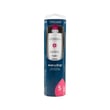
| Low water flow / bad ice production | Filter, water supply, valve | Refrigerator water filter EDR5RXD1, refrigerator inlet valve W10408179 |
| Frost buildup / warm temps | Defrost system | Refrigerator heater WP2323198, refrigerator defrost bi-metal WPW10225581 |
| Door not self-closing | Door cam wear | Refrigerator door closer cam WPW10329686 |
Why it matters
Cooling, ice, and water issues often share the same root causes: restricted airflow, a clogged filter, or inconsistent water supply. Catching those early helps protect food temperatures, reduces frost, and prevents leaks that can damage flooring.
For model-specific operating and troubleshooting steps, use the owner's manual.
Last updated: February 2026