Owner’s manual




What engine is in a Husqvarna Z248F-96730360100?
The Husqvarna Z248F-96730360100 zero-turn riding lawn mower is commonly equipped with a Kohler V-twin engine in the 26 HP class. For the exact engine family and spec number used on your mower, match the engine ID label to the engine information listed in the owner's manual.
How to confirm the exact engine on your mower
Use the mower and engine labels together so you get the right tune-up and repair parts.
- Park on level ground, set the parking brake, and remove the key
- Lift the seat and open the rear engine area (let the engine cool first)
- Find the engine ID label (typically shows brand, model/family, and spec)
- Record the model/family and spec numbers exactly as printed
- Compare those numbers to the engine section in the owner's manual
- Use the engine spec when selecting filters, spark plugs, and belts
What you should see on the engine label
Most Kohler V-twin labels include these fields; the spec is the tie-breaker when parts vary.
| Label item | What it tells you | Why it matters |
|---|---|---|
| Engine brand | Kohler (common on this model) | Confirms parts family |
| Model/family | Series and displacement class | Narrows compatible parts |
| Spec number | Exact build configuration | Ensures correct replacements |
| Serial number | Production identifier | Helps with service history |
Why it matters
The Z248F-96730360100 can use the same general engine type across production runs, but filters, ignition parts, and even belt routing details can change by engine spec. Confirming the engine label first prevents ordering the wrong maintenance parts.
Last updated: February 2026
What size deck is a Husqvarna Z248F-96730360100?
The Husqvarna zero-turn riding lawn mower model Z248F-96730360100 uses a 48-inch cutting deck (deck width). For the exact deck configuration and adjustment specs for your mower, we recommend confirming in the owner's manual.
How to confirm the deck size on your mower
- Check the deck decal or stamping on top of the cutting deck (often shows deck width).
- Measure blade tip-to-tip across the deck (with the engine off and key removed).
- Compare the deck shell width to the spec listed for Z248F-96730360100 in the owner's manual.
- Verify the model number on the product ID label matches Z248F-96730360100.
- If you have a bagger or chute installed, confirm it is sized for a 48-inch deck.
Quick reference: deck size vs. what it affects
| Item | What the deck size changes | What it does not change |
|---|---|---|
| 48-inch deck width | Cut path per pass, blade/deck parts fit | Engine starting system, battery/charging |
| Deck adjustments | Cut quality, scalping risk, belt tracking | Basic mower model number |
Why it matters
Deck width drives parts compatibility for common wear items like deck belts, idler components, and hardware. Using the correct deck size helps you match the right replacement parts and maintain an even cut.
Last updated: February 2026
What are common issues with Husqvarna?
Common issues we see on Husqvarna zero-turn riding lawn mowers like model Z248F-96730360100 are no-start conditions, rough running or stalling, and mower deck problems such as blades not engaging or belts slipping. Most problems trace back to fuel quality, ignition, safety switches, or normal wear parts; use the owner's manual for model-specific checks and adjustments.
Most common symptoms (and what they usually mean)
- Engine will not crank: weak battery, bad connections, failed solenoid, or an interlock (seat, brake, PTO) not satisfied
- Cranks but will not start: stale fuel, clogged fuel path, fouled spark plug, or ignition issue
- Starts then stalls: restricted fuel cap vent, dirty air filter, carburetor varnish, or debris in fuel
- Blades will not engage: PTO switch issue, wiring problem, or clutch not operating
- Poor cut or uneven cut: dull blades, deck out of level, or belt/idler wear
Quick checks we recommend first
- Park on level ground; set parking brake; remove key and let hot parts cool.
- Confirm the PTO is OFF and you are seated (interlock conditions).
- Inspect battery terminals for corrosion and tightness.
- Drain/replace old fuel; check for water or debris in the tank.
- Inspect belts and pulleys for glazing, cracking, or debris buildup.
Parts that commonly fix these problems
If your symptoms match, these model-compatible parts are common solutions:
| Symptom | Likely part area | Example part on this model page |
|---|---|---|
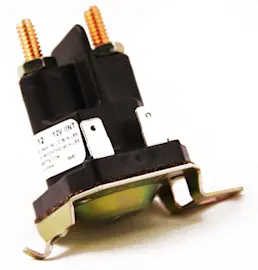
| No crank or intermittent crank | Starting circuit | Lawn tractor starter solenoid 582042802 |
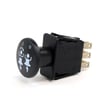
| Blades will not engage | PTO control circuit | Lawn tractor pto switch 582107601 |
| Drive feels weak or slips | Ground drive belt | Lawn tractor ground drive belt, 1/2 x 56-5/16-in 539110411 |
Why it matters
Catching a failing solenoid, PTO switch, or worn belt early prevents no-start surprises and reduces strain on the starter, clutch, and wiring. It also helps keep cut quality consistent and protects the deck drive system.
Last updated: February 2026
What riding mower has the least problems?
Riding mowers with the fewest problems are typically commercial grade or heavy-duty residential models with a proven hydrostatic drive system, a V-twin engine, and strong dealer-level parts support. For a Husqvarna zero-turn like model Z248F-96730360100, reliability comes most from correct maintenance and using the right replacement parts listed in the owner's manual.
What to look for if you want fewer repairs
We see the lowest “nuisance failure” rates when a mower is built around durable driveline components and simple, well-supported systems.
- Hydrostatic transmissions (smooth engagement, fewer linkage issues than manual drives)
- V-twin engines (better cooling and power delivery than many single-cylinder setups)
- Heavy deck construction and solid spindle/bearing support
- Easy access to service points (oil filter, air filter, belt routing)
- Strong electrical safety interlocks that are easy to diagnose (PTO switch, solenoid)
- A parts ecosystem where common wear items are readily available
Common problem areas (and how to prevent them)
Most “problem mowers” are really “maintenance-deferred mowers.” On zero-turns, the most frequent issues we troubleshoot are belt wear, PTO engagement complaints, and no-crank electrical faults.
- Keep belts properly tensioned and replace at the first signs of glazing or cracking
- Keep the deck clean underneath to reduce heat and belt slip
- Protect wiring from rubbing and corrosion; secure loose harnesses
- Test electrical parts before replacing them (especially switches and solenoids)
- Replace worn hardware so components stay aligned and don’t vibrate loose
Helpful parts for reliability on this model
If you are chasing a no-start or intermittent PTO issue, these are common wear or failure points for Z248F-96730360100:
| Symptom | Common check | Example part on this model |
|---|---|---|
| No crank, click/no click | Battery connections, solenoid output | Lawn tractor starter solenoid 582042802 |
| Blades will not engage | PTO switch function, connector condition | Lawn tractor pto switch 582107601 |
| Poor drive or slipping | Belt condition, routing, idlers | Lawn tractor ground drive belt, 1/2 x 56-5/16-in 539110411 |
Why it matters
Choosing a mower with robust driveline design helps, but the biggest driver of “least problems” is reducing heat, vibration, and electrical corrosion. That directly extends belt life, improves PTO engagement, and prevents intermittent no-start complaints.
Last updated: February 2026