Error Codes



What is the capacity of Samsung WF501ANW?
The Samsung WF501ANW washer is an ultra-capacity front-load model; most units in this series are about 3.7 cu. ft. capacity. For the most accurate match to your exact WF501ANW configuration, we recommend confirming by model tag details and comparing to the washer’s tub size and cycle platform.
How to confirm capacity on your washer
Capacity is tied to the tub size and platform, so the most reliable confirmation is to verify the exact model information on the appliance and compare it to published specs for that platform.
- Check the model tag on the door opening or cabinet frame for WF501ANW and any suffix details.
- Measure the inner basket diameter and depth (approximate) to sanity-check capacity.
- Compare your control panel and cycle set to the correct platform listing.
- If you are shopping parts, match by model number first, then by symptom.
Typical capacity ranges (helpful comparison)
| Washer type | Typical capacity range |
|---|---|
| Compact front-load | 2.0 to 2.6 cu. ft. |
| Standard front-load | 3.0 to 4.5 cu. ft. |
| Large front-load | 4.5 to 5.8 cu. ft. |
WF501ANW generally falls in the standard front-load range.
Why it matters
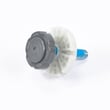
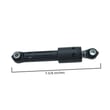
Capacity affects load size, cycle performance, and vibration. Overloading a front-load washer can increase out-of-balance events and stress suspension components such as the Samsung washer shock absorber DC66-00470A.
Last updated: February 2026
What is the code e01 on a Samsung washing machine?
On the Samsung WF501ANW washer, the E01 (often shown as E1) error points to a water supply problem: the washer is not sensing that it is filling properly. In most cases, restoring normal water flow to the inlet valves clears the code.
What to check first (fast fixes)
- Make sure both hot and cold water faucets are fully open.
- Confirm the fill hoses are not kinked, crushed, or frozen.
- Unscrew the hoses and clean the small inlet screen filters (sediment can block flow).
- Verify household water pressure is strong at the faucets.
- Try a quick power reset: unplug for 2 minutes, then restart a cycle.
When a part is likely the cause
If water flow and screens are good but E01 returns, the inlet valve may be sticking or electrically failing. For this model, common valve options include:
| Symptom you notice | Most likely area | What it affects |
|---|---|---|
| No water enters at all | Inlet valve not opening | Washer cannot fill |
| Only hot or only cold fills | One side of inlet valve | Wrong temp fill, long fill |
| Slow fill, code returns | Screens or valve restricted | Fill timeout, E01/E1 |
Model-matched parts to consider:
Why it matters
A washer that cannot fill will stop mid-cycle, rinse poorly, and can leave detergent residue on clothes. Fixing the water supply issue quickly also helps prevent repeat error codes and unnecessary strain on the control system.
Related Samsung troubleshooting
If you are seeing other codes along with fill issues, use our Samsung front load washer nf error code guide for targeted checks.
Last updated: February 2026
How much does it cost to repair a Samsung washing machine?
For a Samsung washer like model WF501ANW, most repairs typically cost $125 to $450, with many common service calls landing around $180 depending on the failure, labor rates, and whether parts such as a drain pump or inlet valve are needed.
What drives the repair price?
- Service call and diagnostics (often a flat fee)
- Labor time (simple access vs. full tear-down)
- Part cost (for example, a pump, valve, or control board)
- Severity of the failure (leak, no-drain, no-fill, no-spin)
- Age and condition of the washer (multiple worn parts can stack costs)
Typical repair scenarios and what they usually involve
| Symptom | Common cause | Example part for WF501ANW | Typical labor level |
|---|---|---|---|
| Won’t drain / water left in tub | Clogged or failed drain pump | Samsung washer drain pump DC96-01585D | Medium |
| Won’t fill / fills slowly | Water inlet valve issue or supply restriction | Washer water inlet valve DC62-30314K | Low to medium |
| Loud banging / walking | Worn suspension or out-of-balance issues | Samsung washer shock absorber DC66-00470A | Medium |
| Door won’t lock / won’t start | Failed door lock | Washer door lock DC64-00519B | Low to medium |
When repair vs. replace makes sense
Repair is usually the better choice when:
- The issue is isolated (pump, valve, door lock)
- The tub and bearings are quiet and smooth
- The washer isn’t leaking from the tub area
Replacement is usually the better choice when:
- The repair involves major tub work plus multiple parts
- The main control and additional components are failing together
- You’re facing repeated breakdowns in a short period
Why it matters
Knowing the likely cost range helps you decide whether to schedule service right away or start by troubleshooting symptoms (like no-drain or no-fill) so you only replace the part that actually failed. For error-code based issues, we use Samsung front load washer error codes to narrow the diagnosis before buying parts.
Last updated: February 2026
How long does a Samsung VRT washer last?
A Samsung VRT washer typically lasts about 10 years with average use; with consistent care (proper loading, cleaning, and prompt repairs), many last 12 to 15 years. For your Samsung WF501ANW, lifespan depends most on vibration control, drainage health, and leak prevention.
Typical lifespan and what affects it most
Most front-load washers fall into a predictable range based on usage and maintenance.
| Usage pattern | Typical lifespan | What usually ends it first |
|---|---|---|
| Light (few loads/week) | 12 to 15 years | Door seal leaks, drain issues |
| Average (4 to 7 loads/week) | ~10 years | Pump, suspension, door lock |
| Heavy (daily loads) | 7 to 10 years | Bearings, tub wear, electronics |
How to help your VRT system last longer
VRT (vibration reduction) performance drops quickly when the washer is overloaded, unlevel, or has worn suspension parts.
- Keep the washer level and stable; re-check after moving or flooring changes.
- Avoid overloading; heavy single items (blankets, rugs) should be balanced with similar items.
- Use HE detergent and avoid oversudsing (suds can stress the drain system).
- Leave the door ajar between loads to reduce moisture and odor buildup.
- Run periodic cleaning to reduce residue and mildew; follow steps in how to keep a washer odor free.
Parts that commonly shorten washer life (and what they do)
When these parts wear, you often see vibration, draining problems, or door/lock errors.
- Samsung washer shock absorber DC66-00470A: controls tub movement; worn shocks cause banging and walking.
- Samsung washer drain pump DC96-01585D: removes water; weak pumps lead to slow drain or no-drain symptoms.
- Washer door lock DC64-00519B: confirms the door is locked; failures can stop cycles from starting.
- Washer door boot DC64-02174B: seals the door opening; tears or mold can cause leaks and odor.
Why it matters
A washer that is vibrating, not draining well, or leaking usually wears out faster because the motor, tub, and control system work harder each cycle. Fixing early symptoms often adds years of reliable service.
Last updated: February 2026