Error Codes




Are bottom mount fridges better?
Yes for most households: a bottom-mount refrigerator like the GE CFE28TP2MES1 usually feels “better” because the fresh-food section sits at eye and waist level, so you reach less for everyday items while the freezer stays in a lower drawer.
- You use fresh foods more often than frozen foods.
- You want easier access to produce, milk, and leftovers.
- You prefer wide refrigerator shelves at a comfortable height.
- You like freezer drawers that keep items contained and organized.
- You access frozen foods many times per day (a higher freezer can be easier on your back).
- You want the simplest layout and typically the lowest purchase and repair complexity.
- You need narrow door swing clearance (some layouts fit tighter kitchens better).
| Layout | Everyday convenience | Freezer access | Typical tradeoffs |
|---|---|---|---|
| Bottom-mount | Best for fresh-food access | Requires bending for freezer | More drawers and features to maintain |
| Top-freezer | Good overall | Easiest freezer access | Fresh-food items sit lower |
| Side-by-side | Good for narrow door swing | Freezer at standing height | Narrower shelves for wide platters |
Most people open the refrigerator section far more than the freezer. With a bottom-mount design, the items you grab most often are higher up, which reduces bending and makes day-to-day cooking and meal prep more comfortable.
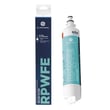
If performance issues ever make the layout feel less “better” (warm temps, weak ice, dispenser problems), start with the most common maintenance and wear items for this model, such as the GE refrigerator water filter RPWFE and airflow-related checks.
Last updated: February 2026
Is GE Café considered high end?
Yes. GE Café is generally considered a high-end (premium) line within the GE brand; it is positioned above standard GE models with upgraded design, finishes, and feature sets that are common in premium kitchen packages.
GE Café refrigerators like model CFE28TP2MES1 typically fit the premium category because they emphasize a built-in look, coordinated styling, and convenience features (for example, advanced dispenser controls and filtration).
Common premium traits include:
- More design-forward finishes and hardware options
- More electronic controls and display features
- More specialized storage and temperature management features
- Higher parts complexity (more sensors, boards, and harnesses)
- Higher replacement-part costs for certain assemblies
Premium models often use more electronics and sensors to manage temperatures, defrost, and user interface functions. If you are troubleshooting performance or control issues on CFE28TP2MES1, these parts are commonly involved:
- Refrigerator temperature sensor WR55X10025 (temperature feedback to the control system)
- Refrigerator main control board WR55X46805 (manages cooling, fans, defrost, and logic)
- Refrigerator lcd touch screen WR55X45229 (user interface and display)
- Refrigerator water filter RPWFE (water quality and flow through the dispenser)
| Category | Standard GE line | GE Café line |
|---|---|---|
| Styling | Basic to mid-range | Premium, design-focused |
| Controls | Simpler controls | More advanced electronic controls |
| Features | Core cooling features | More convenience and customization |
| Repair profile | Fewer electronic parts | More sensors/boards/displays |
Knowing GE Café is a premium line helps set expectations for ownership: you often get more features and a more upscale look, but repairs can involve higher-cost electronic parts and more detailed troubleshooting.
Last updated: February 2026
What is the most common problem with GE profile refrigerators?
The most common issue we see on GE Profile refrigerators like model CFE28TP2MES1 is a cooling problem (warm fresh food section, warm freezer, or temperatures that swing). Cooling complaints often trace back to airflow, defrost performance, or temperature sensing, not just the compressor.
- Refrigerator not cooling or not cold enough
- Freezer cold but fresh food warm (or the reverse)
- Ice maker stops making ice or makes small cubes
- Water dispenser flow is slow
- Unusual noises (fan noise, buzzing, clicking)
- Water leaking or puddles under the unit
- Confirm settings: Set fresh food to about 37°F and freezer to about 0°F.
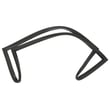
- Check door sealing: Make sure doors close fully and gaskets are clean.
- Look for blocked vents: Avoid packing food tightly against air returns.
- Listen for the evaporator fan: A failed fan can cause warm temps and noise.
- Check for frost buildup: Heavy frost on the evaporator cover points to a defrost issue.
If your symptoms match, these model-specific parts are common suspects:
| Symptom | What it often points to | Example part for this model |
|---|---|---|
| Temps fluctuate, unit runs too long | Bad temperature feedback | Refrigerator temperature sensor WR55X10025 |
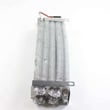
| Heavy frost, warm temps, fan noise changes | Defrost system problem | Refrigerator defrost bi-metal thermostat WR50X10108 or refrigerator defrost heater WR51X10131 |
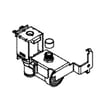
| No ice or intermittent ice | Ice maker assembly issue | Ice maker WR30X28731 |
| Slow water, bad taste/odor | Restricted filter | GE refrigerator water filter RPWFE |
Cooling problems can quickly lead to food spoilage and can also trigger secondary issues like ice maker failures and excess frost. Catching airflow, defrost, or sensor problems early usually prevents bigger repairs.
- Use our GE refrigerator error codes reference if your display shows an error.
- If the issue is the door alarm or door not closing fully, follow how to reset the door alarm on a GE refrigerator.
Last updated: February 2026