Owner’s manual
 View engine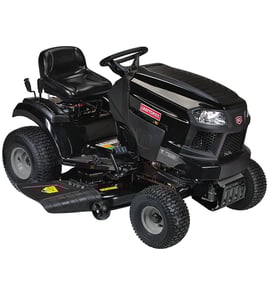


What engine does Craftsman riding mower use?
For Craftsman model 917257711, the engine is an 18 HP class gasoline engine (as identified in the model’s documentation). For the exact engine manufacturer, model family, and tune-up specs (spark plug, oil type, air filter), use the 917257711 owner's manual.
We recommend confirming the engine make and model from the engine ID label, then matching maintenance parts to that engine.
- Lift the hood and locate the engine ID label (often on the blower housing or valve cover)
- Write down the model, type, and code (or spec) numbers
- Compare those numbers to the engine section in the manual
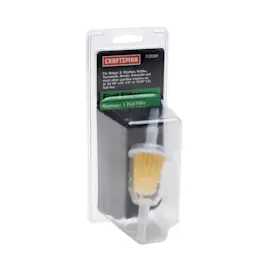
- Use the engine ID to select the correct spark plug, air filter, and fuel filter
- If the label is missing, use the tractor’s serial/product ID label plus the manual’s parts listings
The documentation for this tractor references an “18 HP” configuration and includes engine operation and maintenance topics such as lubrication, fuel, air filter service, and cold-weather/high-altitude notes. That’s the information you need to keep starting, charging, and mowing performance consistent.
| Item | What we can state for 917257711 | Where to confirm the exact detail |
|---|---|---|
| Horsepower class | 18 HP class | 917257711 owner's manual and engine ID label |
| Engine brand/model | Varies by production run | Engine ID label under the hood |
| Oil, air filter, tune-up parts | Engine-specific | Manual maintenance section and engine label |
Ordering the right maintenance parts depends on the engine’s exact model/type code, not just horsepower. Two 18 HP class engines can use different air filters, spark plugs, and carburetor settings.
Last updated: January 2026
Who makes Craftsman push mower engines?
Craftsman push mower engines are typically supplied by major small-engine manufacturers; for the Craftsman model 917257711 specifically, the owner’s documentation lists a Briggs & Stratton engine (B&S model 422707, type 1267-01). For current push mower lineups, Craftsman commonly uses Briggs & Stratton, Kohler, and Kawasaki depending on the model.
The 917257711 owner’s manual identifies the engine as Briggs & Stratton, and the engine parts section calls out B&S model 422707 (type 1267-01). That means this Craftsman riding tractor is powered by a Briggs & Stratton engine, not a proprietary Craftsman-built engine.
Use these quick checks to identify the engine manufacturer and exact engine model:
- Look for the engine ID label on the blower housing or valve cover (often shows brand and model/type).
- Check the tractor or mower model number tag (Craftsman model numbers are different from engine model numbers).
- Match the engine model and type numbers to the engine parts list in the 917257711 owner’s manual.
- If the engine was replaced, use the engine label, not the tractor model number.
- Compare the starter, carburetor, and muffler style to the engine parts diagram when labels are missing.
| Engine maker | Where you’ll usually see it | What to look for |
|---|---|---|
| Briggs & Stratton | Many Craftsman walk-behind and riding models | “Briggs & Stratton” badge; model/type code |
| Kohler | Some premium walk-behind and riding models | “Kohler” badge; Command/Courage-style labeling |
| Kawasaki | Some higher-end riding models | “Kawasaki” badge; FR/FS-series style labeling |
The engine maker determines the correct tune-up parts and service procedures (spark plug, air filter, carburetor kit, starter, and governor settings). Using the engine model and type number prevents ordering the wrong parts.
Last updated: January 2026
Is it worth replacing a lawn mower engine?
Yes, it’s worth replacing the engine on your Craftsman lawn tractor model 917257711 when the mower deck, steering, and drive system are still solid and the total engine swap cost stays well below the cost of replacing the entire tractor. If multiple major systems are worn, replacement is usually the better value.
- The tractor frame, deck shell, and steering are not cracked or badly rusted
- The transmission/drive still moves smoothly and pulls under load
- You’re not also facing major deck-drive repairs (belt, pulleys, mandrels)
- You can do basic mechanical work (or have a shop do the swap)
- The engine replacement cost is comfortably under about half the price of a comparable new rider
Use the 917257711 owner's manual to identify adjustment points and service checks, then inspect these common “make-or-break” areas:
| Area to check | What “good” looks like | What pushes you toward replacing the tractor |
|---|---|---|
| Mower deck and spindles | Deck is straight; blades spin without grinding | Deck is rotted through; spindle/mandrel damage is widespread |
| Belt and pulley system | Belts track correctly; pulleys spin freely | Repeated belt throwing, seized pulleys, heavy vibration |
| Electrical starting | Clean connections; consistent crank | Chronic no-crank issues from multiple components |
| Fuel system | No leaks; clean fuel delivery | Tank leaks, brittle lines, recurring contamination |
If your deck belt system is already worn, pricing out a known deck-drive part like the lawn tractor drive v-belt 532144200 helps you estimate the “all-in” repair cost.
An engine swap can extend the life of a good chassis for years, but it only pays off when the rest of the tractor is dependable. On this model, deck-drive wear (belts, idlers, mandrels) and starting-system issues can add cost quickly, so checking those systems first prevents sinking money into a tractor that still won’t mow reliably.
- DIY swap: Lowest cost, highest time investment; plan for mounting, wiring, throttle/choke linkage, and belt alignment checks.
- Shop swap: Higher cost, faster turnaround; best if you want warranty-backed labor.
- Middle ground: If the engine is mostly good, sometimes a tune-up and fuel-system cleanup restores performance.
Last updated: January 2026
How much does it cost to replace a riding lawn mower engine?
Engine replacement on a Craftsman riding tractor like model 917257711 typically costs about $260 to $1,800 installed, depending on the engine type, labor rates, and whether related items (battery cables, belts, wiring) need attention during the swap. Use the 917257711 owner's manual to confirm engine and wiring details before ordering.
- Engine price (new vs. rebuilt, horsepower, crankshaft size and length)
- Labor time (most riding mower engine swaps run around 6 hours)
- Extra parts often replaced at the same time (belts, pulleys, switches)
- Condition issues found during removal (rusted fasteners, damaged wiring)
- Shop minimums and pickup/delivery charges
| Cost item | Typical range | Notes |
|---|---|---|
| Engine (part) | $200 to $1,400 | Biggest variable; must match crankshaft specs |
| Labor | $200 to $600+ | Often based on ~6 hours plus shop rate |
| Misc. parts/supplies | $20 to $200 | Fuel line, clamps, oil, filter, hardware |
If the tractor had drive or deck issues before the engine failed, it is smart to inspect wear parts while everything is accessible.
- Lawn tractor drive v-belt 532144200 if the belt is cracked, glazed, or stretched
- Lawn tractor idler pulley 532139245 if it squeals, wobbles, or has rough bearings
- Switch 582107601 if the PTO engagement is intermittent
- Battery cables and terminals if cranking was weak or inconsistent
An engine swap only pays off when the replacement engine matches the tractor’s mounting pattern and crankshaft specs, and when the drivetrain and mower deck are in good shape. Otherwise, you can spend engine money and still have poor cutting or drive performance.
Last updated: January 2026