Installation guide
 Owner’s manual
 Error Codes



What is the average lifespan of a Frigidaire refrigerator?
Most Frigidaire refrigerators, including the LFHD2251TF5 bottom-mount refrigerator, typically last 10 to 15 years. You can often reach the high end of that range by keeping airflow and temperatures stable and staying on top of routine maintenance listed in the LFHD2251TF5 owner's manual.
What affects lifespan the most
- Condenser coil cleanliness (dust buildup makes the compressor work harder)
- Door seal condition (air leaks cause longer run times and frost)
- Stable power (voltage swings can stress the compressor)
- Water system upkeep (filters and supply line condition affect ice and water performance)
- Vent clearance and loading (blocked vents reduce cooling efficiency)
Maintenance schedule we recommend
| Task | How often | Why it helps |
|---|---|---|
| Replace water filter | Every 6 months | Protects water flow and ice quality; reduces strain on the water system |
| Clean condenser area | Every 6 to 12 months | Improves efficiency and reduces compressor workload |
| Check door gaskets for gaps/tears | Every 3 to 6 months | Prevents warm air leaks and frost buildup |
| Verify temps (fresh food/freezer) | Monthly | Catches cooling issues early |
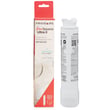
If your refrigerator uses the PureSource Ultra II style filter, the refrigerator filter assembly EPTWFU01 is the correct replacement part for this model.
Signs your refrigerator is nearing end-of-life
- Compressor runs almost constantly or is unusually loud
- Temperatures drift even after adjusting controls
- Frost buildup returns quickly after defrosting
- Water dispenser or ice maker performance declines repeatedly
- Door gaskets no longer seal even after cleaning and reshaping
Why it matters
A refrigerator that is running longer to hold temperature uses more energy and puts extra wear on sealed-system components (compressor, evaporator, condenser). Simple upkeep, especially filter changes and keeping seals tight, is the easiest way to extend service life.
Last updated: February 2026
How old is my Frigidaire appliance by serial number?
For your Frigidaire LFHD2251TF5 bottom-mount refrigerator, we date the unit by decoding the serial number: the first digit is the year within a decade, and the next two digits are the production week (01 to 52). Because the year digit repeats every 10 years, you confirm the decade using the model’s style and features.
How to decode a Frigidaire serial number
Use this quick format:
- 1st digit: year (last digit of the year)
- 2nd and 3rd digits: week of the year (01 to 52)
- Remaining characters: factory and sequence information (varies)
Example
If your serial starts with 823…:
- 8 = a year ending in 8 (commonly 2008 or 2018)
- 23 = 23rd week of that year
How to confirm the correct decade (the part that trips people up)
Because “8” could mean 2008 or 2018, use these checks:
- Match the refrigerator’s design and control style to the diagrams and features in the LFHD2251TF5 owner’s manual
- Check your purchase or delivery paperwork (receipt, invoice, or home inspection report)
- Compare the serial tag information with the warranty and service contact details listed in the manual
- If your refrigerator has newer styling and features, the later decade is typically the right match
Quick reference table
| Serial number start | What it tells you | What you still need |
|---|---|---|
| YWW… | Year digit (Y) and week (WW) | Which decade that year digit belongs to |
| 5WW… | Year ends in 5; built in week WW | Decide between 2005, 2015, 2025 based on purchase era |
Why it matters
Knowing the build week and year helps us choose the right Frigidaire parts (like a control board, temperature sensor, or ice maker) and avoid ordering a look-alike part that does not match your production run.
Last updated: February 2026
What is the most common problem with a Frigidaire refrigerator?
The most common issue we see on a Frigidaire refrigerator like model LFHD2251TF5 is a cooling complaint, often “freezer is cold but fresh food is warm.” This is usually tied to airflow (evaporator fan), frost buildup from a defrost problem, or temperature control and sensor issues.
Most common symptoms customers notice
- Fresh food section warms up while the freezer still makes ice
- Frost or ice buildup on the freezer back wall
- Weak airflow from the air ports into the refrigerator section
- Temperature swings (too warm, then too cold)
- Ice maker or water dispenser problems after a filter change or water interruption
Quick checks that solve many “not cooling right” calls
- Confirm set temperatures: Frigidaire’s recommended starting point is 37°F fresh food and 0°F freezer; adjust 1 to 2 degrees if food is freezing near air ports (see the LFHD2251TF5 owner’s manual).
- Check airflow: Keep food at least about 1 inch away from air ports to prevent freezing and airflow blockage.
- Look for frost buildup: Heavy frost points to a defrost system issue (defrost thermostat, sensor, control).
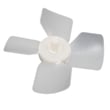
- Listen for the evaporator fan: If the freezer is cold but you do not hear/feel airflow, the fan motor or blade can be involved.
Parts commonly involved (when a repair is needed)
| Problem pattern | What often fails | Example part for LFHD2251TF5 |
|---|---|---|
| Freezer cold, fridge warm | Evaporator fan not moving air | Frigidaire refrigerator evaporator fan motor 809069206 |
| Temps inaccurate or erratic | Temperature sensor (thermistor) | Refrigerator temperature sensor (model-specific options vary) |
| Ice maker not making ice | Water supply, filter seating, ice maker | Refrigerator ice maker 243297613 |
| Water/ice flow issues | Water inlet valve restriction | Refrigerator water inlet valve assembly 242253002 |
Why it matters
Cooling and airflow problems can spoil food quickly and also create secondary issues like frost buildup, noisy operation, and ice maker failures. Starting with correct temperature settings and clear air circulation helps you avoid unnecessary part replacements.
If your issue is an alarm or a display message, use the Frigidaire refrigerator error codes reference to narrow the problem faster.
Last updated: February 2026
Is a Frigidaire considered high end?
Frigidaire is generally considered a mainstream, mid-range appliance brand rather than a true luxury or high-end brand. For the Frigidaire LFHD2251TF5 bottom-mount refrigerator, you can expect solid everyday performance and practical features, with “high-end” depending mostly on the specific series and feature set.
How Frigidaire typically compares
In most kitchens, Frigidaire sits in the value-to-mid tier; it competes on reliability, availability of parts, and straightforward design more than luxury finishes.
- Mainstream positioning: built for everyday use and broad price points
- Feature-driven “upgrade” feel: higher series add nicer finishes and more controls
- Serviceability: common parts like water filters, ice makers, and sensors are widely supported
- Good fit for repairs: many issues are resolved with standard troubleshooting and part replacement
What “high end” means for a refrigerator
“High end” usually refers to a mix of premium materials, advanced temperature management, quieter operation, and specialty features.
| Category | Mainstream (typical Frigidaire) | High-end (typical luxury brands) |
|---|---|---|
| Fit and finish | Practical, durable | Premium materials, tighter tolerances |
| Features | Strong essentials | Specialty cooling zones, advanced automation |
| Repair costs | Often moderate | Often higher |
| Parts availability | Typically strong | Can be more limited |
How to judge your LFHD2251TF5 specifically
We recommend using your documentation to confirm which features your exact configuration includes (controls, ice maker type, filter location, and operating expectations).
- Review the “Features at a glance” and controls sections in the LFHD2251TF5 owner’s manual
- Compare your unit’s dispenser and ice maker setup to the guide’s diagrams
- If you want a “premium” experience, prioritize consistent temps, good door sealing, and clean water filtration
Why it matters
Brand tier affects expectations for noise, finish, and feature depth, but day-to-day satisfaction usually comes down to correct installation, stable temperatures, and keeping wear items (like filters and gaskets) in good shape.
Last updated: February 2026