Owner’s manual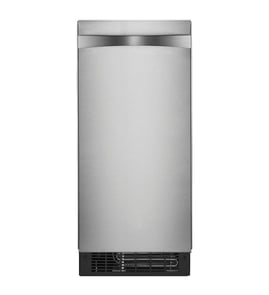


Why is my free standing ice maker not making ice?
If your Kenmore 10689592100 freestanding ice maker runs but makes no ice, the most common causes are the control being OFF, the water supply being shut off, a loose drain cap that empties the water pan, or a problem in the water circulation and cutting system. Use the checks below, then follow the troubleshooting chart in the owner's manual.
Quick checks that fix “runs but no ice”
- Confirm the ice maker control is set to ON.
- Verify the household water supply valve is open and the supply line is connected.
- Tighten the drain cap (a loose cap can drain the water pan and prevent normal ice formation).
- Clean the drain tube and make sure the drain line is not kinked.
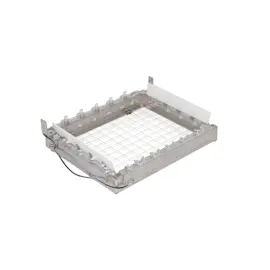
- Make sure the cutter grid is seated securely and its harness plug is connected.
- Check that the water filter is installed correctly (if equipped).
What’s happening inside the machine (why one failure stops ice)
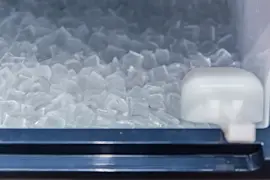
Your model constantly circulates water over a freezing plate; once the ice sheet reaches thickness, it releases onto a cutter grid, then mineral-heavy water drains and fresh water refills for the next cycle. If water cannot fill, circulate, or stay in the pan, the unit can run without producing cubes.
Parts that commonly cause “no ice” on this model
If the basic checks above do not restore ice production, these model-matched parts are common suspects:
| Symptom you see | What it often points to | Model-matched part to consider |
|---|---|---|
| No water entering for a cycle | Failed inlet valve or supply issue | Ice maker water inlet valve W10881366 |
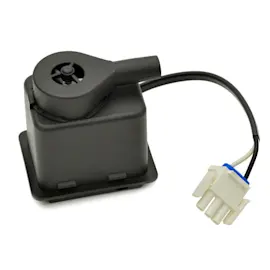
| Water present but not circulating over the plate | Weak or failed recirculation pump | Freestanding ice maker recirculation pump W11566406 |
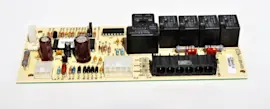
| Unit behavior is erratic, cycles wrong, or won’t initiate ice making | Control not driving the cycle correctly | Ice maker electronic control board W11034363 |
Why it matters
When the water pan does not fill and hold water, or water is not recirculated over the freezing plate, the machine can sound like it is operating but never builds an ice sheet to drop onto the cutter grid.
Last updated: February 2026
How to reset an ice maker?
For the Kenmore 10689592100 freestanding ice maker, the most reliable “reset” is a power reset: unplug the unit (or disconnect power) for 1 minute, then restore power and turn the control back on. This clears minor control glitches and restarts the ice-making cycle.
Quick reset steps (power reset)
- Turn the ice maker control OFF (if your control panel has an on/off setting).
- Unplug the ice maker or disconnect power at the breaker.
- Wait 60 seconds.
- Plug back in (or restore power).
- Turn the control ON and allow time for the next harvest and refill.
For control locations and normal cycle timing, use the owner's manual.
If it still will not restart after a reset
These checks solve the most common “won’t run after reset” situations:
- Confirm the unit is plugged into a grounded 3-prong outlet.
- Check the home fuse/circuit breaker.
- Make sure the room temperature is above 55°F; colder rooms can keep the bin thermostat from calling for ice.
- If your unit has a drain pump and you recently added a lot of water, wait a few minutes for the pump to clear.
- Inspect the drain hose for kinks or pinches (a drain issue can stop production).
What you should hear and see after a successful reset
Some sounds right after restart are normal:
- Buzzing when the water valve opens to fill
- Water splashing or running over the evaporator plate
- Compressor sounds (pulsing or higher-pitched)
Normal vs. problem symptoms
| After reset | Usually normal | Usually needs troubleshooting |
|---|---|---|
| Water fill sound | Brief buzz, then stops | No fill sound at all, or constant fill/overflow |
| Operation | Compressor cycles on/off | Unit completely dead, trips breaker |
| Ice | First batch takes time | Thin ice or no ice after multiple cycles |
Why it matters
A reset only helps if the issue is a temporary control or power interruption. If water supply, temperature sensing, or draining is the real cause, the ice maker can appear “stuck” even though the control is working.
Last updated: February 2026
Is it worth replacing the ice maker on a refrigerator?
Yes, it’s usually worth replacing an ice maker when the rest of the appliance is cooling normally and the problem is isolated to ice production. For Kenmore model 10689592100, we recommend confirming basic operating conditions first (power, water supply, room temperature) before investing in major parts. See the 10689592100 owner's manual.
Quick checks before you replace anything
These items cause “no ice” or “low ice” complaints most often, and they are specifically called out in the troubleshooting guidance for this style of ice maker:
- Confirm the unit is plugged into a grounded 3-prong outlet and the control is turned ON.
- Verify the water supply is connected and turned ON.
- Make sure room temperature is above 55°F (13°C); colder rooms can make the bin thermostat shut the unit off.
- If the unit runs but makes no ice, tighten the drain cap and check for a dirty drain tube or kinked drain line.
- If ice production is low, remember that room temps above 90°F (32°C) reduce output.
- Break up clumped ice in the bin; the bin is not refrigerated, so some melting and refreezing is normal.
When replacement is the smart move
Replacing parts is a good value when the machine otherwise runs normally and you can point to a likely failed component.
| Symptom | What it often points to | Example part to consider |
|---|---|---|
| Runs but produces no ice | Water not filling correctly | Ice maker water inlet valve W10881366 |
| Intermittent or incorrect temperature sensing | Sensor/thermistor issue | Thermistor WPW10511923 |
| Won’t drain properly (pump models) | Drain pump problem | Ice maker drain pump W11542868 |
| Dead controls or erratic operation | Control board issue | Ice maker electronic control board W11034363 |
When replacement is usually not worth it
We typically steer customers away from major repairs when the issue is not isolated to the ice maker function.
- The unit has multiple symptoms (poor cooling plus ice issues, repeated shutdowns, heavy noise).
- You suspect sealed-system problems (cooling performance is weak even after cleaning airflow paths).
- Repair cost is approaching the cost of replacing the entire appliance.
Why it matters
This type of freestanding ice maker recirculates water over a freezing plate, then drains mineral-heavy water after each cycle. If water supply, drain, or temperature conditions are off, you can get thin ice, no ice, or frequent shutoffs even when the machine itself is still “good.”
Last updated: February 2026
Can I replace my own ice maker?
Yes, for Kenmore model 10689592100, many owners can handle common ice maker repairs themselves if you follow safe shutdown steps first (unplug power and shut off water). For sealed-system work or anything involving refrigerant, we recommend using a qualified technician.
Before you start (safety and prep)
- Unplug the ice maker (disconnect power before servicing).
- Shut off the water supply.
- Remove ice from the storage bin.
- Drain the water pan by removing the drain cap; reinstall it securely afterward.
- Keep towels handy for water in the inlet and outlet lines.
- Take a quick photo of wire connections before unplugging anything.
What DIY replacement usually looks like on this model
The owner's manual outlines access and shutdown steps that make DIY work more straightforward, such as removing the lower access panel (4 screws total) and draining water before servicing.
Common DIY-friendly tasks include:
- Cleaning condenser fins and the unit compartment (airflow issues can reduce ice production).
- Replacing electrical parts that plug in or mount with screws.
- Swapping a pump or valve if you can access the lower compartment and reconnect hoses securely.
Parts that commonly solve “no ice” or “low ice” symptoms
| Symptom | What to check first | Part that may be involved |
|---|---|---|
| Runs but no ice | Water supply on, drain cap tight, drain tube clear | Ice maker water inlet valve W10881366 |
| Thin ice or no ice | Drain cap loose or leaking from water pan | Drain cap seating (no part needed) |
| Poor circulation or slow production | Water movement during cycle | Freestanding ice maker recirculation pump W11566406 |
| Not draining properly | Drain line, pump operation | Ice maker drain pump W11542868 |
Why it matters
Doing the shutdown and draining steps correctly prevents leaks, protects electrical components, and helps you avoid “thin ice” or “no ice” problems caused by a loose drain cap or restricted drain path.
Last updated: February 2026