 Installation guide
 Owner’s manual
 Error Codes







How long do Amana dryers last?
Most Amana dryers, including the Amana NGD7200TW10, last 10 to 15 years with normal household use. Consistent airflow maintenance (lint screen and venting) and fixing small issues early are what most often push a dryer toward the high end of that range.
Typical lifespan and what affects it
A dryer’s life is mostly determined by heat stress, airflow restriction, and wear on moving parts (drum support rollers, idler, belt).
- Best-case lifespan: 15 years (good venting, light to moderate loads)
- Typical lifespan: 10 to 15 years
- Shortened lifespan: under 10 years (restricted venting, frequent overloading, ignored noises)
For model-specific care and cleaning guidance, follow the NGD7200TW10 owner's manual.
Maintenance that extends dryer life
These steps reduce overheating, shorten dry times, and protect thermostats, igniter, and the motor.
- Clean the lint screen before every load
- Check and clean the exhaust duct to the outside regularly (crushed hose and long runs hurt airflow)
- Avoid overloading; heavy loads strain the drum support system and belt
- Use the correct cycle and heat setting for the fabric
- Keep the area around the dryer clear so it can pull in room air
Quick “repair or replace” guide
Use age plus symptoms to decide whether a repair makes sense.
| Dryer age | Condition | What we recommend |
|---|---|---|
| 0-7 years | Most issues | Repair is usually the best value |
| 8-12 years | Minor issues, good airflow | Repair if the drum and cabinet are in good shape |
| 13-15 years | Multiple issues or long dry times | Compare repair cost vs. replacement |
If your NGD7200TW10 is overheating or cycling heat oddly, a common wear item is the dryer operating thermostat WP35001092.
Why it matters
A dryer that runs with restricted airflow runs hotter and longer; that accelerates wear on safety controls, increases energy use, and can lead to repeated no-heat or long-dry-time complaints.
Ordering parts
We list model-matched replacement parts for the Amana NGD7200TW10 on this page; for broader model searches and ordering, use Sears PartsDirect.
Last updated: February 2026
What are common dryer part failures?
Common part failures on an Amana NGD7200TW10 dryer usually show up as no heat, long dry times, squealing or thumping, or the dryer shutting off early. Most problems trace back to airflow restrictions (venting and lint), heat-control parts (thermostats), or drum-drive wear parts.
Most common failures (and what you notice)
- Poor airflow or blocked venting: clothes take too long to dry, cabinet feels hotter than normal
- Heat-control parts failing: no heat, overheating, or short cycling (heat turns on and off too quickly)
- Ignition problems on gas models: no heat even though the drum tumbles
- Drum support and drive wear: squealing, thumping, or intermittent tumbling
- Load-related issues: uneven drying or early shutoff when loads are too small or too large
Model-specific parts on this page that often relate to these symptoms
If your NGD7200TW10 is tumbling but not heating, these parts are common suspects:
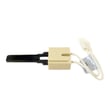
- Dryer burner igniter WP33002789
- Dryer operating thermostat WP35001092
- Dryer safety thermostat WP35001087
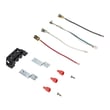
If you are converting fuel type (for example, LP conversion where applicable), use the correct kit for your setup:
| What you are doing | Part to look for | Notes |
|---|---|---|
| Gas conversion (kit) | Conversion kit | Match the kit to your gas type and installation requirements |
| Heat cycling issues | Operating thermostat | Helps regulate normal drum temperature |
| Overheat protection | Safety thermostat | Helps protect the dryer if temperatures get too high |
Airflow and venting failures (the biggest cause of long dry times)
Your installation requirements matter because restricted exhaust can cause long dry times and overheating. For NGD7200TW10, use metal ducting and keep the run short and straight.
- Use 4-inch metal duct (rigid is best)
- Avoid plastic or nonmetal flexible duct
- Avoid sharp bends; limit 90-degree elbows
- Do not run flexible duct through walls or concealed spaces
- Do not fasten joints with screws (they catch lint); use duct tape
For the exact venting rules and length guidance for your setup, follow the installation guide.
Why it matters
Most “bad part” symptoms start with airflow. A restricted vent can mimic failed heating parts, increase drying time, and cause the dryer to shut off early. Confirming strong airflow first helps you replace the right parts the first time.
If you need to order replacement parts for NGD7200TW10, use the parts list for this model or search by model number on Sears PartsDirect.
Last updated: February 2026
How much does it cost to repair an Amana dryer?
For an Amana NGD7200TW10 dryer, most professional repairs typically total $150 to $350 (parts plus 1 to 2 hours of labor). Costs run lower for simple fixes like a thermostat swap and higher when multiple heat or drive components need replacement; confirm procedures in the NGD7200TW10 owner's manual.
Typical repair cost breakdown
Dryer repair pricing usually comes down to labor, the part(s), and whether the job requires disassembly of the drum or burner area.
- Service call / diagnostic: commonly charged separately or rolled into labor
- Labor rate: typically $50 to $100 per hour
- Time on most repairs: 1 to 2 hours
- Parts cost: varies by symptom (no-heat, noisy drum, won’t start)
| Repair type (common) | What’s usually involved | Typical total cost range |
|---|---|---|
| No heat (gas dryer) | Ignition or temperature control parts, airflow checks | $150 to $350 |
| Overheating / cycling issues | Thermostat replacement, venting inspection | $150 to $300 |
| Noisy drum / squeal | Roller, idler, belt inspection and replacement | $200 to $400 |
Parts that often affect the final price
If your NGD7200TW10 is not heating or is overheating, these model-compatible parts are common suspects:
- Dryer operating thermostat WP35001092 (temperature cycling)
- Dryer safety thermostat WP35001087 (overheat protection)
- Dryer burner igniter WP33002789 (gas ignition)
Why it matters
Dryer symptoms often overlap. For example, restricted venting can mimic a failed thermostat or igniter, so a correct diagnosis prevents repeat repairs and helps the dryer dry faster and run cooler.
Ways to keep repair costs down
- Clean the lint screen every load and keep the exhaust duct clear
- Avoid overloading; it increases dry time and wear on drum support parts
- If you’re converting fuel type, use the correct kit for safe operation
- Use the parts list for NGD7200TW10 first; for broader model searches, use Sears PartsDirect
Last updated: February 2026
How do you know if a thermal fuse is blown on an Amana dryer?
On an Amana NGD7200TW10 dryer, a blown thermal fuse usually shows up as a dryer that will not start, or a dryer that runs but does not heat. The reliable way to confirm it is a multimeter continuity test; a blown fuse reads open (no continuity).
Common signs before you test
A thermal fuse is a one-time safety device that opens when the dryer overheats, most often from restricted airflow.
- Dryer will not start even though the door is latched and power is present
- Drum tumbles but there is no heat (common on gas dryers)
- Dryer shuts off early and clothes stay damp
- Cabinet feels unusually hot or you notice a hot, “overheated” smell
How to test the thermal fuse (continuity)
Follow the access steps for your NGD7200TW10 in the NGD7200TW10 owner's manual.
- Unplug the dryer (and shut off the gas supply on gas models)
- Remove at least one wire from the fuse terminal
- Set the meter to continuity or the lowest ohms setting
- Touch probes to the fuse terminals
| Meter reading | Fuse status | Next step |
|---|---|---|
| Beep or near 0 ohms | Good | Check airflow and heating components |
| OL, no beep, high resistance | Blown | Replace the fuse and fix the overheating cause |
Why it matters (prevent repeat failures)
If you replace the fuse without correcting airflow, the new fuse can blow again. The NGD7200TW10 guidance emphasizes keeping the exhaust system clear and using proper ducting.
Airflow checks we recommend
- Clean the lint screen and the lint screen housing
- Inspect and clean the exhaust duct and outside hood so it opens freely
- Use 4-inch rigid metal duct when possible; keep runs short and straight
- Tape joints (avoid screws that catch lint)
Related parts that can affect heating
If airflow is good but heat is still inconsistent, these model-compatible parts are commonly involved:
- Dryer operating thermostat WP35001092
- Dryer safety thermostat WP35001087
- Dryer burner igniter WP33002789
If you are ordering parts, use the model parts list first; you can also search by model number on Sears PartsDirect.
Last updated: February 2026





