


Where is the model number on a Craftsman rear tine tiller?
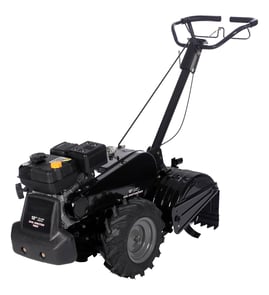
On a Craftsman rear-tine tiller like model 917299680, the model number is printed on the equipment ID label (a sticker or metal tag) attached to the tiller frame. It’s most often on the tine shield/guard area or near the engine and fuel tank, and sometimes on the front of the unit.
Common places to check on model 917299680
Look for a rectangular label that includes the model number and sometimes a serial number.
- On the tine shield (tine guard) above or behind the tines
- On the main frame rail near the transmission housing
- Near the engine mounting area
- On or near the fuel tank support or engine shroud area
- On the front frame or front cover (some builds place it forward)
What the label looks like (so you don’t miss it)
The ID label is usually easy to overlook because it can be dirty, faded, or covered by debris.
| What you see | What it means | What to do |
|---|---|---|
| “MODEL” followed by numbers | This is the model number | Match it exactly when ordering parts |
| “SERIAL” followed by numbers | Production identifier | Keep it for reference |
| Worn or missing sticker | Label is damaged | Clean the area and check nearby frame surfaces |
Quick tips to find it faster
- Brush off packed soil and plant debris around the tine guard and frame.
- Wipe the area with a rag and mild degreaser; avoid soaking the label.
- Use a flashlight and look along flat frame surfaces where a sticker would adhere.
- If the label is unreadable, write down any partial digits and compare to your paperwork.
Why it matters
We use the exact model number to match the correct diagrams and parts for your Craftsman 6-hp & 8-hp rear-tine tiller. Even small model-number differences can change tines, bearings, wheels, and hardware.
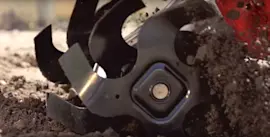
If you’re ordering common wear items, start by matching your model number and then confirm the part in the diagram, such as the tine 532101194.
Last updated: January 2026
How often should I change the oil in my tiller?
For the Craftsman 917299680 6-hp & 8-hp rear-tine tiller, we recommend changing engine oil after the first few hours on a new or rebuilt engine, then about every 25 to 50 hours of use or once per season (once per year), whichever comes first. Heavy, dusty tilling calls for the shorter interval.
A practical oil-change schedule
Use this as a reliable baseline for most small 4-cycle tiller engines:
- First oil change: after 5 hours of run time (break-in)
- Normal use: every 50 hours or once per season
- Hard use (dusty soil, high heat, long sessions): every 25 hours
- If oil looks dark or smells burnt: change it now
- If the level drops between changes: top off with the correct oil and check for leaks
Quick checklist before you drain the oil
- Shut the engine off and let it cool for 10 to 15 minutes
- Disconnect the spark plug wire to prevent accidental starting
- Clean dirt from around the fill and drain areas
- Use a drain pan and dispose of used oil properly
- Refill to the correct level, then recheck after a short run
What oil to use (typical guidance)
Most 4-cycle tiller engines use SAE 30 for warm-weather operation; 10W-30 is common for wider temperature ranges. Match the oil type to your engine label and local temperatures.
| Condition | Typical oil choice | Change interval |
|---|---|---|
| Warm weather, steady temps | SAE 30 | 50 hours/season |
| Mixed temps | 10W-30 | 50 hours/season |
| Dusty or heavy tilling | Same as above | 25 hours |
Why it matters
Fresh oil protects the crankshaft, piston, and bearings from heat and grit. On a rear-tine tiller, dirty oil accelerates wear and can make starting harder and power weaker under load.
If you are already servicing the machine, it is also smart to inspect wear items like the tine 532101194 and replace damaged hardware so the tiller runs smoothly.
Last updated: January 2026
What are the common problems with lawn tillers?
Common problems on the Craftsman 917299680 rear-tine tiller are fuel and ignition issues (won’t start, runs rough, stalls), drive or tine engagement problems (won’t move or won’t till), and wear in rotating hardware (noise, vibration, wobble). Most fixes start with fresh fuel, a clean spark plug, and a quick inspection for loose or worn parts.
Most common symptoms and what they usually mean
- Won’t start or starts then dies: stale fuel, clogged fuel line/filter, dirty carburetor, fouled spark plug
- Runs rough or surges: partially clogged carburetor jet, air leak, dirty air filter
- Tines won’t turn: belt/clutch cable out of adjustment, shear pin/roll pin failure, seized bearing
- Tiller won’t drive: worn drive belt, loose linkage, wheel hub/key issue
- Excess vibration or grinding noise: bent tine, loose fasteners, worn bearing or thrust parts
Quick checks we recommend (fast, high-impact)
- Drain old gas and refill with fresh fuel; clean the tank cap vent if it is plugged.
- Inspect the spark plug; replace if fouled, cracked, or heavily worn.
- Check for obvious looseness at the tine shaft and wheels; tighten hardware.
- Look for missing or damaged pins and keys in the driveline; a failed roll pin can stop tine rotation.
- If you hear grinding or feel wobble, inspect bearings and thrust surfaces before continued use.
Parts that commonly wear on rear-tine tillers
| Problem you notice | Part type often involved | Example from this model’s parts list |
|---|---|---|
| Tines don’t dig well, machine bounces | Tines | Tine 532101194 |
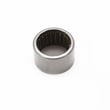
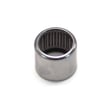
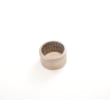
| Clicking, looseness, tine shaft play | Bearing/needle bearing/thrust parts | Bearing 532006803 |
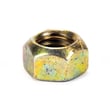
| Driveline won’t transmit power | Roll pin/key | Lawn & garden equipment roll pin 532001572 |
Why it matters
A tiller that is starving for fuel or running with worn rotating parts can quickly turn a small tune-up into a bigger repair. Catching a clogged fuel path, a worn tine, or a failing bearing early helps protect the transmission and tine shaft.
Last updated: January 2026
What tiller is made in the USA?
There is no single tiller brand that is always made in the USA; country of origin varies by manufacturer and by specific model and production run. For a Craftsman rear-tine tiller model 917299680, the most reliable answer is the country-of-origin statement on the product ID plate.
How to confirm “made in USA” for a specific tiller
Check these locations on the machine and its paperwork:
- Product ID plate on the tiller frame (often near the handle support, engine mount area, or transmission housing)
- Decal on the frame or hood that lists manufacturing origin
- Original carton label or packing slip (if you still have it)
- Engine label (engine origin can be different from the tiller origin)
What common origin labels mean
These phrases are used differently across brands and years:
| Label wording | What it indicates | What you should do |
|---|---|---|
| Made in USA | Manufactured in the United States (as stated by the maker) | Confirm it is printed on the ID plate for your exact model |
| Assembled in USA | Final assembly in the United States; components may be imported | Use the ID plate wording as the deciding source |
| Designed/engineered in USA | Product development in the United States; manufacturing may be elsewhere | Look for a separate “made in” statement |
Why it matters
Country of origin can affect hardware standards and parts variations over time, especially in the tine drive, wheel hubs, and bearing assemblies. When ordering Craftsman parts, matching the exact model and configuration prevents fit and durability issues.
Parts check while you are inspecting the ID plate
If you are already servicing the tiller, inspect common wear points:
- Tines for bending, cracks, or excessive rounding
- Wheel and tine-shaft bearings for roughness or play
- Retainers and roll pins for looseness
- Tires for dry rot and sidewall cracking
A common wear item to review for this model is the tine 532101194.
Last updated: January 2026