 Owner’s manual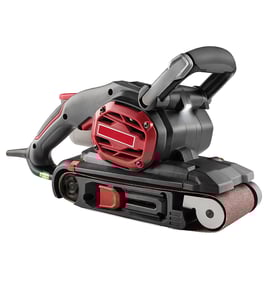
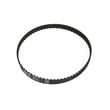

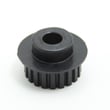
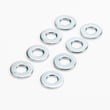

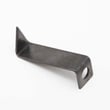
What are the parts of a sander?
On the Craftsman belt and disc sander model 113226424, the main parts include the sanding belt and disc, work supports (table and backstop), drive components (shafts and pulleys), bearings, guards, and the motor and switch. For the exact component names and diagrams, use the 113226424 owner's manual.
These are the assemblies and components most owners interact with during setup, use, and basic maintenance:
- Sanding belt and sanding disc (the abrasive surfaces)
- Worktable and table tilt hardware (supports the workpiece)
- Backstop (supports end sanding on the belt)
- Sanding plate and guard (helps prevent contact and entanglement)
- Drive and tracking parts (drive shaft, drive pulley, idler pulley, belt tension spring)
- Bearings and bearing supports (keep shafts aligned and running smoothly)
- Motor, power cord, switch, and switch key (power and safety control)
| Part or assembly | What it does | When it usually needs attention |
|---|---|---|
| Sanding belt / disc | Removes material and smooths wood | Worn, glazed, torn, or slipping |
| Worktable / backstop | Supports the workpiece for control | Loose, out of square, vibrating |
| Guards / sanding plate | Reduces exposure to moving parts | Missing, cracked, rubbing |
| Pulleys / shafts / tension parts | Drives and tracks the belt | Belt won’t track, squeals, slips |
| Bearings | Reduce friction at rotating points | Grinding noise, wobble, heat |
Knowing the part groups helps you troubleshoot faster. For example, tracking problems usually point to tension or pulley alignment, while vibration and squealing often point to bearings, loose mounting hardware, or a worn belt.
The manual’s safety guidance is especially important on a belt and disc sander:
- Turn the sander OFF and unplug it before installing or removing accessories
- Keep guards in place during operation
- Support the workpiece with the worktable or backstop (except certain curved work on the belt’s outer end)
- Replace any broken, bent, missing, or failed parts before using the sander again
- Sand wood or wood-like materials only
If you are ordering parts, match the model number 113226424 and the part description; you can also search by model on Sears PartsDirect.
Last updated: February 2026
How much does a power sander cost?
A power sander typically costs about $109, with common prices ranging from about $26 to $549 depending on the sander type (belt, disc, random-orbit), motor size, and whether it is a bench-top tool like the Craftsman 113226424 belt and disc sander. For model-specific setup and safe operation details, use the 113226424 owner's manual.
- Sander type: belt sanders and belt-and-disc sanders often cost more than basic palm sanders
- Motor and duty cycle: higher horsepower and heavier frames cost more
- Table and fence features: larger worktables, better angle adjustment, and sturdier backstops add cost
- Dust collection: built-in ports and better shrouding can increase price
- Condition: used or refurbished tools are usually cheaper than new
| Sander type | Typical use | Typical price range |
|---|---|---|
| Palm/finish sander | Light finishing | $25 to $80 |
| Random-orbit sander | General sanding, swirl reduction | $40 to $150 |
| Belt sander (handheld) | Fast stock removal | $60 to $250 |
| Belt-and-disc sander (bench) | Shaping, edge sanding, small parts | $100 to $550 |
This model is a belt and disc sander, so budgeting toward the bench-sander range is realistic. Also, safe setup affects value: the manual calls out keeping guards in place, supporting the workpiece with the worktable/backstop, and bolting the machine down if it tends to tip during sanding.
- Match the model number 113226424 when shopping for parts or accessories
- Use only recommended accessories and keep guards installed
- Unplug the sander before installing or removing accessories
- If you need to search beyond the model parts list, we recommend starting at Sears PartsDirect
Last updated: February 2026
Where can I buy Craftsman replacement parts?
You can buy replacement parts for your Craftsman belt and disc sander model 113226424 from the parts list for this model and by ordering with the exact model number, part number, and part description shown in the 113226424 owner's manual. For broader Craftsman parts searches by model, use Sears PartsDirect.
Use the model-specific parts list first; it helps you match the exact component name (for example, drive pulley, idler pulley, sanding belt, belt tension spring) to the correct part number.
- Find the model number plate on the back side of the base.
- Use the parts list to identify the part description and part number.
- Order by part number and description, not by the diagram key number.
- If you are replacing a wear item (belt, bearing, pulley), inspect nearby hardware (washers, screws) at the same time.
- Keep your old part until the replacement arrives so you can compare fit and mounting.
The manual calls out the exact details that prevent wrong-part orders.
| What to provide | Example for this tool | Why it matters |
|---|---|---|
| Model number | 113226424 | Ensures the correct parts list |
| Part number | From the parts list | Identifies the exact replacement |
| Part description | Example: drive shaft, sanding belt | Confirms function and fit |
| Item name | Belt and disc sander | Helps avoid mix-ups with other Craftsman tools |
Craftsman sanders often have similar-looking pulleys, shafts, and bearings across models. Using the 113226424 parts list reduces returns and downtime, and it helps ensure proper belt tracking, tension, and safe operation after the repair.
Last updated: February 2026
What is a belt and disk sander?
A belt and disc sander is a single machine that combines a sanding belt and a sanding disc, so we can sand flat faces, edges, and curves using the best surface for the job. The Craftsman model 113226424 is designed for sanding wood or wood-like materials; see the 113226424 owner's manual for setup and safe operation details.
- Belt sander section: best for longer edges, flattening, and shaping; you can also sand some curves at the outer end of the belt.
- Disc sander section: best for end-grain, squaring edges, and controlled angle sanding using the worktable.
- Worktable/backstop support: helps keep the workpiece stable and your hands positioned safely.
- Feed the work against the direction of rotation of the belt or disc.
- Keep guards in place; do not operate with the sanding plate or guard removed.
- Support the workpiece with the worktable or backstop (except certain curved work at the belt’s outer end).
- Turn the sander OFF and unplug it before changing accessories or doing setup.
- Bolt down or clamp the sander if it can tip, walk, or move during sanding.
| Setup | Best for | What to watch for |
|---|---|---|
| Bolt to a workbench | Permanent shop location | Use a firm surface; prevent tipping during long-board sanding |
| Mount to a board and clamp | Semi-portable use | Countersink fasteners so the board sits flat |
| Clamp the base directly | Quick temporary setup | Use two or more C-clamps, one on each end |
Using the belt side versus the disc side changes how the abrasive contacts the wood, how much control you have at the table, and how safely you can support the work. A stable, properly mounted sander also reduces chatter and helps prevent the tool from moving during use.
For replacement parts and diagrams for Craftsman 113226424, start with the parts list for this model, or search by model number on Sears PartsDirect.
Last updated: February 2026