Installation guide
 Owner’s manual
 Error Codes


How to identify a Kenmore washer model?
To identify your Kenmore washer model, find the model/serial tag on the washer cabinet. On Kenmore model 11028103310, it’s commonly on the back of the control panel, on the top area, or on the cabinet side near the bottom; check your 11028103310 owner’s manual for the exact label location.
Where to look on the washer
Check these common spots first (power off is fine, no disassembly needed):
- Back of the control panel or console area
- Along the top rim of the cabinet under the lid
- Left or right cabinet side near the bottom edge
- Rear panel of the washer cabinet
- Under the lid near the opening (around the tub ring area)
What the label looks like and what to write down
The tag is usually a printed sticker or metal plate with multiple lines.
- Model number (example: 11028103310)
- Serial number (unique to your washer)
- Electrical rating (volts/amps, sometimes listed)
- Manufacturing code/date (varies by series)
Quick checklist
| Item | Why we need it | Example format |
|---|---|---|
| Model number | Ensures parts fit your exact washer | 11028103310 |
| Serial number | Helps match production changes | Letters and numbers |
| Brand | Confirms product family | Kenmore |
Why it matters
Kenmore washers can look similar across multiple series, but parts like a lid lock, hub, or suspension kit can differ by model. Using the exact model number helps us match the correct diagrams and compatible parts the first time.
Last updated: February 2026
How many cubic feet is a Kenmore Model 11028103310 washer?
The Kenmore washer model 11028103310 is typically about 3.2 cubic feet of capacity for this Kenmore 110-series top-load platform. For the most accurate capacity and basket details tied to your exact configuration, check the 11028103310 owner's manual.
How to confirm capacity on your exact washer
We recommend verifying capacity using the model-specific literature because “110” models can vary by series and year.
- Look for “capacity” or “basket volume” in the specifications section
- Check the model tag to confirm the full model number is 11028103310
- Compare cycle options and tub style shown in the manual to your control panel
- If your washer is in a tight install, use the 11028103310 installation guide for placement and setup requirements
What 3.2 cu. ft. means in real-world loads
A 3.2 cu. ft. top-load washer is commonly sized for everyday family laundry.
| Load type | Typical fit | Notes |
|---|---|---|
| Bath towels | Medium | Avoid packing; distribute evenly |
| Jeans | Small to medium | Heavy items can unbalance easily |
| Bedding | Medium | Bulky loads may need a “bulky” cycle if available |
Why it matters
Capacity affects cleaning performance, water use, and spin balance. Overloading can lead to poor agitation, out-of-balance spinning, and extra wear on suspension and drive components.
Last updated: February 2026
Is it worth repairing a Kenmore washing machine?
Yes, repairing a Kenmore washer is worth it when the fix restores reliable washing for less than replacing the machine, especially on a proven model like Kenmore 11028103310. The best value comes from diagnosing the failure first, then deciding based on the repair type and total cost.
How we decide if repair makes sense
Use these practical checkpoints before buying a new washer:
- Repair cost vs. replacement cost: If the repair is clearly cheaper and solves the root cause, repair wins.
- Type of failure: Wear items and common service parts are usually good repair candidates.
- Washer condition: Rusted cabinet, severe tub damage, or repeated breakdowns push toward replacement.
- Symptoms: No-drain, no-spin, lid not locking, or out-of-balance issues are often repairable.
- Downtime and effort: Some repairs are quick; others require major teardown.
Common repairs on model 11028103310 that are often worth it
These are frequent, fixable issues on top-load washers like this one:
| Symptom | Likely area | Example part for this model |
|---|---|---|
| Won’t start or won’t spin | Lid lock system | Washer lid lock WPW10619844 |
| Won’t drain or leaves water | Drain pump or blockage | Washer drain pump WPW10409079 |
| Loud roar or grinding in spin | Bearing/shaft wear | (Often a major repair) |
| Shakes or bangs excessively | Suspension support | Suspension W10247710 |
What to check before you spend money
We recommend doing these quick checks first because they can prevent an unnecessary parts purchase:
- Confirm the washer is level and the load is not overloaded.
- Check for standing water and listen for the pump during drain.
- Verify the lid closes firmly and the lock engages (many cycles will not spin if it does not).
- Look for error codes and follow the reset steps in the 11028103310 owner’s manual.
- If you see an F-type system error, follow the manual’s guidance to clear and restart; repeated codes point to a service-level issue.
Why it matters
A targeted repair (lid lock, drain pump, suspension) can restore safe operation and extend the washer’s life at a fraction of replacement cost. A correct diagnosis also prevents replacing good parts and helps you choose the right repair path.
Last updated: February 2026
What is the average lifespan of a Kenmore washer?
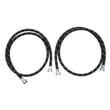
A Kenmore washer typically lasts 10 to 15 years with normal household use. For your Kenmore model 11028103310, consistent maintenance (especially using HE detergent correctly and replacing wear items like inlet hoses on schedule) is what most directly determines whether you land closer to 10 years or 15.
Typical lifespan and what changes it
Most washers reach the end of their service life due to wear in moving/draining components, not because the cabinet “wears out.” The biggest lifespan drivers are:
- Load size and frequency (daily heavy loads shorten life)
- Detergent habits (too much detergent leaves residue and can cause odor and buildup)
- Water quality (hard water increases scale and residue)
- Vibration and out-of-level installation (stresses suspension and bearings)
- Preventive maintenance (hoses, cleaning, and prompt repairs)
Maintenance schedule we recommend for model 11028103310
Your manual calls out specific care items that help extend washer life. Use this as a simple checklist from the 11028103310 owner's manual.
| Item | What to do | When |
|---|---|---|
| Water inlet hoses | Inspect for bulges, kinks, cuts, wear, leaks | Every few months |
| Water inlet hoses | Replace to reduce risk of hose failure | Every 5 years |
| Detergent use | Use HE detergent; do not exceed label amounts | Every load |
| Lid behavior | Avoid leaving lid open too long during a filled cycle (unit may pump out after 10 minutes) | As needed |
Signs it is near end-of-life (or needs a major repair)
These symptoms often point to higher-cost repairs (drive system, bearings, tub, or controls):
- Loud roaring/grinding during spin (bearing or drive shaft wear)
- Persistent out-of-balance shaking even after leveling (suspension wear)
- Repeated draining problems or water left in tub (pump or drain path issues)
- Lid will not lock or cycle will not start (lid lock issue)
- Frequent error codes that return after resetting
If you are troubleshooting a no-start or lid-lock symptom, the washer lid lock WPW10619844 is a common wear part on this platform.
Why it matters
A washer that is maintained and repaired early usually reaches the full 10 to 15 year lifespan; ignoring vibration, residue buildup, or hose deterioration often turns a small fix into a major repair.
Last updated: February 2026