Installation guide
 Owner’s manual


Is it worth repairing a Kenmore dishwasher?
Yes, repairing a Kenmore undercounter dishwasher like model 66513039K113 is worth it when the problem is isolated (drain, fill, heat, or a rack issue) and the tub is sound; a targeted repair often restores performance for far less than replacement.
Quick way to decide
Use this checklist to make a clear repair vs. replace call:
- Repair if the dishwasher still fills and washes but has one main symptom (not draining, not drying, leaking at a hose, poor spray).
- Repair if the fix is a common wear part (pump, valve, heating element, filter, hose).
- Replace if the tub is cracked or the unit has repeated major failures (multiple expensive parts in a short time).
- Replace if you have persistent electrical/control issues plus other symptoms.
- Repair if you want to avoid the time and cost of uninstalling and reinstalling an undercounter unit.
Common repairs that are usually cost-effective
These are frequent, straightforward fixes on many Kenmore dishwashers, including 66513039K113:
| Symptom | Likely area to check | Example part for this model |
|---|---|---|
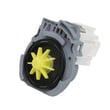
| Won’t drain or leaves water | Drain path, drain pump, drain hose routing | Dishwasher drain pump WPW10348269 |
| Dishes not drying well | Rinse aid use, heating circuit | Dishwasher heating element W10518394 |
| Poor cleaning, weak spray | Spray arm clogs, filter buildup | Dishwasher spray arm WPW10491331 |
| Won’t fill or fills slowly | Water supply, inlet valve, inlet screen | Dishwasher water inlet valve WPW10327249 |
Before you spend money on parts
We recommend doing these quick checks first because they can prevent an unnecessary repair:
- Confirm the door is closed and latched.
- Check the circuit breaker/fuse.
- Make sure the cycle is set correctly, then press Start and close the door promptly.
- Verify the water supply valve is turned on.
- Run a short cycle and check for water in the bottom of the tub after a couple minutes (a basic “is it filling?” test).
(These steps align with the “If Dishwasher Does Not Operate” and “Check Operation” guidance in the installation guide.)
Why it matters
A dishwasher that is not draining, not heating, or not filling often looks “dead,” but it is frequently a single-part failure. Fixing the root cause can bring back cleaning and drying performance while avoiding the disruption of replacing an undercounter dishwasher.
Last updated: February 2026
Where to find model number on a Kenmore dishwasher?
On Kenmore undercounter dishwashers like model 66513039K113, the model number is printed on the rating label located just inside the door opening, typically along the left-hand side. The same label usually lists the serial number as well.
Where to look (quick checklist)
- Open the dishwasher door fully.
- Look along the inner edge of the tub opening (not the outer decorative door panel).
- Check the left-hand side first.
- Wipe the area with a damp cloth; soap film can hide the print.
- Use a flashlight and view from an angle if the label looks faded.
What the label helps you do
Finding the exact model number ensures you get the right Kenmore dishwasher parts and instructions for your specific build.
| Label item | What it’s used for |
|---|---|
| Model number | Matching parts (pump, heating element, racks) and diagrams |
| Serial number | Identifying production run for service and documentation |
Why it matters
Kenmore dishwashers often have similar-looking doors and consoles across multiple model series. Using the exact model number (for example, 66513039K113) prevents ordering the wrong items such as a dishwasher heating element W10518394 or dishwasher drain pump WPW10348269.
Tip for repairs and installation
Once you have the model number, use it to follow the correct steps and safety guidance in the installation guide, especially for leveling, securing the dishwasher to the cabinet or countertop, and checking door clearance.
Last updated: February 2026
Why is water standing in the bottom of my Kenmore dishwasher?
Water standing in the bottom of your Kenmore 66513039K113 dishwasher usually means the unit is not draining fully because of a restriction (filter, hose, air gap/disposer connection) or a drain component problem (pump). We start with cleaning and hose checks, then move to drain-pump diagnosis.
Quick checks that fix most standing-water problems
- Cancel the cycle and run a drain (or start a short cycle, then cancel to force a drain).
- Remove and clean the filter area in the sump; clear labels, glass, and food debris.
- Check the sink drain connection: make sure the disposer inlet plug was removed (new disposer installs are a common cause).
- Inspect the drain hose for kinks, crushing, or a low spot that traps water.
- Verify the drain hose routing has a high loop or is connected to an air gap (prevents backflow).
Parts to suspect on model 66513039K113
If the filter and hose are clear but water still remains, these parts are common culprits:
| Symptom | Most likely cause | Part to check on this model |
|---|---|---|
| Hums but does not drain | Jammed or failed drain pump | Dishwasher drain pump WPW10348269 |
| Drains slowly, then stops | Partial blockage or collapsing hose | Dishwasher drain hose 8269144A |
| Won’t fill correctly and can leave dirty water behind | Low incoming water flow | Dishwasher water inlet valve WPW10327249 |
Why it matters
Standing water can cause odors, redeposit soil on dishes, and lead to leaks if the dishwasher overfills on the next cycle. Restoring proper drain flow protects the pump, sump, and tub seals.
What the installation guide check tells you
During the operation check, it is normal to see water in the bottom of the tub shortly after starting a cycle. The key is whether the dishwasher drains at the end of the cycle. Use the steps in the installation guide to confirm basic operation and then focus on the drain path if water remains after draining.
Last updated: February 2026
Does a Kenmore dishwasher model 66513039K113 have a filter?
Yes. Your Kenmore 66513039K113 dishwasher uses a filter system in the bottom of the tub to help keep food soil from recirculating during the wash. On many dishwashers in this design family, the filter area is meant to be cleaned in place rather than removed; use the cleaning steps below and confirm the exact layout in the owner's manual.
Where the filter is (and what it does)
The filter area is in the tub floor, typically near the center and below the lower spray arm. It helps protect the circulation pump and spray arms by trapping larger debris.
Common signs the filter area needs cleaning:
- Grit or food particles left on dishes
- Cloudy glasses even with rinse aid
- Poor spray pressure or a “lazy” spray arm
- Standing water or slow draining
- Odors after a cycle
How we recommend cleaning the filter area
- Turn off power to the dishwasher at the breaker.
- Remove the lower rack.
- Lift off the lower spray arm if your model allows it.
- Use a soft brush and hot water to scrub the mesh/sump screen area.
- Remove any debris around the sump opening.
- Reinstall parts and run a short cycle to verify normal wash action.
Parts that are often involved when “filter” symptoms show up
If cleaning the filter area does not restore performance, these parts commonly affect wash and drain results:
| Symptom | Most likely area | Example part for this model |
|---|---|---|
| Dishes not getting clean | Spray and circulation | Dishwasher spray arm WPW10491331 |
| Water not draining well | Drain system | Dishwasher drain pump WPW10348269 |
| Odors, debris recirculation | Filtration/sump area | Dishwasher filter WPW10463906 |
Why it matters
A clogged filter area restricts water flow. That reduces spray pressure, increases redepositing of soil, and can strain the pump and motor assembly over time.
Last updated: February 2026