 Installation guide
 Owner’s manual
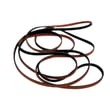


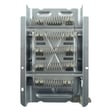
Can I replace a dryer heating element myself?
Yes, on the Admiral AED4675YQ0 electric dryer, many homeowners can replace a heating element themselves if they are comfortable working around 240V wiring and can follow step-by-step disassembly and reassembly. Always disconnect power first and verify the venting system is clear so the new part does not overheat.
Before you start (safety and prep)
- Unplug the dryer (or switch off the breaker) and confirm power is off.
- Let the dryer cool completely.
- Take photos of every wire connection before removing anything.
- Work with the dryer pulled out far enough to avoid crushing the vent.
- Use a magnetic tray or labeled bags for screws.
For electrical connection and venting requirements that affect heating performance, follow the AED4675YQ0 installation instructions.
What the DIY job usually involves
Most electric dryers like the AED4675YQ0 require access to the heater housing from the rear or front (varies by design). In general, you will:
- Remove the access panel(s)
- Locate the heater housing and attached thermostats
- Disconnect wires (label them) and remove mounting screws
- Swap the heater assembly or element, then reinstall sensors as needed
- Reassemble panels and restore power
If you find heat-damaged terminals or brittle wiring while you are in the heater area, replacing the harness can prevent repeat failures; see dryer heating element wire kit 279457.
Quick decision guide: DIY vs. service
| If you have this | DIY is usually OK | Consider a technician |
|---|---|---|
| Basic hand tools and patience | Yes | |
| Comfort identifying wires and terminals | Yes | |
| Burnt wiring, melted connectors, or repeated no-heat issues | Yes | |
| Unsure about 240V safety practices | Yes |
Why it matters
A failed heating element is often caused or accelerated by restricted airflow. Fixing the element without correcting vent restrictions can lead to overheating, blown thermal protection devices, longer dry times, and another no-heat problem.
If your dryer is heating but takes too long, our dryer takes a long time to dry guide can help you check airflow, lint buildup, and vent routing.
Last updated: January 2026
What are common dryer part failures?
On the Admiral AED4675YQ0 electric dryer, the most common part failures we see are heat-safety parts (thermal fuse and thermostats) and drive parts (belt and motor). Many of these failures are triggered or accelerated by restricted airflow from lint buildup or a crushed vent; see the AED4675YQ0 installation guide for venting requirements.
Most common failures and what they look like
- No heat or weak heat: thermal fuse, high-limit thermostat, operating thermostat, heater circuit wiring
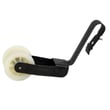
- Drum will not turn: belt, idler pulley, drive motor
- Stops mid-cycle: overheating protection opening (often airflow-related), motor overheating
- Loud squeal, thump, or rumble: drum support wear items (rollers, bearing surfaces), blower wheel issues
- Will not start: door switch, push-to-start switch, motor, power supply issues
Parts that commonly fail on AED4675YQ0
These are model-compatible examples from our parts list:
- Dryer thermal fuse WP3392519
- Belt 341241
- Dryer operating thermostat WP3387134
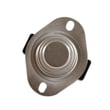
- Dryer high-limit thermostat WP3977767
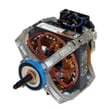
- Drive motor 279827
Quick symptom-to-part guide
| Symptom | Most likely area | First checks we recommend |
|---|---|---|
| Runs but no heat | Heating and safety circuit | Clean venting, then test thermal fuse and thermostats |
| Hums but will not start | Motor or drum stuck | Try turning drum by hand; check belt and blower for binding |
| Runs then shuts off | Overheating | Verify strong airflow at outside vent hood; clean lint path |
| Clothes take too long to dry | Airflow restriction | Clean lint screen, lint chute, vent duct, and outside hood |
Why it matters
Most “failed parts” symptoms on an electric dryer are tied to airflow. When the vent system is restricted, the dryer runs hotter, which can open a thermal fuse or high-limit thermostat and also shorten the life of the motor and belt.
Last updated: January 2026
Why is my admiral dryer not drying?
If our Admiral electric dryer AED4675YQ0 runs but clothes stay damp, the most common causes are restricted airflow (lint screen, lint chute, venting) or a no-heat condition. On this model, the installation instructions emphasize proper 4-inch metal venting to maintain drying performance.
Quick checks we recommend first
- Clean the lint screen thoroughly; rinse off any fabric-softener film and let it dry.
- Check airflow at the outside vent hood; it should be strong and steady.
- Inspect the vent for crushing, kinks, or excessive length and elbows.
- Run Timed Dry on high heat for 5 minutes; confirm the drum air is heating.
- Avoid overloading; tightly packed loads block airflow through the drum.
Model-specific venting guidance for AED4675YQ0
Your AED4675YQ0 is designed to vent outdoors using a 4-inch (102 mm) heavy metal exhaust vent. The installation instructions also warn against plastic or foil venting and note that long, restrictive vent runs reduce performance.
Use the venting section in the AED4675YQ0 installation guide to match your setup to the recommended vent length and elbow limits.
Venting choices that affect drying
| Vent condition | What you may notice | What to do |
|---|---|---|
| Long run or too many 90° turns | Long dry times | Shorten run, reduce turns |
| Crushed or kinked duct | Dryer feels hot but dries poorly | Re-route and support duct |
| Lint-clogged duct or hood | Weak airflow outside | Clean duct and hood |
If the dryer tumbles but does not heat
If airflow is good but there is little or no heat, a heat-circuit safety device may have opened or a temperature control part may have failed.
Parts we commonly see involved on AED4675YQ0 include:
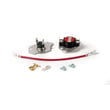
- Dryer thermal cut-off fuse kit 279816 (thermal cut-off kit used in the heater safety circuit)
- Dryer operating thermostat WP3387134 (regulates normal operating temperature)
- Dryer high-limit thermostat WP3977767 (backup overheat protection)
For step-by-step help, use how to replace a thermal fuse in an electric dryer.
Why it matters
Airflow problems are the number one cause of long dry times; they also make the dryer run hotter, which can trip safety cut-offs and lead to repeat no-heat problems.
Last updated: January 2026








