Owner’s manual
 Error Codes


How many cubic feet is a Kenmore Model 11027822790 washer?
The Kenmore washer model 11027822790 is labeled “Super Capacity Plus” in the 11027822790 owner's manual, which indicates a large-capacity top-load design. For Kenmore 110-series Super Capacity Plus washers, capacity is typically about 3.2 to 3.5 cubic feet.
“Super Capacity Plus” is Kenmore’s way of identifying a larger tub and basket compared to standard-capacity top-load washers.
Typical capacity ranges you will see:
- Standard capacity: about 2.5 to 3.1 cu. ft.
- Super capacity / Super Capacity Plus: about 3.2 to 3.5 cu. ft.
- Extra-large top load (newer styles): about 3.6 to 4.5+ cu. ft.
Because capacity can vary by production run and basket design, we recommend confirming using model-specific documentation and measurements.
Use these checks:
- Look in the 11027822790 owner's manual for a listed “capacity” or “basket volume” spec.
- Check the model and serial tag (commonly under the lid) and match it to the correct literature.
- If you are comparing to another washer, compare basket diameter and depth, not just “Super Capacity” wording.
| Label on washer/manual | What it usually indicates | Typical cu. ft. range |
|---|---|---|
| Standard capacity | Smaller basket | 2.5 to 3.1 |
| Super Capacity Plus | Larger basket (like 11027822790) | 3.2 to 3.5 |
| Extra-large / HE top load | Largest baskets, newer designs | 3.6 to 4.5+ |
Knowing cubic feet helps us choose the right cycle settings and load size, and it also helps when troubleshooting issues like out-of-balance spinning or poor cleaning due to overloading.
Last updated: February 2026
How to hard reset kenmore washer?
For Kenmore washer model 11027822790, a hard reset is a simple power reset: unplug the washer (or switch off the breaker) for 1 minute, then restore power and try a normal cycle. This clears minor control glitches and stuck cycle behavior.
- Press the timer knob in to stop the washer.
- Unplug the power cord (or turn the laundry breaker off).
- Wait 60 seconds.
- Plug back in (or turn the breaker on).
- Set a cycle using the push and turn clockwise timer knob, then pull to start.
- If the washer still acts up, run a short fill and drain to confirm basic operation.
A “reset” will not fix a failed safety switch, drain problem, or drive issue. Check these common causes next:
- Lid not closing or lid switch not clicking (common no-start symptom)
- Washer not draining (water left in tub)
- Coupler or clutch slipping (agitate or spin problems)
- Overloaded or badly unbalanced load
| Symptom | What to check first | Common related part |
|---|---|---|
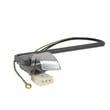
| Won’t start or stops when lid opens | Lid switch and lid strike alignment | Washer lid switch WP3949238 |
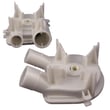
| Won’t drain or drains slowly | Pump, hose kinks, clogs | Washer drain pump WP3363394 |
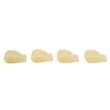
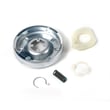
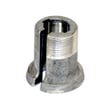
| Motor runs but won’t agitate/spin | Motor coupler | Coupling 285753A |
A hard reset clears temporary electrical logic issues, but it does not correct mechanical failures. If the washer consistently will not start, drain, or spin after a reset, checking the lid switch, drain pump, and drive components prevents repeat shutdowns and incomplete cycles.
For model-specific operating details (timer use, cycle selection, and normal control behavior), follow the 11027822790 owner's manual.
Last updated: February 2026
How to identify a Kenmore washer model?
Your Kenmore washer model number is printed on the model and serial number plate; on Kenmore model 11027822790, it’s typically located under the lid on the top panel area. Use that exact number when ordering replacement parts so the lid switch, drain pump, and other components match your washer.
Most Kenmore washers place the model tag in one of these spots:
- Top-load washers: under the lid, around the tub opening or on the underside of the top panel
- Front-load washers: inside the door opening, around the door frame
- All styles (sometimes): on the back panel near the power cord or control console
For the exact location and a diagram for your unit, check the 11027822790 owner's manual.
Kenmore model numbers often start with 110 (a common Kenmore prefix) and are usually 11 characters or more. Entering the full model number helps us match the correct part design and wiring style.
- Different lid switch styles can look similar but wire differently
- Drain pumps can have different hose port angles
- Agitator and drive parts can vary by series and capacity
- Control console graphics and timer knobs can differ
| Label | What it tells you | Used for parts lookup? |
|---|---|---|
| Model number | The exact washer design family | Yes |
| Serial number | Production run and build date info | Sometimes |
Use these practical options:
- Look for a faint imprint on the plate and take a photo with flash
- Check inside the console area if the top has been replaced
- Compare key parts (like the lid switch) to narrow the match; for example, the washer lid switch WP3949238 is a common safety interlock part used on many Kenmore 110 top-load designs
Using the correct Kenmore washer model number prevents wrong-part returns and helps ensure proper fit, safe operation, and correct cycle performance.
Last updated: February 2026
Is it worth repairing a Kenmore washing machine?
Yes, it’s usually worth repairing a Kenmore washer like model 11027822790 when the fix is a common wear item and the machine is otherwise in good shape. This washer is a traditional top-load design with a dual-action agitator and straightforward mechanical parts, so many repairs are cost-effective.
- Repair when the problem is isolated (no spin, no drain, won’t agitate) and the tub is not leaking
- Repair when the washer is mechanically solid and you just need a drive or switch part
- Replace when you have major leaks, severe rusted cabinet/tub, or repeated failures in multiple systems
- Replace when the repair requires multiple high-cost assemblies at once
These are frequent, fixable issues on direct-drive Kenmore top-load washers:
| Symptom | Often caused by | Example part for this model |
|---|---|---|
| Won’t spin or agitate | Worn motor coupling | Coupling 285753A |
| Won’t drain | Clogged or failed pump | Washer drain pump WP3363394 |
| Stops mid-cycle or won’t run with lid closed | Failed lid switch | Washer lid switch WP3949238 |
| Agitator moves poorly or “ratchets” | Worn agitator dogs/cam | Agitator dog 80040 |
A targeted repair restores safe operation and prevents secondary damage. For example, continuing to run a washer that won’t drain can strain the drain pump and leave water sitting in the basket, while a slipping drive system can reduce cleaning performance.
- Confirm the symptom (no drain vs. no spin vs. no agitation)
- Listen for the motor: hums, runs, or silent
- Look for water under the washer (leak points change the repair decision)
- Review cycle and control operation in the 11027822790 owner’s manual
Last updated: February 2026
What is the average lifespan of a Kenmore washer?
A Kenmore washer typically lasts 10 to 15 years. For the Kenmore 11027822790 top-load washer, staying within proper load size, using the right water level and temperature settings, and keeping the drive and drain systems in good shape helps you reach the longer end of that range (see the 11027822790 owner's manual).
Most washers wear out from mechanical and water-handling stress over time. These factors have the biggest impact:
- Overloading the basket and running frequent heavy-duty cycles
- Unbalanced loads that cause repeated vibration and strain
- Hard water and detergent buildup that accelerates wear
- Small leaks that go unnoticed and damage bearings or the gear case
- Ignoring early symptoms like slow drain, no spin, or intermittent stopping
On a classic Kenmore direct-drive style top-load washer like model 11027822790, these parts are frequent culprits when performance drops:
- Washer lid switch WP3949238 (won’t spin or drain if the lid switch fails)
- Washer drain pump WP3363394 (slow drain, no drain, or grinding noise)
- Coupling 285753A (motor runs but washer won’t agitate or spin)
- Clutch 285785 (weak spin, burning smell, or slow basket ramp-up)
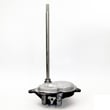
- Gear case 3360629 (oil leak, loud noise, agitation/spin problems)
Use this simple comparison to decide whether a repair is likely to extend life meaningfully.
| What you’re seeing | Most likely area | Typical outcome |
|---|---|---|
| Won’t spin but fills and agitates | Lid switch, clutch | Often a good repair |
| Won’t agitate or spin, motor runs | Motor coupling | Often a good repair |
| Loud roaring, leaking oil underneath | Gear case, bearings | Higher-cost repair |
| Slow or no drain | Drain pump, hose | Often a good repair |
A washer that is draining slowly, slipping in spin, or vibrating heavily usually uses more time and stress per load. Fixing the root cause early helps protect the basket drive, motor, and gear case, which are the components that most often determine whether the washer reaches 15 years.
Last updated: February 2026