Owner’s manual




How do I know what model my garage door opener is?
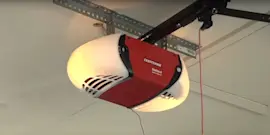
On a Craftsman garage door opener, the model number is typically printed on a label on the motor unit under a light lens. For your opener, the model shown in the documentation is 13953976SRT; confirm it by matching the label on the unit to the number in the 13953976SRT owner's manual.
Where to look on the opener (most common spots)
Check the motor unit (the power head mounted to the ceiling), not the door or the rail.
- Under the front light lens cover
- Under the left light lens cover (when you are facing the opener from inside the garage)
- On the side panel near the antenna wire (the antenna hangs down)
- On the back panel near the wiring terminals or adjustment dials
- On the same label that lists horsepower and electrical ratings
Quick checklist to confirm you have the right model
Use this to avoid mixing up similar Craftsman units.
| What to match | What you should see | Why it helps |
|---|---|---|
| Model number format | 139.53976SRT or 13953976SRT | Craftsman labels often include a dot after 139 |
| Product type | Garage door opener motor unit label | The rail and door hardware rarely show the full model |
| Features mentioned | Security+ and safety reversing sensors | Confirms you are reading the opener label, not a remote label |
Why it matters
We use the exact model number to pull the correct parts diagrams, wiring details, and programming steps (for example, using the Learn button for Security+ remotes). It also helps when troubleshooting issues like blinking lights or sensor alignment.
If you are troubleshooting at the same time
If the opener is flashing lights or showing a diagnostic pattern, use our model-appropriate troubleshooting content:
Last updated: February 2026
How to find out garage door opener type?
To find out what type of garage door opener you have (and what it’s set up for), we identify the door style it’s installed on (sectional vs one-piece) and the opener’s key features like the safety reversing sensors and wall control. For Craftsman model 13953976SRT, the owner's manual shows exactly what to look for.
Quick ways to identify your opener type
Use these checks on your Craftsman 13953976SRT garage door opener:
- Look at the door style: sectional door (multiple hinged panels) vs one-piece door (single solid panel).
- Confirm you have photo eyes: a pair of safety reversing sensors near the bottom of the door track (one sending eye, one receiving eye).
- Check the drive system: look for a chain running along the rail (common on this style of Craftsman opener).
- Identify the controls: wall-mounted door control (control console) and handheld remote(s).
- Note special features: items like Security+ and a keyless entry keypad may be included depending on the package.
What “type” usually means (and why it matters)
“Type” can refer to different things. Here’s how we break it down:
| What you’re trying to identify | What to look for | Why it matters |
|---|---|---|
| Door type | Sectional vs one-piece | Affects bracket placement, rail height, and setup steps |
| Drive type | Chain along the rail (vs belt or screw) | Helps match repair procedures and common wear parts |
| Safety system | Photo eyes (sending and receiving sensors) | Door will not close safely if sensors are misaligned |
| Control system | Wall control, remote style, keypad | Impacts programming and troubleshooting steps |
Where to confirm it in the documentation
In the owner's manual, we use the Planning section to identify the type and height of your garage door, and the Carton inventory section to match major components (rail, trolley, chain, sensors, control console).
Related troubleshooting help
If you’re trying to identify the opener type because it’s flashing lights or acting up, use Craftsman error codes to match the symptom to the most likely cause.
Why it matters
Correctly identifying the door type and opener features prevents installation mistakes (like incorrect header bracket positioning) and speeds up troubleshooting for issues like a door that will not close due to sensor problems.
Last updated: February 2026
What are the common problems with Craftsman garage door openers?
Common problems on a Craftsman garage door opener like model 13953976SRT include the door reversing unexpectedly, incomplete opening, lights not working correctly, the motor humming but not running, and remote or wall control issues. Many of these are caused by sensor alignment, force or travel limit settings, or door balance problems.
Most common symptoms and what they usually mean
- Door reverses and the opener light blinks: safety reversing sensors are blocked or misaligned.
- Door will not open completely: travel limits or up-force need adjustment, or the door is binding.
- Door runs by itself: a stuck remote button, a faulty wall control, or a short in the control wiring.
- Motor hums briefly then stops: door lock engaged, broken door springs, or drive system timing/phase issues.
- Opener lights do not turn on or do not turn off: bulb issue (75W max) or the Light feature is enabled.
Quick checks we recommend before adjusting anything
- Look at the safety sensors: remove obstructions and confirm both sensor LEDs indicate proper alignment.
- Test the door balance: pull the emergency release and move the door by hand; a balanced door should stay at mid-travel.
- Check controls: make sure remote buttons are not stuck; inspect the wall control wiring for pinches or staples through the insulation.
- Confirm the door is not locked: disable any manual lock before running the opener.
- Reprogram if needed: clear the opener memory and reprogram remotes when behavior is erratic.
Common problem to fix mapping
| Problem you see | Most likely cause | Best next step |
|---|---|---|
| Reverses for no reason | Sensor blocked/misaligned | Align sensors; clear obstruction |
| Stops short of fully open | Limits/force out of adjustment | Adjust travel limits, then force |
| Runs by itself | Wall control or wiring short | Isolate wall control; inspect wiring |
| Hums then won’t move | Door lock/springs/drive issue | Unlock door; check door movement by hand |
Why it matters
Force and travel limit settings protect people and property. If the door is out of balance or springs are broken, increasing force can make the system unsafe and can damage the opener.
Helpful model-specific resources
- Use the troubleshooting and adjustment steps in the 13953976SRT owner's manual.
- If your unit displays diagnostic flashes or codes, use our Craftsman error codes reference to narrow the cause faster.
Last updated: February 2026
How to find a compatible garage door opener?
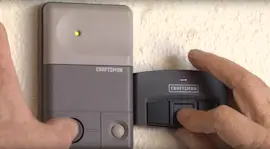
For a compatible opener accessory (remote, keypad, wall control, or smart controller) for your Craftsman 13953976SRT, match the accessory to the opener’s radio system and programming method. This model uses Security+ rolling-code technology and programs accessories using the motor unit’s Learn button, as shown in the 13953976SRT owner's manual.
What to match for compatibility
Use the opener’s motor-unit label and the programming section in the manual to confirm what you need.
- Brand and model: Craftsman 13953976SRT
- Technology: Security+ rolling code (not dip switches)
- Programming method: Learn button pairing (30-second learn window)
- Accessory type: remote, keyless entry keypad, wall control console, or universal remote
- Door safety system: safety reversing sensors must be installed and aligned for normal operation
Quick compatibility checklist (what we look for)
If you are replacing or adding a control, these checks prevent buying the wrong type.
| What you’re adding | Must be compatible with | What to verify on the opener |
|---|---|---|
| Handheld remote | Security+ receiver | Learn button programming steps in the manual |
| Keyless entry keypad | Security+ keyless entry system | “Programming” section and accessory type |
| Wall control console | Compatible wall control wiring and logic | Wall control type and wiring terminals |
| Universal remote | Supported brand/rolling-code system | Universal remote instructions for Security+ |
How to confirm your opener is the right “type”
The 13953976SRT is designed to work with Security+ remotes and a Security+ keyless entry system. In the manual, we also note the opener can operate with multiple Security+ remotes (up to eight) and one keyless entry system.
Typical signs you have the right match
- The opener and remote pair using the Learn button (not a bank of dip switches)
- The opener light blinks (or you hear clicks) to confirm it learned the code
- The remote operates the door consistently from normal range after programming
Why it matters
Compatibility is not just “will it fit”; it is whether the accessory can communicate with the opener’s receiver and rolling-code system. A mismatched remote or keypad will not program, even with new batteries.
Last updated: February 2026
Is it worth repairing a 20 year old garage door opener?
For a 20-year-old garage door opener, repair is usually not worth it; most openers have a typical lifespan of 10 to 15 years, and age-related wear plus outdated safety and security features often make replacement the better long-term choice. If your Craftsman 13953976SRT only needs a small, low-cost fix and the door is properly balanced, a repair can buy time.
When repair still makes sense
Repair is a good short-term decision when the opener is otherwise reliable and the issue is clearly minor.
- The door is properly balanced and lubricated (the opener is not fighting the door)
- The problem is adjustment-related (travel limits or force settings)
- The opener still runs smoothly with no grinding, slipping, or intermittent operation
- You can complete the required monthly safety reversal test successfully
- You only need basic maintenance (tightening hardware, cleaning photo eyes, re-aligning sensors)
For model-specific adjustment and safety checks, follow the steps in the 13953976SRT owner's manual.
Signs replacement is the better investment
If any of these are true, replacement typically saves money and frustration over the next few years.
- The opener fails the safety reversal system test (door must reverse on a 1-inch object or a 2x4 laid flat)
- You have repeated issues with force or limit settings drifting
- The unit struggles because the door is not balanced (springs or hardware need service)
- You want modern upgrades (quieter operation, better remote security, smart features)
- Major internal wear is present (common on older chain-drive units)
Safety and adjustment checks to do before deciding
These checks help you separate a simple adjustment from a bigger reliability problem.
| Check | What “good” looks like | What it points to if it fails |
|---|---|---|
| Safety reversal test | Door reverses on a 1-inch object/2x4 | Force/limit misadjustment or sensor issue |
| Door balance | Door stays near mid-travel when released | Springs/hardware need professional service |
| Travel limits | Door fully closes without slamming | Limit adjustment needed |
| Force setting | Door stops and reverses when obstructed | Force too high (unsafe) |
If you’re seeing blinking lights or diagnostic behavior, use Craftsman error codes to narrow down the failure faster.
Why it matters
Older openers can still run, but the biggest deciding factor is safe, consistent reversing and a properly balanced door. The manual specifically calls out that an improperly balanced door may not reverse when required, and that the safety reversal system must be tested regularly.
Last updated: February 2026