Error Codes



How do you put the bottom grill on a GE refrigerator?
On the GE GWE23GYNBFS bottom-mount refrigerator, the bottom grill (base grille) typically installs by aligning it with the lower front frame, snapping or sliding it into the retaining tabs, then reinstalling any screws that secure it. This restores airflow and protects the condenser area.
Before you start
- Unplug the refrigerator or switch off power at the breaker (safer around wiring and fans).
- Pull the refrigerator forward a few inches for access.
- Locate the mounting points: tabs/clips along the frame and any screw holes.
- If the grill was removed due to door alignment or service, confirm nothing is pinched behind it.
How to reinstall the bottom grill
- Position the grill: Hold it level and centered across the lower front opening.
- Engage the tabs first: Line up the grill’s slots with the frame tabs, then push inward until it seats.
- Slide if designed to slide: Some GE base grilles need a slight left/right slide after engaging tabs to lock.
- Reinstall screws (if used): Tighten screws snugly with a Phillips screwdriver; do not overtighten.
- Verify fit: The grill should sit flush with no gaps and should not rattle when you tap it.
Quick checks if it will not snap in
- Wrong orientation: Flip the grill and try again; many only fit one way.
- Bent tabs or cracked clips: Inspect the frame tabs and the grill’s locking points.
- Obstruction: Make sure the toe-kick area is not blocked by insulation, wiring, or a water line.
- Door interference: If doors rub after reinstall, recheck leveling and alignment.
Why it matters
The bottom grill helps direct airflow across the condenser area and keeps dust and debris away from components. A loose or missing grill can contribute to poor cooling performance and extra noise.
Common symptoms and what they suggest
| Symptom | What it often means | What to do next |
|---|---|---|
| Grill will not sit flush | Tabs not engaged or obstruction | Re-seat tabs, clear obstruction |
| Rattling at the bottom | Loose screws or broken clip | Tighten screws, replace grill if damaged |
| Warm temps after service | Airflow path disrupted | Confirm grill is fully installed |
If you are also working around the center door mullion area, follow our guide on how to remove a GE french door refrigerator flipper mullion.
Last updated: January 2026
What is the average lifespan of GWE23GYNBFS?
A GE bottom-mount refrigerator like model GWE23GYNBFS typically lasts 13 years with normal household use. Keeping airflow clear, cleaning the condenser area, and fixing cooling or defrost issues early helps you reach that lifespan and avoid food-spoilage breakdowns.
What affects lifespan most
- Condenser cleanliness and airflow (dust buildup makes the compressor work harder)
- Door seal and door alignment (warm air leaks increase run time)
- Defrost system health (ice buildup restricts airflow and stresses fans)
- Fan performance (weak evaporator or fresh food fan causes temperature swings)
- Water filter maintenance (restricted flow can affect dispenser and ice maker performance)
Quick maintenance schedule (simple and effective)
| Task | How often | Why it helps |
|---|---|---|
| Replace water filter | Every 6 months | Maintains water flow and taste |
| Vacuum dust from grille and condenser area | Every 6 to 12 months | Reduces compressor run time |
| Check door closing and gaskets | Monthly | Prevents warm air leaks |
| Confirm temps | Monthly | Keeps fresh food near 37°F and freezer near 0°F |
Parts that commonly extend service life when replaced promptly
If you notice warm temperatures, heavy frost, or unusual fan noise, these model-matched parts are often involved:
- Refrigerator temperature sensor WR55X10025 (helps the control board regulate cooling)
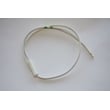
- Refrigerator defrost heater WR51X10131 (melts frost off the evaporator)
- Refrigerator defrost bi-metal thermostat WR50X10108 (protects and controls defrost heating)
- Refrigerator evaporator fan motor and blade WR60X10352 (moves cold air through the freezer and into the fresh-food section)
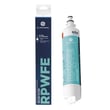
- GE refrigerator water filter RPWFE (supports dispenser and ice maker water flow)
Why it matters
A refrigerator that runs longer than it should (from dirty coils, air leaks, or defrost problems) wears out major components faster. Staying ahead of airflow and temperature-control issues is the most reliable way to get the full expected life from GWE23GYNBFS.
Last updated: March 2026
What is the most common problem with GE profile refrigerators?
The most common issue we see with GE Profile refrigerators like model GWE23GYNBFS is cooling trouble (fresh food or freezer not staying at the set temperature). It is often tied to airflow, frost buildup, or a failed sensor or fan rather than the sealed system.
Most common symptoms (and what they usually point to)
- Warm fresh food section: restricted airflow, fan issue, or temperature sensing problem
- Freezer cold but fridge warm: evaporator frost buildup or air duct blockage
- Clicking, buzzing, or rattling: fan blade hitting ice, failing fan motor, or loose panels
- Water under the refrigerator: defrost drain issue or water line/dispenser leak
- Ice maker or dispenser problems: filter restriction, air in the line, or dispenser mechanism issue
Quick checks we recommend first
- Confirm vents are not blocked by food packages (especially in the fresh food section).
- Set temperatures to typical targets: 37°F fresh food, 0°F freezer.
- Listen for the evaporator fan running when the doors are closed.
- Check for heavy frost on the rear freezer panel (a classic defrost airflow problem).
- If water flow is slow, replace the filter and purge the dispenser.
Parts that commonly relate to “not cooling” complaints
| Symptom | Common suspect | Example part for GWE23GYNBFS |
|---|---|---|
| Temps swing or read wrong | Temperature sensor | Refrigerator temperature sensor WR55X10025 |
| Warm fridge, noisy freezer | Evaporator fan motor | Refrigerator evaporator fan motor WR60X25858 |
| Frost buildup, warm temps | Defrost heater circuit | Refrigerator defrost heater WR51X10131 |
Why it matters
Cooling problems can spoil food quickly and can also cause secondary issues like ice buildup, fan noise, and water leaks. Catching airflow or defrost problems early often prevents more expensive repairs.
Helpful DIY guidance
- Use our GE refrigerator error codes guide if the display shows a code.
- If the door alarm is involved (doors not sealing or left ajar), follow how to reset the door alarm on a GE refrigerator.
Last updated: January 2026