Installation guide
 Owner’s manual
 Error Codes




What is the most common problem with Whirlpool washers?
The most common Whirlpool washer problem is a no-drain or no-spin condition. On the Whirlpool WTW4955HW0, this is often tied to drain restrictions (items from pockets, a clogged or kinked drain hose), excess suds from too much HE detergent, or a lid lock issue that prevents spinning. See the WTW4955HW0 owner's manual for the model’s troubleshooting checks.
What to check first (fast, no-parts steps)
- Confirm both hot and cold faucets are fully on and hoses are not kinked.
- Reduce suds: measure HE detergent carefully; run Rinse & Spin with no detergent if you see lots of suds.
- Check the drain hose setup: avoid pushing it too far into the standpipe (typical max insertion is about 4.5 inches) and keep the drain height within normal limits.
- Look for drain restrictions: remove coins, hairpins, and small items that can block the drain system.
- Rebalance the load: tightly packed or uneven loads can affect spin performance.
Common symptoms and the most likely causes
| Symptom | Most likely cause | What we recommend |
|---|---|---|
| Won’t drain, hums/gurgles | Partial blockage or pump struggling | Inspect drain hose and check for items from pockets; consider the washer drain pump W10919003 if the pump is noisy and not moving water |
| Won’t spin | Lid not locking, load out of balance, excess suds | Check lid closure and load size; if the lid won’t lock reliably, consider the washer lid lock W11307244 |
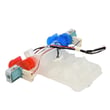
| Won’t fill or stops during fill | Water supply issue or clogged inlet screens | Verify both hoses are attached and screens are clear; if the valve is failing, consider the water inlet valve assembly W11210459 |
| Loud humming/whirring during sensing or spin changes | Normal sensing or basket deceleration | Compare sounds to the normal-operation notes in the manual |
Why it matters
No-drain and no-spin problems can leave clothes soaking wet and can trigger repeated cycle interruptions. Catching simple causes first (suds, hose kinks, pocket items) prevents unnecessary part replacement and helps protect the drive system.
Last updated: February 2026
What is the life expectancy of a Whirlpool washing machine?
A Whirlpool washing machine like model WTW4955HW0 typically lasts 10 to 14 years. Reaching the high end usually comes down to routine care: correct loading, using the right detergent amount, and preventing avoidable strain on the drain system and drive components (belt, actuator, pump).
Typical lifespan and what affects it
Most washers fall into a predictable range, but day-to-day use makes the difference.
- Load size and balance: tightly packed loads increase wear and reduce rinse performance
- Detergent habits: too much HE detergent can cause excess suds and poor operation
- Water supply and hoses: restricted flow can cause long fills and stress components
- Drain system care: coins and small items can block the pump and create repeat issues
- Cycle selection: frequent heavy cycles add more mechanical load than normal cycles
Quick maintenance checklist (high impact)
Use these habits to extend the service life of your WTW4955HW0.
- Empty pockets to prevent objects from entering the drain system
- Load items in loose heaps around the basket wall (not tightly packed)
- Measure HE detergent carefully; avoid “extra for good measure”
- Confirm both hot and cold faucets are fully on; straighten kinked inlet hoses
- If rinsing is poor, check and clean inlet valve screens as needed
Common wear items and what they do
These parts often show symptoms first as a washer ages.
| Part | What you may notice | What it affects |
|---|---|---|
| Drive belt W11239857 | slipping, weak spin, burning rubber smell | spin and agitation power |
| Washer actuator W10913953 | won’t shift, won’t spin, cycle confusion | mode shifting (agitate to spin) |
| Washer drain pump W10919003 | humming with poor draining, standing water | draining and spin enable |
Why it matters
A washer near the end of its expected life can still run well, but small issues (over-sudsing, restricted water flow, pocket debris) tend to cascade into bigger problems like no-drain/no-spin, repeated off-balance events, and premature drive wear. Following the care and loading guidance in the WTW4955HW0 owner's manual helps you get the full 10 to 14 years.
Last updated: February 2026
Are Whirlpool washer parts interchangeable?
Whirlpool washer parts are only interchangeable when the replacement part is specifically listed as compatible with your exact washer model. For Whirlpool model WTW4955HW0, we recommend using genuine Whirlpool FSP (Factory Specified Parts) because they are built to fit and function correctly and help prevent performance problems.
What “interchangeable” really means
Parts can look similar across Whirlpool top-load washers, but small differences (mounting points, wiring connectors, calibration, belt length) can cause issues such as no-fill, no-spin, leaks, or error codes.
Use these checks before ordering:
- Match the model number WTW4955HW0 on the rating label to the parts listing
- Compare the part ID and description, not just the part’s appearance
- Confirm the part’s role in the system (drive, drain, fill, lid lock)
- If the washer has a fill or run problem, verify water supply basics first (hoses, screens, faucets)
Common WTW4955HW0 parts that must match exactly
These are examples of parts where “close enough” often causes trouble:
| System | What can go wrong with a non-matching part | Example model-listed part |
|---|---|---|
| Lid lock | Won’t start, stops mid-cycle | Washer lid lock W11307244 |
| Fill system | Slow fill, no fill, leaking | Water inlet valve assembly W11210459 |
| Drain system | Won’t drain, won’t spin | Washer drain pump W10919003 |
| Drive system | No agitation/spin, noise | Drive belt W11239857 |
Why it matters
Using the correct WTW4955HW0-COMPATIBLE part protects wash performance and helps avoid repeat failures. Whirlpool’s documentation also notes that damage caused by non-genuine parts or accessories is not covered under the limited warranty.
Where to confirm the right part
- Check the parts diagrams and part lists in the WTW4955HW0 owner's manual
- Use the model-based parts list to confirm the exact part ID before you buy
Last updated: February 2026
How much does it cost to repair a Whirlpool washing machine?
For a Whirlpool washer like model WTW4955HW0, most repairs typically run $150 to $400 total (parts plus labor). Smaller fixes (hoses, belt, simple adjustments) often stay under $150 to $250, while electrical or major drive issues (control board, motor, pump) commonly land in the $300 to $600 range.
What drives the total repair cost
- Service call and diagnosis: commonly $75 to $150 (sometimes applied toward the repair)
- Labor time: many washer repairs take 1 to 2 hours
- Part type: mechanical parts usually cost less than electronic assemblies
- Access and installation: stacked installs, tight laundry closets, or rusted fasteners add time
- Warranty status: Whirlpool warranty service is handled through authorized providers; details are in the WTW4955HW0 owner's manual
Typical part-and-symptom cost examples (WTW4955HW0)
| Problem you notice | Common repair area | Example part for this model | Typical total cost |
|---|---|---|---|
| Won’t drain, water left in tub | Drain system | Washer drain pump W10919003 | $250 to $600 |
| Won’t fill or fills slowly | Water supply/valve | Water inlet valve assembly W11210459 | $200 to $450 |
| Won’t spin, lid won’t lock | Lid lock system | Washer lid lock W11307244 | $200 to $450 |
| Loud squeal, burning rubber smell | Belt/drive | Drive belt W11239857 | $150 to $350 |
When repair makes sense vs. replacement
- Repair is the better value when the estimate is less than about half the cost of a comparable new washer
- Repair is usually worth it for single-part failures (belt, actuator, inlet valve)
- Consider replacement when you have multiple major failures (motor plus control, repeated leaks, severe tub damage)
Why it matters
Getting the right diagnosis first prevents paying for the wrong part. On the WTW4955HW0, symptoms like “won’t spin” can point to the lid lock, actuator, belt, or control, so confirming the failure saves time and money.
Last updated: February 2026
What does E01 and F09 mean on a Whirlpool washer?
On Whirlpool washers, E01 F09 points to a long drain condition: the washer is taking too long to pump water out, so it may stop draining to protect the system. On your Whirlpool WTW4955HW0, start by checking for a drain restriction and listening for normal drain-pump sounds described in the WTW4955HW0 owner's manual.
What to check first (fast fixes)
- Cancel the cycle and wait for the lid to unlock; the lid unlocks only after movement stops.
- Make sure the drain hose is not kinked, crushed, or pushed too far down the standpipe.
- Check pockets and remove loose items (coins, screws, etc.); objects can block the drain system.
- Run a Drain & Spin cycle and listen: a continuous hum with periodic gurgling can be normal while finishing a drain.
- Reduce detergent if you see heavy suds; excess suds can interfere with proper operation.
Likely causes and the most common parts involved
If the basics look good, the issue is usually a restriction in the drain path or a weak pump.
| Symptom you notice | Most likely cause | What we typically do next |
|---|---|---|
| Water stays in tub, pump is loud or only hums | Pump jammed or failing | Inspect/replace washer drain pump W10919003 |
| Drains slowly, hose looks damaged | Restricted or collapsing hose | Inspect/replace washer drain hose W11244231 |
| Intermittent drain issues, wiring looks loose | Connection or control issue | Check harness connections; follow diagnostics in the manual |
Why it matters
A long drain condition can stop the cycle, leave clothes soaking wet, and increase the chance of an off-balance spin. Fixing the drain path quickly helps protect the drive system and improves wash performance.
Helpful reference
For additional Whirlpool washer code patterns and troubleshooting flow, use our Whirlpool belt drive top load washer error codes guide alongside the model-specific steps in your manual.
Last updated: February 2026