Installation guide
 Owner’s manual
 Error Codes


Does my Kenmore top load washer have a filter?
Yes, the Kenmore top load washer model 11025852400 uses a drain pump system but it does not have a customer-cleanable lint filter like many front-load washers. Most “filter” maintenance on this style is checking the drain path and pump for obstructions and keeping the wash basket area clear.
On a direct-drive Kenmore top-load washer, draining problems are almost always caused by a restriction in the drain hose or an item stuck in the pump.
- Check the standpipe or laundry tub for slow draining
- Inspect the external drain hose for kinks or crushing
- Look for coins, socks, or debris at the pump inlet
- Verify the lid closes properly so the washer can spin and drain
- Confirm the drain hose height and setup matches the 11025852400 installation guide
- Unplug the washer.
- Make sure the drain hose is not pushed too far down the standpipe (it can siphon or restrict flow).
- If the washer hums but will not drain, plan to inspect the pump for a blockage.
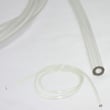
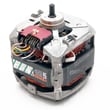
If you need to replace a failed pump (leaking, seized, or noisy), use the exact model-matched part: washer drain pump WP3363394.
| Symptom | Most likely cause | What to check first |
|---|---|---|
| Won’t drain, motor runs | Pump jam or hose restriction | Pump inlet, drain hose |
| Drains slowly | Partial clog | Hose routing, standpipe flow |
| Won’t spin and seems “dead” | Lid switch issue | Lid strike and washer lid switch WP3949238 |
A restricted drain path can prevent proper spin, leave clothes soaking wet, and strain the drive system. Correct drain hose setup and a clear pump keep cycle times normal and reduce leaks.
Last updated: February 2026
What is the capacity of a Kenmore Model 11025852400 washer?
The exact tub capacity (in cubic feet) for Kenmore washer model 11025852400 depends on the specific version in this model group; most Kenmore 110 top-load, direct-drive washers of this style are typically around 3.2 to 3.5 cu. ft., which fits medium to large loads. For the exact spec, use the 11025852400 owner's manual.
We recommend verifying capacity using the model’s published specifications and the rating label information.
- Check the specifications section in the 11025852400 owner's manual
- Look for the model and serial tag (commonly under the lid or on the rim of the tub opening)
- Match your full model number exactly (11025852400) when comparing specs
- If you are measuring laundry loads, use basket fill level (not weight) as your guide
- Avoid overfilling; clothes should move freely for proper wash action
Even when two washers look similar, capacity changes how much you can wash per cycle.
| Approx. capacity | Typical load examples | Practical tip |
|---|---|---|
| 3.0 to 3.2 cu. ft. | Mixed everyday load, towels | Do not pack items tightly |
| 3.3 to 3.5 cu. ft. | Medium-large family load | Keep items below the top of the basket |
| 3.6 to 4.0 cu. ft. | Larger loads, bulky items | Wash bulky items in smaller batches |
Capacity affects cleaning performance, rinse quality, and spin-out. Overloading can cause poor agitation, out-of-balance spinning, and extra wear on drive components such as the washer motor coupling 285753A.
Last updated: February 2026
How to identify a Kenmore washer model?
Your Kenmore washer model number is printed on the appliance’s model and serial tag. For Kenmore model 11025852400, you’ll typically find that tag under the lid on a top-load washer, around the lid opening, or on the rear panel; once you match the full number, we can help you choose the correct parts and diagrams.
Check these common locations first:
- Under the lid, along the rim of the tub opening
- On the underside of the lid itself
- On the back of the cabinet near the power cord
- Behind the control panel end caps (on some designs)
- Inside the cabinet (visible after lifting the console on some models)
Kenmore washer model numbers often start with 110 and are usually 11 digits long (like 11025852400). Using the exact model number helps us match the right fit for parts such as a lid switch, drain pump, or motor coupling.
| What you see on the tag | What it means | What to do next |
|---|---|---|
| 11025852400 | Full model number | Use it to select exact Kenmore parts |
| Serial number | Production identifier | Keep it for service history |
| Type/voltage info | Electrical details | Confirm outlet and circuit match |
- Write the model number exactly as shown (include all digits)
- Double-check similar-looking digits (0 vs O, 5 vs S)
- Use the model number to confirm the correct version before ordering
- If the tag is worn, take a clear photo and zoom in
Kenmore washers can look alike across multiple series, but internal components and mounting styles can differ. Matching 11025852400 to the correct parts list prevents returns and speeds up repairs.
For model-specific identification notes and diagrams, use the 11025852400 owner’s manual.
Last updated: February 2026
How do I reset my Kenmore washer?
For Kenmore washer model 11025852400, the most reliable reset is a power reset: unplug the washer (or switch off the breaker) for 1 to 5 minutes, then restore power and set a new cycle. This clears many stuck conditions and lets the timer and controls restart cleanly.
- Turn the cycle selector (timer) to Off.
- Unplug the washer or turn off the circuit breaker.
- Wait 1 to 5 minutes.
- Restore power.
- Select a Spin Only or Rinse & Spin cycle to confirm the washer drains and spins.
- Run a normal wash cycle.
On this style of Kenmore top-load washer, a “no start” or “no spin” symptom is often caused by a lid safety circuit or a drain problem, not a control that needs a reset.
Common checks we recommend:
- Confirm the lid closes firmly; listen for a click.
- Make sure the drain hose is not kinked or shoved too far into the standpipe.
- If the tub is full of water, try Spin Only to force a drain and spin.
- If the washer drains slowly or not at all, inspect the pump and hoses for a sock or lint blockage.
| Symptom | What it points to | Example part for this model |
|---|---|---|
| Won’t spin, acts dead when lid is open | Lid safety circuit | Washer lid switch WP3949238 |
| Hums but will not drain | Drain restriction or failed pump | Washer drain pump WP3363394 |
| Agitates but will not spin, or intermittent drive | Drive train issue | Washer motor coupling 285753A |
A true reset is mainly about restoring power so the washer’s timer and internal switches return to a known starting position. If the washer still will not drain or spin after a reset, troubleshooting the lid switch, drain pump, and drive coupling prevents repeat shutdowns and incomplete cycles.
For cycle and control details (including how the timer is used for Rinse & Spin and Spin Only), follow the instructions in the 11025852400 owner’s manual.
Last updated: February 2026
What is the average lifespan of a Kenmore washer?
A Kenmore washer typically lasts 10 to 15 years. For your Kenmore model 11025852400, correct installation, avoiding overloads, and addressing early wear items (like the lid switch, drain pump, or drive coupling) helps you reach the longer end of that range; see the 11025852400 owner's manual for care guidance.
Most top-load washers like the Kenmore 11025852400 land in the 10 to 15 year window. Lifespan is mainly driven by load size, water quality, and how quickly small problems are fixed.
- Avoid chronic overloading; it strains the gear case, clutch, and suspension.
- Use the right water level and detergent amount to reduce residue and drag.
- Keep the washer level; out-of-level operation increases vibration and tub wear.
- Don’t run the washer in freezing conditions; trapped water can damage components.
- Fix “won’t spin” or “won’t drain” symptoms early to prevent secondary damage.
When these parts wear, the washer may stop agitating, stop spinning, or stop draining, which can accelerate wear on other drive components.
| Symptom | Common wear area | Example part for this model |
|---|---|---|
| Agitator moves poorly or “ratchets” | Agitator dogs | Agitator dog 80040 |
| Washer won’t spin or agitates intermittently | Motor-to-transmission coupling | Washer motor coupling 285753A |
| Won’t drain or drains slowly | Drain pump or drain path | Washer drain pump WP3363394 |
| Won’t spin with lid closed | Lid safety circuit | Washer lid switch WP3949238 |
A washer that is installed correctly runs with less vibration, drains properly, and avoids electrical and water-supply issues. The installation instructions for this platform call for a grounded 3-prong outlet, proper drain height (commonly 39 to 96 inches for a standpipe), and a level floor; review the 11025852400 installation guide to confirm your setup.
Last updated: February 2026
Is it worth repairing a Kenmore washing machine?
Yes, repairing a Kenmore washer is worth it when the fix restores reliable washing and spinning for less than the cost of replacing the machine. For Kenmore model 11025852400, many common failures are repairable with standard parts and basic service steps in the 11025852400 owner's manual.
We recommend repairing when most of these are true:
- The washer fills, drains, and powers on (even if it will not agitate or spin).
- The problem is isolated (noise, no spin, no drain, lid not sensing) rather than multiple major failures.
- The tub is not leaking heavily and the cabinet is not rusted through.
- The repair is a wear item or a single drive component.
- You can complete the repair safely with the washer unplugged and water shut off.
These parts are frequent, straightforward fixes on many Kenmore top-load designs:
- No spin or intermittent operation: washer lid switch WP3949238
- Will not drain or drains slowly: washer drain pump WP3363394
- Agitator moves poorly or “ratchets”: agitator dog 80040
- Motor runs but basket does not move: washer motor coupling 285753A
| Symptom | Likely area | Typical DIY difficulty | Typical “worth it” signal |
|---|---|---|---|
| Won’t spin | Lid switch, clutch, coupling | Low to medium | Single-part fix restores spin |
| Won’t drain | Drain pump, hose restriction | Low | Pump or blockage fix stops standing water |
| Loud during spin | Suspension, drive components | Medium | Noise is new and localized |
| Electrical issues | Outlet, cord, timer | Medium to high | Power supply is correct and issue is one component |
A washer that is not level or is installed outside the recommended conditions can look “broken” when it is really an installation problem. The installation guidance for this model calls for a level floor (max slope about 1 in. under the washer), proper drain height (standpipe roughly 39 to 96 in.), and a grounded 3-prong outlet on a dedicated 15 or 20 amp circuit; confirm these basics in the 11025852400 installation guide before buying major parts.
Last updated: February 2026