Installation guide
 Owner’s manual


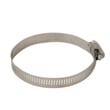
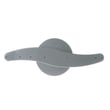
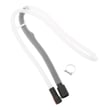
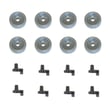
Where is my GE dishwasher filter located?
On the GE CDW9380N20SS dishwasher, the filter is located inside the tub at the bottom, under the lower rack area. You typically access it by removing the lower rack, then twisting the filter assembly to unlock it and lifting it out for cleaning (see the CDW9380N20SS owner's manual).
How to find and remove the filter
- Turn the dishwasher off at the control panel.
- Pull out the lower rack to expose the sump area.
- Look for a round or cylindrical filter assembly in the tub floor.
- Twist the filter counterclockwise to unlock.
- Lift the filter up and out.
- Rinse the mesh and screen with warm water; use a soft brush if needed.
What you should see (common GE layout)
| Item | Where it sits | What it does |
|---|---|---|
| Main filter assembly | Bottom of tub, under lower rack | Catches food soil and protects the pump |
| Mesh/screen surface | On or around the filter body | Traps particles so they do not recirculate |
| Sump area | Directly below filter | Routes water to the circulation pump |
If cleaning the filter does not fix poor washing
Food soil left on dishes is often caused by restricted water flow or spray issues. Check these common items next:
- Make sure the lower spray arm spins freely and holes are not clogged.
- Clean the filter regularly if you run heavy-soil loads.
- Confirm tall items are not blocking the wash arm.
- If the filter is damaged or will not lock in place, replace it with the correct part for this model (for example, the dishwasher filter WD12X10109 if it matches your filter style).
Why it matters
A clean, properly seated filter helps maintain strong circulation, protects the pump and motor assembly, and improves cleaning performance. A loose or clogged filter can lead to gritty residue, poor spray pressure, and longer cycle times.
Last updated: February 2026
Can I replace dishwasher parts myself?
Yes, for the GE CDW9380N20SS dishwasher, we recommend DIY replacement only for parts and procedures that are specifically covered in the CDW9380N20SS owner's manual. For anything not called out there, disconnect power first (turning the dishwasher off is not the same as disconnecting power) and use a qualified technician for service.
Good DIY part replacements (common and manageable)
These repairs are typically straightforward if you can use basic hand tools and follow step-by-step instructions:
- Cleaning or replacing the dishwasher filter WD12X10109
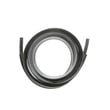
- Replacing a leaking door seal (often the dishwasher door seal WD08X10055)
- Replacing a worn spray arm (such as the dishwasher spray arm WD22X10047)
- Replacing the detergent dispenser if the cup will not open (the dishwasher detergent dispenser assembly WD12X10163)
- Replacing the silverware basket (the dishwasher silverware basket WD28X10128)
Repairs we treat as “pro-level”
These involve higher shock risk, water-leak risk, or more complex disassembly and testing:
- Pump and motor work (for example, the mechanism assembly)
- Wiring, grounding, or control-related troubleshooting
- Drain and fill system diagnosis beyond basic clogs and kinks
Quick safety checklist before you start
Use this checklist every time you work on the dishwasher:
- Shut off power at the breaker or wall switch; verify the control panel is dark
- Shut off the water supply valve under the sink
- Protect the floor; keep towels ready for residual water
- Take photos of wire and hose routing before removal
- Restore power only after panels are reinstalled and connections are secure
DIY vs. technician: what to choose
| Task type | Typical DIY fit | Why |
|---|---|---|
| Filter, spray arm, basket | High | Minimal disassembly, low risk |
| Door seal or tub gasket | Medium | Leak prevention depends on correct seating |
| Pump/motor, electrical | Low | Higher shock risk and diagnostic complexity |
Why it matters
Choosing the right repair level prevents electric shock, avoids repeat leaks, and helps your GE dishwasher clean and drain correctly after the repair.
Last updated: February 2026
How to remove the filter and spinner on GE dishwasher?
On the GE CDW9380N20SS dishwasher, we remove the filter and spinner (spray arm) from inside the tub by taking out the lower rack, unlocking and lifting out the filter assembly, then unthreading or releasing the spray arm so you can rinse debris away and restore wash performance. See the CDW9380N20SS owner's manual for the exact filter and spray arm layout.
Before you start (safety and prep)
- Turn off power at the breaker; do not work around a live control panel.
- Let the dishwasher cool if it just ran (hot water can be 120°F to 150°F).
- Pull out the lower rack for clear access to the sump area.
- Keep a towel handy; a small amount of water in the sump is normal.
- Avoid dropping screws or hard debris into the sump opening.
Filter removal steps (typical GE setup)
- Remove the lower rack.
- Locate the filter assembly in the bottom center of the tub.
- Rotate the cylindrical filter counterclockwise to unlock (or release the locking tabs, depending on the version).
- Lift out the fine filter and then lift out the coarse screen beneath it.
- Rinse under hot water; use a soft brush to clear grease and food soil.
If the filter is damaged, warped, or won’t seat tightly, replace it with the correct part for this model, such as the dishwasher filter WD12X10109.
Spinner (spray arm) removal steps
- Hold the spray arm to keep it from turning.
- Remove the center fastener (often a hub nut or retaining cap) by turning it counterclockwise.
- Lift the spray arm straight up and off the mount.
- Rinse the spray arm and clear clogged jet holes with warm water.
If the spray arm is cracked or the jets won’t clear, replacement is often the fastest fix; use the dishwasher spray arm WD22X10047.
Quick troubleshooting guide
| Symptom | Most common cause | What to do |
|---|---|---|
| Grit on dishes | Filter clogged | Clean filter and sump area |
| Poor spray, quiet wash | Spray arm jets blocked | Clean spray arm holes |
| Standing water | Drain restriction | Clean filter, check drain path |
| Leaks at door | Seal not sealing | Inspect/replace door seal |
Why it matters
A clogged filter or blocked spray arm reduces water flow and can cause poor cleaning, redepositing food soil, and longer cycle times. Keeping the filter and spinner clean helps the circulation system work the way GE designed it.
Last updated: February 2026