Error Codes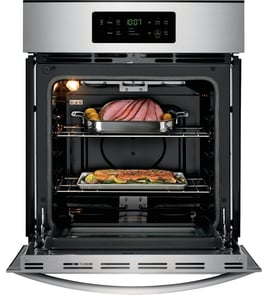


How to reset GE wall oven?
To reset a GE JKP13GT1BB electric wall oven, we cycle power at the home breaker: turn the oven circuit OFF for about 1 minute, then turn it back ON. This clears many control glitches and restores normal operation after a power interruption.
Reset steps (power cycle)
- Turn the oven circuit breaker to OFF (or remove the fuse if your home uses fuses).
- Wait 60 seconds.
- Turn the breaker back to ON (or reinstall the fuse).
- Set the clock if it is flashing.
- Test Bake and Broil for a few minutes to confirm the oven heats.
If the oven still will not power up
A reset will not fix a hard failure like an open thermal fuse, failed heating element, or a door lock issue. Check these common causes next:
- House breaker trips again immediately (possible shorted wiring or component).
- Display is blank and the oven is completely dead (often points to a safety device like a fuse).
- Oven heats poorly or not at all (often a bake or broil element problem).
- Self-clean will not start or the door will not unlock (lock system issue).
Quick part checks for this model
| Symptom | What to check | Common related part for JKP13GT1BB |
|---|---|---|
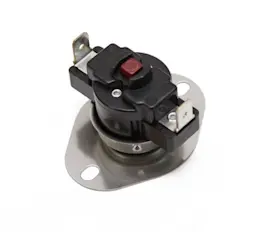
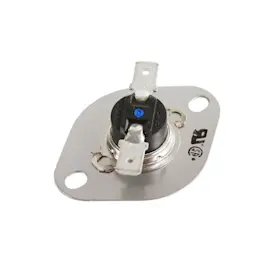
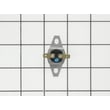
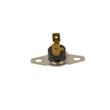
| Dead, no display | Safety cutout opened | Wall oven thermal fuse WB24K5085 |
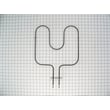
| No bake heat | Lower element open | GE range bake element WB44K5013 |
| No broil heat | Upper element open | GE range broil element WB44K5009 |
Why it matters
Resetting by cycling power is the fastest way to clear a “locked up” electronic control after a surge or outage. If the problem returns, it usually means a component (like a thermal fuse, heating element, or wiring connection) is failing and needs testing.
Last updated: January 2026
What size breaker and wire for 20 amp wall oven?
For a GE electric wall oven like model JKP13GT1BB, a 20-amp, 240-volt dedicated circuit typically uses a 2-pole 20A breaker with 12 AWG copper conductors (plus ground). Confirm the oven’s nameplate amperage and match the circuit to that rating.
Recommended circuit setup (typical)
- Breaker: 2-pole 20 amp (for 240V)
- Wire size: 12 AWG copper (commonly 12/2 with ground for 240V-only loads)
- Circuit type: Dedicated circuit (no other loads)
- Connections: Tight, clean terminals at the breaker and junction box
- Grounding: Equipment ground required; neutral only if the oven requires it
Why the nameplate rating matters
Wall ovens vary by wattage. If the oven’s nameplate shows a higher amp draw than a 20A circuit supports, you must size the breaker and wire to the manufacturer rating. If the oven is truly designed for a 20A circuit, 12 AWG copper is the correct match.
Quick sizing guide
| Oven circuit rating | Typical breaker | Typical copper wire |
|---|---|---|
| 20A | 2-pole 20A | 12 AWG |
| 30A | 2-pole 30A | 10 AWG |
| 40A | 2-pole 40A | 8 AWG |
Common mistakes to avoid
- Using a single-pole breaker for a 240V wall oven
- Upsizing the breaker without upsizing the wire (overheating risk)
- Sharing the circuit with a microwave, cooktop, or receptacles
- Assuming all wall ovens are 20A (many are 30A to 50A)
If the oven is dead after wiring work
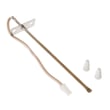
A blown thermal fuse can also prevent the oven from powering up. If you suspect an overheat event, check the wall oven thermal fuse WB24K5085 as part of your diagnosis.
Why it matters
Correct breaker and wire sizing protects the wiring from overheating and helps the oven heat consistently without nuisance trips.
Last updated: January 2026
Where is the model number on a GE wall oven?
On a GE wall oven like model JKP13GT1BB, the model number is typically on the oven’s identification label around the door opening; check the frame area you can see when the oven door is open (often along the side trim or near the bottom edge).
Common places to check on JKP13GT1BB
Look with the oven door fully open and a flashlight; the label is usually a small sticker or metal tag.
- Left or right side of the oven frame (door jamb area)
- Along the bottom front lip of the oven frame
- On the front frame behind the door, near a corner
- Occasionally on the oven door itself (inner edge) or behind the lower trim
Quick tips to find it fast
- Wipe grease and dust off the frame; labels can blend in.
- Look for “Model” and “Serial” printed together.
- Take a photo once you find it; it helps when ordering parts.
- Match every character exactly (letters and numbers).
Why it matters
The exact model number ensures you get the correct GE wall oven parts for your configuration (for example, the correct heating element, door gasket, or thermal fuse).
Related parts customers often order by model number
| Part type | Example part for JKP13GT1BB | What it helps with |
|---|---|---|
| Bake heating | GE range bake element WB44K5013 | Oven not heating or slow baking |
| Overheat protection | Wall oven thermal fuse WB24K5085 | Oven dead or no power after overheating |
| Door sealing | Range oven door gasket WB2X9168 | Heat leaking, uneven temps |
Last updated: January 2026
Why is my GE wall oven not heating?
If your GE JKP13GT1BB electric wall oven isn’t heating, the most common causes are a failed bake element, a bad temperature sensor, or a blown thermal fuse. Start by checking whether the bake element glows and whether the oven can hold temperature during preheat.
Quick checks we recommend first
- Confirm the oven is set to Bake (not Delay Start or Self-Clean).
- Verify the display is on and the clock is set (some models will not start timed functions correctly otherwise).
- Try Broil: if broil heats but bake does not, the bake circuit is the likely issue.
- Check for obvious damage: blistering, cracks, or burned spots on the bake element.
- Reset power: turn the breaker off for 2 minutes, then back on.
Most likely parts to inspect on model JKP13GT1BB
1) Bake element
A broken bake element is the most common reason an electric wall oven won’t heat in Bake.
- Look for visible cracks or a hole in the element.
- If it looks damaged, replace the GE range bake element WB44K5013.
2) Thermal fuse
If the oven is completely dead or heats briefly then stops, a thermal fuse can open to protect the oven from overheating.
- A blown fuse usually means there was an overheating event or airflow issue.
- Test continuity and replace the wall oven thermal fuse WB24K5085 if open.
3) Temperature sensor
If the oven heats but never reaches set temperature (or shuts off early), the sensor can be out of range.
- Inspect the sensor wiring for damage.
- Consider testing and replacing the sensor WB21X5301 if readings are abnormal.
What the symptoms usually mean
| Symptom | Most common cause | What to do next |
|---|---|---|
| Broil works, Bake doesn’t | Bake element or wiring | Inspect element; check connections; replace bake element if damaged |
| No heat in Bake or Broil | Thermal fuse, power supply, control issue | Check breaker and fuse; test thermal fuse; inspect wiring |
| Heats but temperature is wrong | Temperature sensor | Test sensor resistance; replace sensor if out of spec |
Why it matters
A no-heat condition can be a simple failed heating element, but it can also point to an overheating protection trip (thermal fuse) or a sensing problem that prevents safe temperature control. Fixing the root cause helps prevent repeat failures.
Last updated: January 2026