Installation guide
 Owner’s manual


What does 350 ppm mean?
350 ppm means 350 parts per million. In practical terms, it describes a concentration: for every 1,000,000 units of something (often air or water), 350 units are the substance being measured. This term is general science terminology and is not a setting or specification for the Maytag MVWC350AW0 washer.
Where you’ll see “ppm” in washer-related situations
PPM is most commonly used around laundry when you’re talking about water quality or chemical concentration, not washer cycles.
- Hard water minerals (total hardness) that can affect detergent performance
- Chlorine/bleach strength in water treatment or cleaning solutions
- Iron or manganese levels that can cause staining
- Total dissolved solids (TDS) as a general water-quality indicator
- Cleaning product dilution instructions (for example, “X ppm solution”)
Quick reference: ppm conversions
These are handy when you’re reading a water report or mixing a solution.
| Measurement | Equivalent | Common use |
|---|---|---|
| 1 ppm | 1 mg/L | Water testing reports |
| 350 ppm | 350 mg/L | Hardness/TDS style readings |
| 1% | 10,000 ppm | Concentrated solutions |
Why it matters for your MVWC350AW0 washer
If “350 ppm” is referring to water hardness, that level is typically considered hard; hard water can leave residue, reduce suds efficiency, and contribute to odor over time. For best results, we follow the detergent and washer-care guidance in the MVWC350AW0 installation guide and use the right detergent amount for your load size and soil level.
What we recommend if your water is around 350 ppm hardness
- Use a detergent amount appropriate for hard water (often slightly more than soft-water dosing)
- Run periodic cleaning cycles to reduce buildup
- Avoid overloading; it reduces agitation and rinsing effectiveness
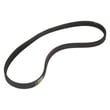
- If you notice poor agitation or slipping, inspect drive components like the washer drive belt WPW10006384
Last updated: February 2026
Where can I get Maytag washing machine parts?
You can get replacement parts for your Maytag MVWC350AW0 washer directly from our parts list for this model; it is the best way to match parts like the lid lock, drain pump, belt, and actuator to your exact washer.
Best way to find the right part for MVWC350AW0
Use the model-based parts list first, then confirm fit by comparing your symptoms and the part description.
- Match the full model number: MVWC350AW0
- Use the diagrams to identify the exact component location
- Compare your symptom to common failure parts (lid not locking, not draining, not spinning)
- Verify any installation notes and safety steps in the installation guide
- If you are unsure between two similar items, choose the part that explicitly lists MVWC350AW0 compatibility
Common MVWC350AW0 parts customers replace
These are frequent fixes for top-load washer issues like no spin, no drain, or a lid that will not lock.
| Symptom | Common part to check | Example part on this model page |
|---|---|---|
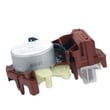
| Won’t lock or won’t start | Lid lock | Washer lid lock assembly W10404050 |
| Won’t drain or leaves water | Drain pump | Washer drain pump assembly WPW10276397 |
| Won’t spin or makes belt noise | Drive belt | Washer drive belt WPW10006384 |
| Shifts poorly between agitate and spin | Actuator | Washer actuator WPW10006355 |
Why it matters
Maytag washers often use similar-looking parts across multiple series; ordering by model number helps prevent wrong-part returns and gets your washer back to washing, draining, and spinning correctly.
Last updated: February 2026
What's the average lifespan of a Maytag washer?
A Maytag washer like model MVWC350AW0 typically lasts 10 to 13 years with normal household use. Consistent maintenance (level installation, correct loading, and fixing small problems early) is what most often determines whether it reaches the high end of that range.
Typical lifespan (what to expect)
Most top-load washers in this class land in a fairly tight window:
| Use pattern | Typical lifespan | What usually shortens it |
|---|---|---|
| Light (few loads/week) | 12 to 15 years | Long periods of non-use, corrosion |
| Average (4 to 7 loads/week) | 10 to 13 years | Overloading, poor leveling |
| Heavy (daily loads) | 7 to 10 years | Worn drive parts, suspension wear |
What extends the life of MVWC350AW0
We see these habits make the biggest difference:
- Keep the washer level to reduce vibration and “washer walk” (the installation guide allows up to a 1 inch floor slope under the washer).
- Use the right amount of detergent; too much can cause residue and odor.
- Avoid chronic overloading; it accelerates wear on the drive system and suspension.
- Check hoses and connections for leaks and replace worn hoses before they burst.
- Address early symptoms (burning rubber smell, weak spin, loud clunking) before they turn into bigger repairs.
Parts that commonly affect longevity
When performance drops, these are frequent wear items on this style of Maytag top-load washer:
- Washer drive belt WPW10006384 (slipping, squealing, weak spin)
- Washer drive pulley and splutch assembly W10721967 (no agitation or poor spin engagement)
- Suspension W10780046 (excessive shaking, off-balance errors)
- Washer lid lock assembly W10404050 (won’t start or won’t spin with lid-lock issues)
Why it matters
A washer that is out of level, overloaded, or forced to run with a slipping belt or worn suspension puts extra stress on the gear case, basket, and motor system. Fixing the root cause early usually prevents higher-cost repairs later.
For model-specific setup details (clearances, leveling steps, electrical requirements), follow the installation guide.
Last updated: February 2026
Is it worth repairing a Maytag washing machine?
Yes, repairing a Maytag MVWC350AW0 washer is worth it when the fix is a common wear item (belt, lid lock, pump) and the total repair cost stays under about half the price of a comparable new washer. If the washer needs multiple major parts at once, replacement is the better value.
Quick decision checklist
- Repair if the washer is otherwise reliable and this is the first major failure
- Repair if the problem points to a single, serviceable part (drain, spin, lid lock, agitation)
- Repair if you can confirm safe installation basics (proper power, drain setup, level) per the installation guide
- Replace if the tub or cabinet is badly damaged or leaking
- Replace if you are facing repeated breakdowns in a short period
- Replace if the estimate includes multiple high-cost components (gear case plus control, for example)
Typical repair costs vs. part type (what we see most often)
| Issue you notice | Common cause on top-load washers | Example part for MVWC350AW0 | Usual “worth it” guidance |
|---|---|---|---|
| Won’t spin or makes a burning/rubber smell | Worn drive belt or splutch | Washer drive belt WPW10006384 | Usually worth repairing |
| Lid won’t lock, won’t start, stops mid-cycle | Failed lid lock | Washer lid lock assembly W10404050 | Usually worth repairing |
| Won’t drain, water left in tub | Drain pump problem or blockage | Washer drain pump assembly WPW10276397 | Usually worth repairing |
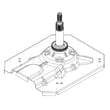
| Loud grinding, no agitation/spin, oil leak underneath | Gear case failure | Gear case W11454741 | Depends on age and overall condition |
Before you decide: rule out setup problems that mimic “failure”
Some symptoms look like a bad part but are caused by installation or setup. We check these first:
- Confirm a dedicated 120V, 60 Hz grounded 3-prong outlet is used (no adapters)
- Make sure the shipping base was removed (required for proper operation)
- Verify the drain hose is installed correctly in the standpipe (not shoved too far down)
- Level the washer so it can spin correctly (adjust feet and tighten jam nuts)
Why it matters
A targeted repair on the MVWC350AW0 (belt, lid lock, pump, actuator) restores performance for far less than replacing the washer. Major drivetrain or electronic repairs can exceed the value of an older unit, especially if other wear issues are starting.
Last updated: February 2026
What is the most common problem with a Maytag washer?
On the Maytag MVWC350AW0 top-load washer, the most common service issues are “won’t drain” or “won’t spin.” These symptoms usually trace back to a draining restriction (hose or pump), a lid lock problem, or a worn drive system (belt or splutch). See the owner's manual for cycle behavior and checks.
Most common symptoms and what typically causes them
- Washer won’t drain: kinked/blocked drain hose, debris in the pump, or a failing pump
- Washer won’t spin: lid not locking, out-of-balance load, worn belt, or drive/splutch wear
- Lid won’t lock or unlock: failed lid lock or lid strike alignment issue
- Poor agitation or weak wash action: worn agitator dogs or drive components
- Leaks: loose inlet hose connections, worn hoses, or drain hose not secured correctly
Quick checks we recommend first (no parts needed)
- Confirm the lid is fully closed and latching; the washer will not spin if it does not sense a safe lid condition.
- Check the drain hose setup: the installation guide calls for about 4.5 in. (114 mm) of drain hose inside the standpipe; too deep can cause siphoning or slow draining.
- Look for kinks or clogs in the drain hose and standpipe.
- Reduce oversudsing: use HE detergent and measure carefully; too many suds can interfere with drain and spin.
- Re-level the washer if it bangs or stops spinning; leveling feet adjustments are covered in the installation guide.
Parts that commonly fix drain/spin problems on MVWC350AW0
| Symptom | Common fix | Part to check on this model |
|---|---|---|
| Won’t drain / water left in tub | Pump not moving water | Washer drain pump assembly WPW10276397 |
| Won’t spin / lid error behavior | Lid not locking reliably | Washer lid lock assembly W10404050 |
| Won’t spin / burning rubber smell | Belt slipping or broken | Washer drive belt WPW10006384 |
| Grinding, poor spin engagement | Worn splutch/drive pulley | Washer drive pulley and splutch assembly W10721967 |
Why it matters
Drain and spin problems are often connected: if the MVWC350AW0 cannot drain fast enough, it will not reach full spin speed. Fixing the root cause prevents repeat shutdowns, wet loads, and extra wear on the gear case and actuator.
Last updated: February 2026