 Owner’s manual
 Error Codes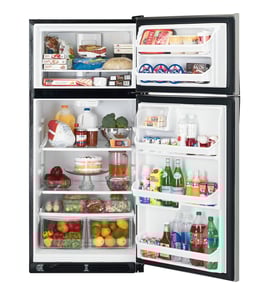




What are the disadvantages of a top mount fridge?
Top-mount refrigerators like the GE A3316ABSERWW put the freezer on top and the fresh-food section below; the main disadvantages are less convenient access to everyday refrigerated items, fewer built-in organization features than many bottom-freezer designs, and fewer dispenser options on many models. For model-specific features and adjustments, use the owner's manual.
Common drawbacks you may notice day to day
- You bend more to reach fresh foods because the refrigerator compartment is lower.
- Shelves and bins often feel less flexible than on many bottom-mount layouts.
- Freezer space can be narrower, which makes bulky frozen items harder to stack.
- Many top-mount models do not include an external ice or water dispenser.
- Temperature can vary more between top and bottom shelves if airflow is restricted.
Quick comparison: top mount vs. bottom freezer
| Feature | Top mount (freezer on top) | Bottom freezer |
|---|---|---|
| Fresh-food access | Lower, more bending | Higher, easier reach |
| Freezer access | Eye level | Lower drawer |
| Organization | Often simpler | Often more configurable |
| Dispensers | Less common | More common |
Why it matters
Layout affects how often you open doors, how easily you keep food visible, and how consistently the refrigerator holds temperature. If you are frequently digging for produce or leftovers, the top-mount layout can feel less efficient even when cooling performance is solid.
Tips to reduce the downsides
- Keep most-used items on the upper refrigerator shelves to reduce bending.
- Avoid blocking vents with tall containers; airflow helps even out temperatures.
- Use clear bins to group snacks, deli items, and condiments for faster access.
- Check door gasket sealing if you see moisture or temperature swings; a worn gasket wastes energy.
Last updated: February 2026
What is the most common problem with a GE refrigerator?
The most common problem we see with GE refrigerators (including the GE Americana A3316ABSERWW top-mount) is poor cooling or temperature swings. In most cases, the root cause is restricted airflow (dirty condenser coils, blocked vents, or a fan issue) that keeps the refrigerator from moving heat out efficiently.
Quick checks that fix many cooling complaints
- Make sure air vents inside the fresh food and freezer sections are not blocked by food packages.
- Clean dust and pet hair from the condenser coil area and the condenser fan area.
- Confirm the doors close fully and the gaskets seal all the way around.
- Set temperatures to normal mid-range settings and give the unit 24 hours to stabilize.
- Listen for fan operation: the evaporator fan (freezer) and condenser fan (near compressor) should run at times.
Common causes and what you typically notice
| Symptom | Most likely area | What it usually points to |
|---|---|---|
| Freezer OK, fridge warm | Airflow from freezer to fridge | Evaporator fan not moving air, iced-up evaporator, or blocked return vents |
| Both sections warm | Heat not being rejected | Dirty condenser coils, condenser fan issue, or compressor/start problem |
| Frost buildup, warming over time | Defrost system | Defrost heater or defrost control issue |
| Runs a lot, temps drift | Door sealing or airflow | Door gasket leak, overpacked shelves, frequent door openings |
Parts that commonly relate to cooling and airflow on this model
If your symptoms match, these model-specific parts are often involved:
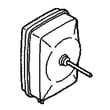
- Evaporator fan motor: refrigerator ac/dc motor WR60X31522
- Condenser fan motor: refrigerator condenser fan motor WR60X10168
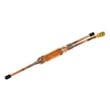
- Defrost heat source: refrigerator defrost heater WR51X10038
- Door sealing (freezer): refrigerator freezer door gasket WR24X10228
Why it matters
When airflow is restricted or a fan is weak, the compressor has to run longer to maintain temperature. That can lead to warm food, freezer burn, excess frost, and higher energy use. Addressing airflow and sealing issues early is the fastest way to restore stable cooling.
Where to confirm settings and normal operation
For the correct temperature control guidance and operating details for your GE Americana A3316ABSERWW, use the owner's manual.
Last updated: February 2026
What is the life expectancy of a top freezer refrigerator?
A top-freezer refrigerator like the GE A3316ABSERWW typically lasts 10 to 17 years, with 13 to 15 years being a common real-world average. You can often push lifespan toward the high end by keeping airflow clear, cleaning coils, and fixing door-seal leaks quickly using the care steps in the owner's manual.
Typical lifespan and what affects it
Top-mount (top-freezer) designs tend to be long-lasting because they are mechanically straightforward, but lifespan still depends on usage and maintenance.
- Room temperature and ventilation: hot garages and tight cabinets shorten life.
- Condenser cleanliness: dusty coils make the compressor run longer.
- Door seal condition: air leaks cause constant run time and frost.
- Fan health: weak fans reduce cooling and increase compressor workload.
- Defrost performance: heavy frost can block airflow and strain the system.
Quick maintenance checklist (high impact)
Use these habits to reduce compressor run time and prevent common failures:
- Vacuum dust from the condenser area regularly (unplug first).
- Keep food from blocking interior air vents.
- Set stable temps (avoid frequent dial changes).
- Clean and inspect gaskets; replace if torn, warped, or not sealing.
- Listen for new noises (rattling, grinding, or squealing) and address early.
Parts that commonly matter for longevity (examples)
If you are troubleshooting warm temps, noise, or frost, these model-matched parts are often involved:
| Symptom | Common area | Example part for A3316ABSERWW |
|---|---|---|
| Warm fridge, freezer OK | Air circulation | Refrigerator ac/dc motor WR60X31522 |
| Hot cabinet sides, loud by back | Condenser airflow | Refrigerator condenser fan motor WR60X10168 |
| Frost buildup, poor airflow | Defrost system | Refrigerator defrost heater WR51X10038 |
| Moisture, frost, or door not closing well | Door sealing | Refrigerator freezer door gasket WR24X10228 |
Why it matters
A refrigerator usually fails early because it is forced to run too long (dusty coils, bad gasket, blocked vents). Reducing run time protects the compressor and helps your GE top-freezer refrigerator cool evenly for years.
Last updated: February 2026
What is the upper part of a fridge called?
On a top-mount refrigerator like the GE A3316ABSERWW, the upper compartment is the freezer. It is the section designed to keep food frozen and, on many models, it is also where ice is made (with an ice tray or an optional ice maker).
Common names you may see
- Freezer compartment
- Freezer section
- Upper freezer
- Freezer cabinet
- Freezer door
What the upper (freezer) section does
The freezer’s job is to maintain below-freezing temperatures and circulate cold air. In a top-mount design, some of that cold air is also routed down to help cool the fresh food section.
| Term | What it refers to | Where it is on a top-mount fridge |
|---|---|---|
| Freezer | Frozen-food storage area | Top compartment |
| Fresh food section | Refrigerator (non-freezing) area | Bottom compartment |
| Evaporator fan | Moves cold air across coils and through vents | Typically behind the freezer’s rear panel |
Why it matters
Using the right term helps you find the correct diagrams, troubleshooting steps, and replacement parts for your GE A3316ABSERWW. For example, cooling issues that start in the freezer often involve airflow parts like the evaporator fan.
Parts that are commonly associated with the upper (freezer) section
If you are troubleshooting weak cooling, warm refrigerator temps, or unusual fan noise, these model-matched parts are often involved:
- Refrigerator ac/dc motor WR60X31522 (evaporator fan motor)
- Evaporator fan blade WR60X46086 (fan blade that pushes air)
- Refrigerator evaporator fan motor grommet WR02X12008 (mounting grommet that helps reduce vibration)
For compartment layout, controls, and airflow details specific to this model, use the owner's manual.
Last updated: February 2026





