Installation guide
 Owner’s manual


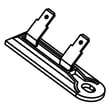

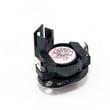
Can I search for Whirlpool parts by model?
Yes. For your Whirlpool electric dryer model WED71HEDW0, searching by the full model number is the most accurate way to get compatible replacement parts because it matches the correct diagrams, revisions, and Factory Specified Parts for your exact dryer.
- Use the complete model number: WED71HEDW0 (letters and numbers matter).
- Open the parts diagrams for the dryer and identify the section (drum, blower, controls, door).
- Match the part by name + part ID, not just by appearance.
- If multiple versions show, choose the one listed for your exact model.
- Confirm symptoms first so you replace the right part the first time.
| Common symptom | Part to check | Example part for this model |
|---|---|---|
| Squealing or thumping | Drum support rollers | Dryer drum support roller WPW10314173 |
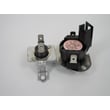
| No heat or overheating shutdown | Thermal safety device | Thermal fuse W10909685 |
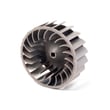
| Long dry times, weak airflow | Air movement component | Dryer blower wheel WP697772 |
| Auto cycles end too soon or run too long | Moisture sensing | Dryer moisture sensor WP3387223 |
Dryer parts can look similar across Whirlpool models, but mounting points, wiring connectors, and temperature ratings can differ. Searching by WED71HEDW0 helps ensure the part fits right and works right, which reduces repeat repairs and drying performance issues.
We recommend checking the model and serial label on the dryer and keeping it with your documentation. The WED71HEDW0 owner's manual also explains where to find identification information and how to use troubleshooting steps before ordering parts.
Last updated: February 2026
What is the average lifespan of a Whirlpool dryer?
A Whirlpool electric dryer like model WED71HEDW0 typically lasts 10 to 13 years. With consistent airflow maintenance, routine cleaning, and avoiding overloads, it commonly reaches the upper end of that range because the heater and drum support parts run cooler and with less strain.
- Vent airflow: restricted venting overheats the heater circuit and shortens component life.
- Lint control: cleaning the lint screen every load reduces heat buildup.
- Load size: chronic overloading stresses the drive system and drum support rollers.
- Heat settings: high heat on every cycle increases wear on thermostats and thermal protection.
- Noise and vibration: early squealing or thumping often signals roller or blower wear.
Use the care and cleaning guidance in the WED71HEDW0 owner's manual.
- Clean the lint screen before or after each load.
- Keep the area around the exhaust outlet free of lint and dust.
- Have the interior cabinet and exhaust vent cleaned periodically by qualified service personnel.
- Confirm the vent system is set up for good airflow (long runs and too many elbows reduce performance).
- If drying times suddenly increase, address airflow first before replacing parts.
| Symptom | Most common cause | What to check next |
|---|---|---|
| Squealing or rumbling | Drum support wear | Inspect rollers and shafts; consider a kit |
| Long dry times, hot cabinet | Poor airflow | Vent run, lint buildup, blower wheel |
| No heat | Heater circuit protection tripped or failed | Thermal fuse, high-limit thermostat, power supply |
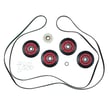
If you hear persistent squealing or thumping, the dryer repair kit 4392067 is a common way to refresh multiple drum support components at once.
A dryer that runs hot or struggles to move air can still tumble, but it ages faster. Good airflow and lint control protect key components like the thermal fuse, high-limit thermostat, blower wheel, and drum support rollers.
Last updated: February 2026
What are the common problems with Whirlpool dryers?
Common Whirlpool dryer problems (including the Whirlpool WED71HEDW0 electric dryer) are no-start, no-heat, long dry times, unusual noises, and vibration. Most issues trace back to power supply, door not fully closed, restricted venting, or normal wear parts like rollers and fuses; our WED71HEDW0 owner's manual troubleshooting table covers the quickest checks.
- Dryer will not run: confirm the door closes fully; press and hold Start/Pause firmly.
- No heat: check the home breaker or fuses (electric dryers often need both legs of power).
- Long dry times: clean the lint screen; verify strong airflow at the outside hood.
- Rattling/vibration: look for small objects between the drum edges; confirm the dryer is level.
- Thumping after sitting: temporary flat spots can happen if the dryer has not been used in a while.
| Symptom | Most likely cause | Best first action |
|---|---|---|
| Won’t start | Door not closed, Start not held, tripped breaker | Reset breaker; re-try Start; close door firmly |
| Won’t heat | Incorrect power supply, tripped breaker/fuse | Verify 240V supply; reset breaker/check fuses |
| Takes too long to dry | Lint screen or vent restriction, vent too long | Clean lint screen; inspect and clean venting |
| Loud squeal/rumble | Worn drum support parts | Inspect rollers; consider a rebuild kit |
If the dryer is noisy (squealing, rumbling) or the drum support feels rough, these model-matched parts are common fixes:
- Dryer repair kit 4392067 (often used when multiple wear items are due)
- Dryer drum support roller WPW10314173 (common source of rumbling)
For heat-related shutdowns or “runs but no heat” complaints, these are common suspects:
- Thermal fuse (opens if overheating occurs)
- High-limit thermostat
- Thermistor
A restricted vent or incorrect vent length can cause long dry times and overheating symptoms. Fixing airflow first prevents repeat failures of safety parts like thermal fuses and helps cycles finish normally. Use the venting requirements and leveling steps in the WED71HEDW0 installation guide to confirm the setup.
Last updated: February 2026
Where is my dryer part number?
On your Whirlpool electric dryer model WED71HEDW0, the part number is printed on the part itself (often on a sticker or stamped into the metal or plastic). To make sure you order the correct replacement, we recommend matching the part number you see on the old part to the parts list in the WED71HEDW0 owner's manual.
Most dryer parts have the number in one of these places:
- A white sticker on the part body (common on sensors, thermostats, and wiring)
- Stamped into metal (common on brackets, panels, and some housings)
- Molded into plastic (common on clips, covers, and some duct pieces)
- Printed on a tag near the wire terminals (common on fuses and thermostats)
- On the motor label (common on drive motors)
These are parts on WED71HEDW0 where customers often look for a printed number:
| Part type | What the number may look like | Example part page on this model |
|---|---|---|
| Drum support roller | Sticker or stamped number | Dryer drum support roller WPW10314173 |
| Thermal fuse | Sticker near terminals | Thermal fuse W10909685 |
| Thermistor | Sticker on sensor body | Dryer thermistor WP8577274 |
| Moisture sensor | Printed on sensor strip or harness tag | Dryer moisture sensor WP3387223 |
Even when you find a number on the old part, Whirlpool can use multiple revisions across similar dryers. Using the WED71HEDW0 model number with the parts diagram helps confirm fit, wiring style, and mounting details before you buy.
- Take a clear photo of the number on the old part before removing it
- Compare the part name and location (for example, blower housing vs. heater housing)
- If the sticker is worn off, use the parts diagram and match by shape and wire terminals
- For heating or airflow problems, check the venting and lint screen first; restricted airflow can mimic a failed part
Last updated: February 2026