 Installation guide
 Owner’s manual






Is GE profile considered high end?
Yes. GE Profile is generally considered the higher-end tier within GE’s mainstream lineup; it typically adds more premium features, styling, and tech than standard GE models. For your GE dishwasher model PDT825SSJ2SS, “Profile” positioning usually means more feature-rich options without moving into true luxury-brand pricing.
Where GE Profile fits (in plain terms)
GE organizes products into tiers; GE Profile sits above standard GE and is commonly positioned below GE’s luxury-focused lines.
- Standard GE: core features, value-focused
- GE Profile: upgraded features and finishes, more tech-forward
- Luxury lines: higher price points, more design and specialty features
What “high end” usually means for a dishwasher
For a built-in dishwasher like PDT825SSJ2SS, “high end” typically shows up as better wash performance, quieter operation, and more convenience features.
| Feature area | Standard GE (typical) | GE Profile (typical) |
|---|---|---|
| Wash system | Basic to mid | More advanced cycles and options |
| Drying | Basic heated/air dry | Enhanced drying features/options |
| Noise | Moderate | Quieter designs are more common |
| Controls | Basic UI | More advanced UI and settings |
How to confirm what your exact model includes
The fastest way to verify which cycles, options, and special modes your PDT825SSJ2SS supports is to match the control panel labels to the feature list in the PDT825SSJ2SS owner’s manual.
- Check the “Getting Started” and “Using the Dishwasher” sections
- Look for cycle names (Normal, Heavy, AutoSense, etc.) and option keys
- Confirm any smart or communications features listed
- Use the troubleshooting section if a feature seems unavailable
Why it matters
Knowing the tier helps set expectations for performance and repair decisions. If you are comparing repair vs. replace, higher-tier models often justify repairs like a dishwasher heating element WD05X30818 because the overall build and feature set is typically stronger.
Last updated: February 2026
How to do a hard reset on a GE dishwasher?
For a GE PDT825SSJ2SS dishwasher, the most reliable “hard reset” is a power reset: turn the dishwasher’s breaker OFF for 1 minute, then turn it back ON. After power is restored, you can cancel a stuck cycle by pressing and holding Start for 3 seconds, then closing the door.
Hard reset steps (power reset)
- Turn the dishwasher circuit breaker OFF.
- Wait 60 seconds (this clears the control memory).
- Turn the breaker ON.
- Press Start once.
- Close the door within 4 seconds to begin a cycle.
If you’re trying to clear a stuck cycle (cancel and drain)
GE’s control logic treats “cancel” as the proper way to stop a cycle and drain water.
- Press and hold Start for 3 seconds.
- Close the door.
- Let the dishwasher drain and end the cycle.
Reference the exact button behavior for your console in the PDT825SSJ2SS owner’s manual.
Quick checks if it still won’t run after a reset
- Confirm the door is closing and latching firmly (a misaligned latch can prevent starting).
- Check for a tripped breaker or blown fuse.
- If your installation uses a wall switch for dishwasher power, make sure it’s ON.
- Make sure the control panel is not locked.
- Follow the correct start sequence: press Start, then close the door within 4 seconds.
What the buttons do on this model (common outcomes)
| Action | What you press | What should happen |
|---|---|---|
| Start a cycle | Start, then close door within 4 seconds | Cycle begins shortly after door closes |
| Pause | Open door slowly | Cycle pauses; beeps as reminder |
| Cancel/drain | Hold Start 3 seconds, then close door | Drains; cycle light turns off |
Why it matters
A power reset clears a “frozen” control state, while Cancel/Drain safely stops the current cycle and removes water. Using the correct method helps avoid repeated beeping, incomplete draining, and false “won’t start” symptoms.
Last updated: February 2026
What is the most common problem with a GE dishwasher?
On the GE PDT825SSJ2SS dishwasher, the most common problems we see are “won’t start/won’t run” complaints and water not draining well. In many cases, the fix is basic: confirm power and water are on, the door is latching, and the filters and drain path are clear (then follow the reset/start steps in the owner's manual).
Most common issues (and what they usually point to)
- Dishwasher won’t run: tripped breaker, wall switch off, control lock enabled, or door not fully latched
- Not draining: clogged filter area, blocked drain hose, or a weak drain pump
- Not drying: heater issue, rinse aid issue, or cycle selection
- Poor cleaning: spray arm blockage, loading that blocks wash jets, or detergent problems
- Leaks: door seal/gasket issues or a leak detection event stopping the cycle
Quick checks we recommend first (fast, no parts)
- Verify the breaker is on and any nearby wall switch supplying the dishwasher is on.
- Close the door firmly; a weak latch can prevent starting.
- Confirm the water valve under the sink is fully open.
- Check the filter area and clear debris; if the float seems stuck, lightly tap the float area under the filter and reinstall the filter.
- Use only automatic dishwasher detergent (tablets or packets work well); avoid hand dish soap to prevent suds.
When a part is the likely fix
| Symptom | Most likely area | Example part for this model |
|---|---|---|
| Won’t start, door feels loose | Door latch system | GE dishwasher door latch lock WD21X10490 |
| Water left in tub | Drain system | Dishwasher drain pump WD19X25187 or dishwasher drain hose WD24X10062 |
| Not drying well | Heating circuit | Dishwasher heating element WD05X30818 |
Why it matters
These “common problems” often share the same root causes: the dishwasher protects itself if it cannot confirm a safe start (door latch, power, water) or if it cannot move water out (filter, hose, drain pump). Fixing the simple items first prevents unnecessary part replacement.
Last updated: February 2026
Can I replace dishwasher parts myself?
Yes, for the GE PDT825SSJ2SS dishwasher we see many DIY repairs succeed when the part is easy to access and you can safely shut off power and water first. For electrical, grounding, or leak-related problems, we recommend using the procedures and cautions in the PDT825SSJ2SS owner’s manual and bringing in a qualified technician when the repair goes beyond basic disassembly.
What you can usually replace yourself
- Door hardware such as the dishwasher door latch lock WD21X10490 or strike
- Wear items like rack rollers and slide rails
- Drain components such as the drain hose (if you can access the routing)
- Toe panel and insulation pieces (common during install adjustments)
- Some vent trim pieces and gaskets (when the leak source is obvious)
Safety steps we follow before any repair
- Disconnect electrical power at the breaker (not just the control panel)
- Shut off the water supply valve under the sink
- Let the heating element cool completely before touching anything inside
- Keep small parts (clips, posts) away from children
- Restore power only after panels are reinstalled and the unit is stable
DIY vs. technician: quick guide
| Repair type | Typical DIY difficulty | Why it can be tricky |
|---|---|---|
| Door won’t latch or start | Low | Alignment and latch engagement issues are common |
| Not draining | Medium | Hose routing, clogs, and pump access vary |
| Not drying / heater issues | Medium to high | Hot surfaces, wiring checks, and reassembly accuracy matter |
| Control or wiring problems | High | Miswiring and grounding mistakes can create shock risk |
Why it matters
Dishwashers combine water, heat, and electricity. GE’s guidance is to disconnect power before maintenance and avoid repairs that are not specifically recommended in the manual; that keeps a simple part swap from turning into a safety issue or repeat failure.
Helpful next step if the dishwasher will not run
If your PDT825SSJ2SS has power but will not start, checking for a tripped breaker, a wall switch feeding the dishwasher, or a locked control panel often saves time before replacing parts.
Last updated: February 2026
What is the average lifespan of a GE dishwasher?
Most GE dishwashers, including model PDT825SSJ2SS, typically last 10 to 12 years with normal household use. Consistent cleaning, correct loading, and fixing small issues early (like draining or drying problems) helps you reach the high end of that range.
Typical lifespan range (what to expect)
In real-world use, we see this pattern most often:
- 8 to 10 years: heavy daily use, hard water, infrequent cleaning
- 10 to 12 years: average use with basic maintenance
- 12 to 15 years: lighter use, good water quality, regular care and prompt repairs
| Usage and care level | Common lifespan | What usually shortens life |
|---|---|---|
| Heavy use, minimal maintenance | 8 to 10 years | Mineral buildup, clogged filters, pump strain |
| Average use, routine care | 10 to 12 years | Normal wear on pumps, heater, seals |
| Light use, proactive care | 12 to 15 years | Mostly age-related electronic failures |
Maintenance that extends life
These steps make the biggest difference on GE dishwashers like PDT825SSJ2SS:
- Clean the filter area and remove debris that can restrict wash and drain flow
- Run a monthly cleaning cycle (especially with hard water)
- Keep spray arms clear so water pressure stays strong
- Check the door seal area for residue that can cause leaks
- Address slow draining quickly to prevent pump damage
For model-specific care and cleaning steps, follow the PDT825SSJ2SS owner's manual.
When a repair is worth it (vs. replacement)
A simple rule we use:
- Under ~8 years: repairs are usually cost-effective
- 8 to 12 years: depends on the part and overall condition
- Over ~12 years: consider replacement if multiple issues stack up
Common “wear” parts that can restore performance include the dishwasher heating element WD05X30818 (drying and water heating) and the dishwasher drain pump WD19X25187 (draining problems).
Why it matters
Knowing the expected lifespan helps you plan: if your dishwasher is near 10 to 12 years old and starts having repeated issues (not cleaning, not drying, not draining), investing in maintenance or a targeted part replacement can prevent bigger failures.
Last updated: February 2026
What are the commonly replaced parts in a dishwasher?
In the GE PDT825SSJ2SS dishwasher, the most commonly replaced parts are the door-latch components, drain and circulation components, and wash and heat components. These parts typically fail from normal wear, clogs, leaks, or electrical issues, and many symptoms show up as “won’t start,” “won’t drain,” poor cleaning, or poor drying.
Most common parts customers replace
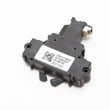
- Door latch and lock (unit will not start if the door is not sensed as closed): GE dishwasher door latch lock WD21X10490
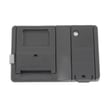
- Door latch strike (helps the latch catch and align correctly): dishwasher door latch strike WD13X10071
- Heating element (poor drying, weak wash performance in some cycles): dishwasher heating element WD05X30818
- Drain hose (leaks, slow drain, or drain routing issues): dishwasher drain hose WD24X10062
- Drain pump (won’t drain, standing water): dishwasher drain pump WD19X25187
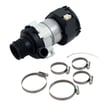
- Circulation pump assembly (poor cleaning, weak spray): dishwasher circulation pump assembly WD26X23258
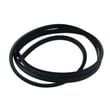
- Tub gasket (leaks around the door opening): dishwasher tub gasket WD08X23477
Quick symptom-to-part guide
| Symptom | Most likely part areas | What we check first |
|---|---|---|
| Won’t start | Door latch, strike, user interface, control | Door fully closed; control panel lock; breaker/wall switch |
| Won’t drain | Drain pump, drain hose | Kinked/pinched hose; blockage; pump operation |
| Not cleaning well | Circulation pump, spray system | Spray arm/manifold clogs; filter area; loading |
| Not drying | Heating element, venting | Rinse aid use; heater operation; cycle selection |
| Leaking | Tub gasket, hose connections | Gasket condition; hose clamp tightness; level install |
Why it matters
Dishwashers are designed to stop the cycle if the door is not securely latched, and installation issues (like a pinched drain hose or the unit not being level) can mimic a “bad part.” Using the PDT825SSJ2SS owner’s manual helps you match the symptom to the right checks before replacing parts.
Helpful checks before you order parts
- Confirm the door closes firmly and the latch engages cleanly.
- Check the breaker and any wall switch that feeds the dishwasher.
- Look for a pinched drain hose behind the unit or under the sink.
- Clean and maintain the interior to reduce odors and mineral buildup.
- If the control shows an error, use GE electronic dishwasher error codes to narrow the failure.
Last updated: February 2026





