Owner’s manual
 Error Codes


What are the advantages of bottom mount refrigerators?
A bottom-mount refrigerator like the KitchenAid KBFS25EWMS3 keeps the fresh-food section at eye and waist level, so you reach everyday items with less bending. The freezer stays below, which helps many households organize frozen foods in pull-out baskets and drawers.
- Easier access to fresh foods (produce, drinks, leftovers) because the refrigerator compartment is on top
- Less bending for the items you use most often
- Freezer drawer storage can make frozen items easier to sort than a traditional top-freezer shelf layout
- Door alignment and closing can be tuned with the built-in leveling and roller adjustments
- Better installation flexibility when you follow clearance guidance for ventilation and door swing
Bottom-mount designs often sit next to cabinets or walls, so clearances and leveling affect how well the doors close and seal.
Use the guidance in the KBFS25EWMS3 owner’s manual for:
- Ventilation space at the top and behind the refrigerator
- Extra space behind the unit if you have an ice maker water line
- Minimum hinge-side clearance so the door can swing open
- Leveling and roller adjustments to help the doors close more easily
| Layout | Fresh-food access | Freezer access | Best for |
|---|---|---|---|
| Bottom-mount | Highest (top section) | Drawer below | Households that use the refrigerator section most |
| Top-freezer | Medium | Highest (top section) | Simple, budget-focused setups |
| Side-by-side | Medium | Medium | Narrow door swing, equal use of fridge and freezer |
A refrigerator that is easier to access and easier to keep level typically gets used more efficiently. Proper clearances and leveling also help the doors seal consistently, which supports stable temperatures and reduces frost and moisture issues.
Last updated: January 2026
What is the average lifespan of a KitchenAid refrigerator?
KitchenAid refrigerators typically last 14 to 17 years on average, and many run 10 to 20 years with normal household use and good maintenance. For your KitchenAid KBFS25EWMS3 bottom-mount refrigerator, routine care and timely part replacement are the biggest factors in reaching the high end of that range.
- Condenser cleanliness: Dust buildup makes the sealed system work harder.
- Door seal condition: Leaky gaskets cause longer run times and temperature swings.
- Airflow inside the cabinet: Overpacking blocks vents and stresses the cooling system.
- Ice maker and water system upkeep: Mineral buildup and air in the line can cause repeated issues.
- Fast response to symptoms: Fixing small problems early prevents compressor overwork.
- Vacuum and brush the condenser area every 6 to 12 months.
- Keep doors closing squarely; adjust leveling if doors drift open.
- Clean and inspect gaskets; replace if torn, warped, or no longer sealing.
- Keep freezer and fresh-food vents clear of food packages.
- Follow the care and troubleshooting guidance in the KBFS25EWMS3 owner's manual.
| What wears out first | Typical symptom | Example part for KBFS25EWMS3 |
|---|---|---|
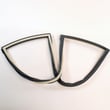
| Door gasket | Frost, moisture, warm temps | Refrigerator gasket panel W10443320 |
| Evaporator fan motor | Warm fridge, noisy fan | Refrigerator evaporator fan motor WPW10128551 |
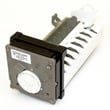
| Ice maker | No ice, small cubes | Refrigerator ice maker D7824706Q |
| Sealed system components | Poor cooling, long run times | Compressor, evaporator, condenser (service-level repair) |
A refrigerator that runs longer than it should uses more electricity and puts extra strain on the compressor and evaporator. Keeping airflow clear and seals tight is the most reliable way to extend the service life of a KitchenAid bottom-mount refrigerator.
Last updated: January 2026
What is the most common problem with a KitchenAid refrigerator?
For KitchenAid model KBFS25EWMS3, the most common issues we see are cooling problems (warm fridge or freezer) and ice maker or water system troubles (slow ice, no ice, leaks). These symptoms are often tied to airflow, drainage, or a failing fan or control component; use the KBFS25EWMS3 owner's manual troubleshooting section to narrow it down.
- Fridge not cold enough: restricted airflow, frost buildup on the evaporator, or a weak evaporator fan
- Freezer cold but fridge warm: evaporator fan issue or blocked air passages
- Water under the refrigerator: clogged/iced defrost drain or drain tube issue
- Ice maker stopped or slow: water supply restriction, air in the line, or ice maker component failure
- Noisy operation: evaporator fan blade rubbing ice, fan motor wear, or condenser area vibration
- Confirm power and controls: the manual notes controls must be on; after a new install, allow 24 hours to cool fully.
- Check door sealing: a poor seal causes warm temps and frost; inspect for gaps and torn gasket areas.
- Look for frost buildup: heavy frost on the back freezer panel often signals an airflow/defrost problem.
- Clean condenser area: dust on coils reduces cooling efficiency and can increase noise.
- Check for drain icing: if you see ice or water pooling, suspect a drain restriction.
| Symptom | Common part to inspect | Example part for this model |
|---|---|---|
| Warm temps, noisy freezer | Evaporator fan motor or blade | Refrigerator evaporator fan motor WPW10128551, refrigerator evaporator fan blade WP2169142 |
| Ice maker not making ice | Ice maker assembly | Refrigerator ice maker D7824706Q |
| Water leaks/puddles | Drain path components | Refrigerator drain tube W10619951 |
| Intermittent cooling | Main control | Refrigerator electronic control board WPW10317076 |
Cooling, ice, and leak complaints usually share the same root causes: restricted airflow, poor heat transfer, or water not draining correctly. Catching these early helps prevent food spoilage, ice buildup, and recurring puddles.
- How to replace the water filter in a KitchenAid refrigerator
- How to fix your evaporator cooling fan
- Common refrigerator ice maker problems and solutions
- How to get rid of refrigerator puddles
Last updated: January 2026