Owner’s manual
 View engine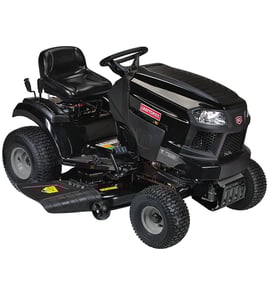





What year is my Craftsman mower serial number lookup?
For a Craftsman front-engine lawn tractor like model 917275972, the model number does not tell the year by itself. To identify the year, we use the product serial number from the ID tag and decode it using the format shown in your 917275972 owner's manual.
On most Craftsman riding mowers and lawn tractors, the ID tag is typically located in one of these spots:
- Under the seat on the fender pan
- On the rear frame near the hitch plate
- On the left or right side of the frame rail
- Under the hood near the dash support (less common)
Write down the serial number exactly as shown, including any letters.
Many Craftsman-built riding mower serial numbers use a 6-digit date code that reads as:
- MM = month
- DD = day
- YY = year
If the serial number begins with 072811, that decodes to:
| Code | Meaning | Result |
|---|---|---|
| 07 | Month | July |
| 28 | Day | 28 |
| 11 | Year | 2011 |
So that mower would be built on July 28, 2011.
If your serial number does not start with 6 digits, use these checks:
- Look for a 6-digit block within the serial number that could be a date
- Check for a separate “DOM” (date of manufacture) line on the tag
- Compare the tag info to the identification section in the 917275972 owner's manual
- If the tractor has had major electrical work, confirm the tag is original (not swapped with a dash panel)
Knowing the build date helps us match the correct parts and diagrams for wear items like the mower deck drive system, PTO switch, and belts. For example, if you are troubleshooting deck engagement, the switch.pto 582107601 is a common part tied to model-specific wiring and safety interlocks.
Last updated: February 2026
How much does it cost to replace a riding lawn mower engine?
Replacing the engine on a Craftsman riding lawn tractor model 917275972 typically costs about $260 to $1,800 installed, depending on the engine price, any extra parts needed (belts, pulleys, wiring), and local labor rates. Most shops book around 5 to 7 labor hours for a riding mower engine swap.
We see engine-replacement totals vary mainly because the job often includes more than just the engine.
- Engine cost (biggest variable): new, rebuilt, or used
- Labor time: access, rusted fasteners, and wiring complexity
- Extra parts: fuel line pieces, pulleys, belts, electrical parts
- Shop supplies: oil, filter, clamps, hardware
- Diagnosis time: confirming the old engine is truly the root cause
| Cost item | Typical range | Notes |
|---|---|---|
| Engine (part) | $200 to $1,400 | Varies by horsepower, crankshaft specs, and availability |
| Labor | $250 to $900 | Often 5 to 7 hours depending on shop rate |
| Fluids, tune-up items, small hardware | $25 to $200 | Oil, filter, fuel line, clamps, nuts/bolts |
| Total installed | $260 to $1,800 | Common real-world range |
Many “dead engine” complaints are actually starting or safety-interlock issues. Your 917275972 owner's manual describes the operator presence and interlock system behavior (brake pedal depressed, attachment clutch disengaged, seat switch logic).
- Battery weak or cables corroded
- Starter solenoid contacts failing (clicking, no crank)
- PTO switch or brake/seat safety switch not made
- Fuel delivery issue (stale fuel, clogged outlet)
- Seized deck component creating drag (belt, idler, mandrel)
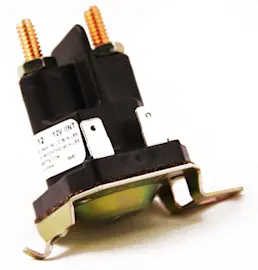
If you are hearing a click but the engine will not turn, the solenoid with brass plunger 532146154 is a common electrical part to inspect and replace.
An engine replacement is one of the highest-cost repairs on a riding mower. Verifying the starting circuit, safety interlocks, and deck drive components first helps you avoid paying for an engine when a switch, solenoid, belt, or pulley is the real problem.
Last updated: February 2026
What are the parts of a tractor engine?
On the Craftsman 917275972 front-engine lawn tractor, the engine is made up of core internal parts (like the cylinder, crankshaft, and cylinder heads) plus external systems that make it start, run, and drive attachments (fuel tank parts, throttle/choke controls, muffler, and electric clutch). See the owner's manual for the exact engine and control layout.
These parts create compression, convert combustion into rotation, and seal the engine:
- Cylinder assembly (engine block)
- Crankshaft
- Cylinder heads
- Head gasket and other engine gaskets
- Oil seals and sump (crankcase base)
The 917275972 parts breakdown shows several engine-area items that commonly get replaced during troubleshooting or maintenance:
- Fuel tank stem (connects fuel tank to fuel line)
- Muffler (exhaust)
- Choke control and throttle control (operator controls)
- Electric clutch (engages mower deck/attachments)
- Starter solenoid (switches battery power to the starter)
| System | What it does | Example part on this model |
|---|---|---|
| Starting | Sends power to starter | Solenoid with brass plunger 532146154 |
| Fuel | Helps route fuel from tank | Frigidaire lawn & garden equipment engine fuel tank stem 532139277 |
| Blade/attachment drive | Engages mower deck | Lawn mower electric clutch 532174509 |
Knowing whether you are dealing with an internal engine issue (compression, sealing, crankshaft) versus an external engine system issue (fuel delivery, starting circuit, choke/throttle) helps you diagnose faster and order the right Craftsman parts the first time.
If the engine clicks but will not crank, start with the battery connections and the starter solenoid circuit; our riding lawn mower engine clicks but doesnt turn over video walks through the most common causes.
Last updated: February 2026
Is it worth replacing a lawn mower engine?
Yes, replacing the engine on your Craftsman 917275972 front-engine lawn tractor is worth it when the tractor’s deck, steering, and drive system are still solid and the total engine-swap cost stays well below the cost of replacing the whole tractor. It is usually not worth it when multiple major systems are worn out.
- Worth it if the mower deck is straight, not rusted through, and cuts evenly after basic service
- Worth it if the tractor still drives smoothly (no slipping, squealing, or frequent belt issues)
- Worth it if you can do the work safely and have the tools for fuel, wiring, and throttle/choke hookup
- Not worth it if the deck is damaged, the steering is loose, and the drivetrain needs major work too
- Not worth it if you are also chasing electrical no-start problems (key switch, solenoid, harness) at the same time
For model-specific maintenance and safety steps (especially around blades, belts, and adjustments), follow the owner's manual.
| What you find on the tractor | What it usually means | Recommendation |
|---|---|---|
| Deck and frame are solid; only engine failed | Good candidate for an engine swap | Replace engine |
| Engine failed plus frequent drive issues | Multiple repairs stacking up | Consider replacing tractor |
| Electrical starting issues plus engine concerns | Diagnosis gets expensive fast | Diagnose starting system first |
| Deck cuts uneven and needs major rebuild | More than an engine problem | Consider replacing tractor |
Even if you replace the engine, we recommend inspecting these related items because they affect starting and mowing performance:
- Starter circuit components like the solenoid with brass plunger 532146154
- PTO engagement components like the switch.pto 582107601
- Wear items on the deck drive side like the riding lawn mower blade drive belt 532148763
- Ground drive wear items like the lawn tractor lawn mower secondary v-belt 532137153
An engine swap can restore reliability, but it only pays off when the rest of the tractor is safe and serviceable. The manual’s guidance on safe servicing (for example, avoiding adjustments with the engine running and using caution around sharp blades) helps prevent injuries and protects the tractor from avoidable damage.
Last updated: February 2026
What engine does Craftsman riding mower use?
Your Craftsman riding mower model 917275972 is equipped with a 22.0 HP low-emission gasoline engine (electric start) as listed in the model’s documentation. The exact engine manufacturer and engine model code are identified on the engine ID label and in the 917275972 owner's manual.
For Craftsman 917275972, the owner’s manual identifies this tractor package as:
- 22.0 HP engine
- Low-emission engine design
- Electric start
- 6-speed transaxle
- 50-inch mower configuration
Craftsman tractors can use engines from different suppliers across production runs; the reliable way to confirm the engine brand and exact model is the engine’s ID tag.
- Find the engine ID label (often on the blower housing, valve cover area, or near the starter)
- Write down the engine model, type/spec, and code (wording varies by engine brand)
- Match that information to the engine section of the 917275972 owner's manual
- Use the engine ID when selecting tune-up items (spark plug, air filter, oil filter) and fuel system parts
| Item you need | Where to get it | What it’s used for |
|---|---|---|
| Tractor model number: 917275972 | Tractor frame tag, paperwork | Correct belts, deck parts, chassis parts |
| Engine HP: 22.0 HP | Owner’s manual | Confirms tractor configuration |
| Engine make and model code | Engine ID label | Correct engine tune-up and repair parts |
The tractor model number gets you the right deck, belt routing, and chassis parts; the engine ID gets you the right engine maintenance parts. Using both prevents wrong-fit parts and hard-starting or poor-running issues.
Last updated: February 2026