Owner’s manual
 Error Codes


What is the average lifespan of a GE refrigerator?
GE refrigerators typically last 12 to 16 years on average, and many run 10 to 20 years with normal use. For your GE GSS25WSTISS side-by-side, consistent maintenance (especially airflow and clean water flow) is what most often determines whether you land closer to 10 years or closer to 20.
What affects lifespan the most
- Condenser airflow and cleanliness (dust buildup makes the compressor work harder)
- Door seal condition (warm air leaks increase run time)
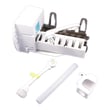
- Ice maker and dispenser use (more moving parts, more wear)
- Water quality and pressure (affects valves, filter head, and ice maker fill)
- Temperature settings and loading habits (overpacking blocks vents)
Maintenance that helps you reach the high end of the range
Use the GSS25WSTISS owner's manual for model-specific care steps and intervals.
- Vacuum and brush the condenser area regularly
- Keep air vents inside the freezer and fresh food sections unblocked
- Replace the water filter on schedule to protect the water system
- Level the refrigerator so doors close fully and consistently
- Address small issues early (slow ice production, warm spots, unusual fan noise)
Common wear items vs. “big ticket” components
| Category | Examples on this model | Why it matters |
|---|---|---|
| Routine maintenance | Water filter, cleaning coils | Reduces strain on cooling system |
| Mid-life repairs | Sensors, fans, water valve | Restores stable temps and ice/water performance |
| Major cooling repairs | Compressor, sealed system parts | Usually the deciding factor in repair vs. replace |
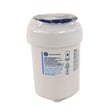
If you are maintaining water quality, the GE refrigerator water filter MWFP is the correct filter style listed for this model.
Why it matters
A refrigerator’s lifespan is mostly about run time and heat load. When airflow is restricted or doors leak, the compressor and fans run longer, which shortens overall life and can lead to temperature swings.
Last updated: January 2026
What is the most common problem with a GE refrigerator?
Cooling problems are the most common issue we see with GE refrigerators like model GSS25WSTISS. In many cases, the fix is basic (airflow or maintenance), but cooling complaints can also point to a defrost-system fault, a fan problem, or a sealed-system issue.
Most common causes of “not cooling”
Start with the items that cause the highest number of everyday cooling complaints:
- Dirty condenser area restricting heat release
- Doors not sealing or being left slightly open
- Air vents blocked by food packages
- Frost buildup from a defrost problem
- Fan not moving air through the freezer and fresh-food sections
- Temperature sensing or control issues
Quick checks we recommend first
These steps solve a lot of “warm fridge” calls without replacing parts:
- Confirm the controls are set to normal cooling (not “0/off”); note that “0/off” does not remove power to the light circuit.
- Make sure nothing is holding a door open.
- Look for heavy frost on the freezer back wall (often a defrost issue).
- Clean and clear airflow paths inside both compartments.
- If you have small or hollow ice cubes, replace the water filter.
Parts that commonly relate to cooling symptoms on GSS25WSTISS
If basic checks do not help, these model-matched parts are frequent suspects depending on the symptom.
| Symptom you notice | Common system involved | Example model-matched part |
|---|---|---|
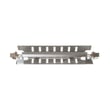
| Heavy frost, warming temps | Defrost system | Refrigerator defrost heater WR51X10055 |
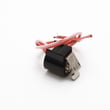
| Temps swing, inconsistent cooling | Temperature sensing | GE profile refrigerator temperature sensor WR55X10025 |
| Weak ice production, hollow cubes | Water filtration | GE refrigerator water filter MWFP |
| Warm fridge, freezer OK or noisy airflow | Air circulation | Refrigerator evaporator motor WR60X10307 |
Why it matters
Cooling issues can spoil food quickly and can also stress the compressor if airflow is restricted. Catching simple causes early (blocked vents, dirty condenser area, door sealing problems) often prevents bigger repairs.
For model-specific operating and care guidance, follow the GSS25WSTISS owner’s manual.
Last updated: January 2026
Are GE side by side refrigerators good?
Yes. GE side-by-side refrigerators like model GSS25WSTISS are a solid choice for everyday reliability, easy organization, and convenient features such as an ice maker and water dispenser. It’s also normal for newer units to sound different than older refrigerators during operation.
What “good” usually means for this GE side-by-side
A good side-by-side keeps steady temperatures, circulates air well, and makes ice and dispenses water consistently. For GSS25WSTISS, the GSS25WSTISS owner’s manual also notes that modern refrigerators can have normal operating sounds (hums, whooshes, clicks) because of newer technology.
Common strengths customers value
- Spacious fresh food and freezer sections with easy access
- Adjustable shelving for flexible storage
- Bright interior lighting that improves visibility
- Built-in ice maker and through-the-door water dispensing
- Efficient cooling that may run longer after frequent door openings
What to watch for (and how to judge it quickly)
Some “complaints” are actually normal behavior, especially sound and run time.
| What you notice | Often normal | When it’s a problem |
|---|---|---|
| Humming or whooshing | Compressor and pressure equalizing | Gets suddenly much louder or changes sharply |
| Longer run times | Frequent door openings, warm groceries | Temperatures won’t reach set points |
| Ice maker seems slow | High use, low water pressure | No ice production at all |
Parts that affect performance most
If cooling, ice, or water performance drops, these are common service parts for this model:
- GE refrigerator water filter MWFP for taste, flow, and dispenser performance
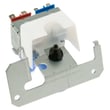
- Refrigerator water valve WR57X33326 if water won’t dispense or ice maker won’t fill
- Refrigerator evaporator fan motor WR60X10307 if airflow is weak or temperatures vary
- GE profile refrigerator temperature sensor WR55X10025 if temperatures seem inaccurate
Why it matters
A “good” refrigerator is one that holds safe food temperatures and fits your routine. Understanding normal sounds and keeping up with basics like water filtration helps you avoid unnecessary service calls and keeps ice and water working as expected.
Last updated: January 2026
How wide is a 25.6 cubic foot refrigerator?
Most 25.6 cu. ft. side-by-side refrigerators are about 36 inches wide. For the GE GSS25WSTISS, plan for a 36-inch class cabinet and confirm the exact cutout and clearance requirements in the GSS25WSTISS owner's manual.
Typical width and what to plan for
Even when capacity is the same (25.6 cu. ft.), width can vary slightly by brand and door style. For shopping, delivery, and cabinet planning, these are the common ranges:
- Typical cabinet width: 35 3/4 to 36 inches
- Common opening needed: 36 inches minimum (more is better)
- Door swing clearance: often needs extra space beyond cabinet width
- Moving through doorways: if an entrance is less than 38 inches wide, the manual indicates the doors may need to be removed
Quick sizing guide (what we see most often)
| Measurement | Typical for a 25.6 cu. ft. side-by-side | What to do before delivery |
|---|---|---|
| Cabinet width | ~36 in. | Measure the cabinet opening at front and back |
| Minimum passage width | 36 to 38+ in. | Measure doorways, halls, and turns |
| Clearance for doors/handles | Varies | Check swing space next to walls/cabinets |
How to measure correctly (so it fits the first time)
Use a tape measure and write down each number:
- Cabinet opening width (inside-to-inside of the surrounding cabinets)
- Depth available (including baseboards and any countertop overhang)
- Height clearance (floor to cabinet soffit)
- Path to the kitchen (front door, hallways, tight turns)
- Water line location if you use the dispenser or ice maker
Why it matters
A refrigerator that is “36-inch wide” can still fail to fit if the doorway is tight, the unit must pivot around a corner, or the doors cannot open fully. Planning for clearance helps prevent delivery issues and protects the door seals, hinges, and dispenser components.
Last updated: January 2026