Owner’s manual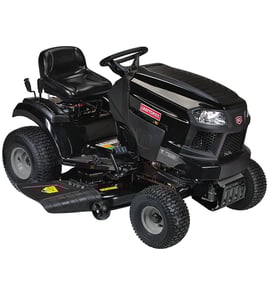


What brand engine does Craftsman use?
Craftsman riding mowers like model 917274953 are commonly equipped with engines supplied by major small-engine manufacturers such as Briggs & Stratton, Kohler, or Kawasaki. The exact engine brand on your tractor is confirmed by the engine identification label and the specifications listed in the 917274953 owner's manual.
How to identify the engine brand on your 917274953
Check these locations first (engine brand and model are usually printed on a decal or metal tag):
- On top of the engine shroud (near the recoil cover area, even on electric-start models)
- On the valve cover or blower housing
- Near the muffler heat shield area (look for a model and type code)
- Under the hood on the engine side of the frame
- In the engine section of the 917274953 owner's manual
What you should match before buying engine-related parts
When ordering tune-up or fuel system parts, match the engine ID information, not just the tractor model number.
| What to match | Where you’ll see it | Why it matters |
|---|---|---|
| Engine brand | Engine shroud decal/tag | Determines the correct parts family |
| Engine model | Engine label | Narrows to the correct carburetor, starter, filters |
| Spec/type code | Engine label | Prevents wrong-fit parts within the same model |
| Tractor model | Tractor frame tag | Confirms chassis and deck parts for 917274953 |
Why it matters
Craftsman tractors can share the same chassis model while using different engine suppliers across production runs. Confirming the engine brand and model keeps you from ordering the wrong air filter, spark plug, fuel line, or starter parts.
Last updated: January 2026
How to identify a lawn mower engine?
On the Craftsman lawn tractor model 917274953, you can identify the engine by locating the engine identification numbers stamped on the engine shroud (sheet metal) near the muffler and air cleaner area. Those numbers let us match the correct engine parts and tune-up specs in the 917274953 owner's manual.
Where to look on the engine
Check these common ID locations on front-engine lawn tractors like the 917274953:
- On the engine shroud (sheet metal) directly above the muffler (muffler can be on the right or left side)
- On the front of the engine, between the engine symbol/marking and the air cleaner housing
- Near the valve cover area or blower housing (often a stamped plate or stamped numbers)
- On a label near the starter or flywheel screen (if equipped)
What numbers to write down
For the best match, record all the IDs you find (even if some are partially worn):
- Engine model (the main identifier)
- Type/spec code (narrows down carburetor, ignition, and governor variations)
- Code/date (helps identify production run changes)
| What you find | What it’s used for | Example outcome |
|---|---|---|
| Engine model number | Identifies the engine family | Correct air filter, spark plug, carb parts |
| Type/spec code | Identifies exact configuration | Correct ignition coil, governor parts |
| Code/date | Confirms production version | Avoids ordering the wrong revision |
Why it matters
The tractor model number (917274953) identifies the chassis and mower deck, but the engine numbers identify the exact engine build. That is what prevents wrong-part issues when you are ordering fuel system parts, ignition parts, or doing a tune-up.
Quick safety reminder before checking
From our manual guidance, use these basics before reaching around the muffler and shroud:
- Shut the engine off and let it cool
- Remove the key and keep hands clear of moving parts
- Never make adjustments or repairs with the engine running
Last updated: January 2026
Is it worth replacing a lawn mower engine?
Yes, replacing the engine on your Craftsman lawn tractor model 917274953 is worth it when the tractor’s deck, transmission, steering, and frame are still solid and the total engine swap cost stays well below the cost of a comparable new rider. If multiple major systems are worn out, replacing the tractor is the better value.
Quick decision checklist
- The mower deck is not rusted through and still cuts evenly after leveling
- The tractor drives normally (no slipping, weak hydro, or grinding)
- Steering and front axle are tight (no severe play or bent linkage)
- You can do the work safely or have a shop install the engine
- The engine replacement total (engine, hardware, labor) is under about half the price of a similar new tractor
Cost and effort: what to compare
| Option | Typical cost | Time/effort | Best when |
|---|---|---|---|
| Replace engine | High | Medium to high | Chassis is in great shape and you want to keep the tractor |
| Repair existing engine | Medium | Medium | Problem is limited (fuel, ignition, carburetion, cooling) |
| Replace tractor | Highest | Low | Deck, drivetrain, and steering all show heavy wear |
Before you commit: rule out common “engine is bad” causes
Many no-start or poor-running complaints are maintenance related. Our manual for this model calls out routine items like replacing spark plugs about every 100 hours/season, replacing the in-line fuel filter once each season, and keeping cooling fins and shrouds clean to prevent overheating damage. Use the 917274953 owner’s manual to match the correct tune-up specs and procedures.
- Replace the spark plug and set the correct gap (per product specifications)
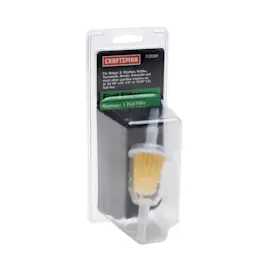
- Replace the in-line fuel filter (arrow toward the carburetor)
- Clean the air filter and check for stale fuel
- Clean the engine air screen and cooling fins; reinstall cooling shrouds
- Inspect the muffler for corrosion and replace if needed
Why it matters
An engine swap only pays off if the rest of the tractor can reliably support the new engine. If the deck is worn, belts are failing, or steering and drivetrain parts are near end-of-life, you can spend engine money and still have a tractor that is frustrating to use.
Last updated: January 2026