Installation guide
 Owner’s manual
 Error Codes


What's the average lifespan of a KitchenAid dishwasher?
Most KitchenAid dishwashers, including model KUDS03FTSS3, last 10 to 14 years with normal household use. Consistent cleaning, correct loading, and fixing small problems early (draining, drying, or starting issues) are what most often push a dishwasher to the high end of that range.
- Water quality (hard water speeds up mineral buildup on the sump, spray arms, and heating surfaces)
- Maintenance habits (routine cleaning and periodic deep-clean cycles)
- How often you run it (daily heavy loads wear pumps and seals faster)
- Drain performance (standing water strains the drain pump and can cause odors)
- Door and rack wear (hinges, balance links, and racks take constant mechanical stress)
We recommend following the care steps in the KUDS03FTSS3 owner’s manual. A simple, effective routine is:
- Run a cleaning cycle with 2 cups of white vinegar in a dishwasher-safe cup on the bottom rack (no detergent)
- Use an air-dry/energy-saving dry option for that cleaning cycle
- Keep the spray arms clear of debris and labels
- Load dishes so they do not strike each other during wash action
- Address “won’t start,” “not draining,” or “not cleaning” symptoms promptly
| Symptom | What it often points to | Example part for this model |
|---|---|---|
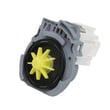
| Water left in tub | Drain restriction or weak drain pump | Dishwasher drain pump WPW10348269 |
| Stops mid-cycle or dead control | Power issue, blown fuse, or control problem | Fuse, electronic control board |
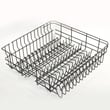
| Poor cleaning | Spray arm blockage, sump issues, wash motor wear | Spray arm, sump, pump motor |
A dishwasher that is maintained and draining correctly runs cooler, quieter, and with less strain on the pump motor, seals, and electronic controls. That directly improves reliability and helps you avoid premature failures.
Last updated: February 2026
What does 03 mean on a dishwasher?
On a KitchenAid dishwasher like model KUDS03FTSS3, “03” is most often seen as part of an error code that points to a drain or water-removal problem. In practice, it usually means the dishwasher is not draining correctly and needs the drain path checked and cleared.
- Cancel the cycle and let the unit try to drain; listen for the drain pump running.
- Check the sink drain/disposer connection for a clog where the dishwasher drain hose connects.
- Inspect the drain hose for kinks, crushing, or a low loop issue.
- Look for standing water in the tub; remove debris around the sump area.
- Verify the door is fully closed and latched; some models stop mid-cycle if the door is not latched.
For model-specific guidance on cycle behavior and troubleshooting steps, use the KUDS03FTSS3 owner’s manual.
If the drain path is clear but the dishwasher still will not drain, these parts are common suspects on this platform:
| Symptom you notice | Most likely area | Example part for KUDS03FTSS3 |
|---|---|---|
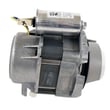
| Hums but won’t pump water out | Drain pump jammed or failed | Dishwasher drain pump WPW10348269 |
| Drains slowly or backs up | Drain hose restricted or routed wrong | Dishwasher drain hose (inspect routing) |
| Stops and won’t run reliably | Power interruption or control issue | Household breaker/fuse, wiring, control |
A drain-related “03” condition can leave dirty water in the tub, reduce cleaning performance, and cause the dishwasher to pause or stop during a cycle. Clearing the drain path early prevents repeat errors and helps protect the pump and motor.
If your display shows a longer code (for example, an “F” code with numbers), match the exact code to the chart in KitchenAid microclean he dishwasher error codes so you troubleshoot the right circuit (drain, fill, heating, or sensor).
Last updated: February 2026
What parts of a KitchenAid mixer do not go in the dishwasher?
KitchenAid mixer attachments with burnished aluminum should not go in the dishwasher because detergent and heat can cause oxidation and discoloration. For best results, we hand wash those pieces, rinse, and dry immediately; check your KUDS03FTSS3 owner’s manual for dishwasher-safe care guidance for your KitchenAid dishwasher.
These are the most common KitchenAid stand mixer pieces that should be hand washed:
- Burnished (polished) aluminum flat beater
- Burnished aluminum dough hook
- Wire whip/whisk with an aluminum hub (the center where the wires insert)
- Any attachment with uncoated aluminum parts
- Painted, wood, or non-dishwasher-safe accessory pieces (if included with specialty attachments)
Hand washing prevents oxidation and keeps the finish looking normal.
- Wash in warm water with mild dish soap
- Use a soft sponge; avoid abrasive pads
- Rinse thoroughly to remove detergent residue
- Dry immediately with a towel (do not air-dry)
- If oxidation leaves gray marks, rewash and dry; the finish change is cosmetic
| Mixer piece material | Dishwasher safe? | Best cleaning method |
|---|---|---|
| Burnished aluminum | No | Hand wash, dry immediately |
| Stainless steel (all-stainless) | Yes (typically) | Dishwasher or hand wash |
| Coated/nonstick (varies) | Sometimes | Follow the attachment instructions |
Dishwasher detergents are alkaline and, combined with heat, can react with aluminum. That reaction causes dulling, dark spots, or gray residue that can transfer to hands or towels.
Last updated: February 2026
How to fix rubber seal on KitchenAid dishwasher?
On KitchenAid dishwasher model KUDS03FTSS3, a “rubber seal” problem is usually a door gasket that has popped out of its channel or is torn. We fix it by cleaning the channel, pressing the gasket in evenly all the way around, then keeping the door closed so the gasket seats correctly (see the KUDS03FTSS3 owner’s manual).
- Turn off power at the breaker; avoid running the dishwasher with the seal out of place.
- Open the door and inspect the gasket for twists, gaps, or hardened sections.
- Wipe the gasket and the mounting channel with warm water and mild dish soap; dry fully.
- Starting at the top center, press the gasket into the channel using your fingers, working evenly down both sides.
- Close and latch the door for several hours so the gasket conforms to the frame.
- Run a short cycle and check for drips along the bottom corners.
A gasket typically needs replacement when it is split, permanently flattened, sticky, or no longer springs back.
| What you see | Most likely cause | What to do |
|---|---|---|
| Leak at one corner | Gasket not fully seated | Reseat and latch door for several hours |
| Leak along entire side | Gasket twisted or stretched | Remove and reinstall evenly from top center |
| Seal looks cracked or stiff | Aged rubber | Replace the gasket |
| Door won’t close smoothly | Gasket bunched in channel | Reposition gasket; confirm it is fully in the groove |
A properly seated door gasket keeps water inside the tub, protects the door latch area, and helps prevent moisture from reaching electrical components like the control board.
- Confirm the dishwasher is level and not leaning forward.
- Look for spray hitting the door directly; a damaged spray arm can contribute (see dishwasher not cleaning dishes video).
- Check for obstructions on the rack that prevent the door from closing fully.
Last updated: February 2026
What is the most common problem with a KitchenAid dishwasher?
The most common KitchenAid dishwasher problems are poor cleaning (from blocked spray paths or filtration), not draining (standing water), and “won’t start” symptoms tied to power, door latch, or control issues. For KitchenAid KUDS03FTSS3, our troubleshooting steps in the KUDS03FTSS3 owner's manual cover these exact categories.
- Not draining or standing water: check the sink/disposer connection, drain loop, and hose for kinks; then suspect the drain pump.
- Poor cleaning or gritty dishes: confirm spray arms spin freely, don’t overload racks, and clean the filter area.
- Won’t start or stops mid-cycle: confirm the door is fully closed and latched, and verify the cycle selection.
- No power symptoms: check the home breaker or fuse; the manual notes a tripped breaker or blown fuse can stop operation.
- Long cycles: incoming water temperature and heavy soil can make the dishwasher add time, heat, and water.
| Symptom | Most likely cause | What we recommend first |
|---|---|---|
| Water left in tub | Drain restriction or failed pump | Inspect hose/air gap, then test/replace dishwasher drain pump WPW10348269 |
| Dishes still dirty | Blocked spray, loading, filtration | Clear spray arm holes; load so items don’t block wash action |
| Unit won’t run | Door not latched, power issue | Latch door firmly; check breaker/fuse |
| Runs then stops | Motor overload reset | Wait a few minutes; retry cycle |
These problems usually start as a simple restriction (food debris, kinked hose, blocked spray jets) and then snowball into repeat wash cycles, odors, or pump and motor strain. Catching the root cause early protects the sump, wash pump, and electronic control.
- If you cancel a cycle, the dishwasher can run a short drain; let it drain completely.
- If the dishwasher won’t fill, check that the overfill float moves freely.
- For odor and buildup, run a cleaning cycle with 2 cups of white vinegar on the bottom rack (no detergent) using an air-dry or energy-saving dry option.
Last updated: February 2026