Owner’s manual
 Error Codes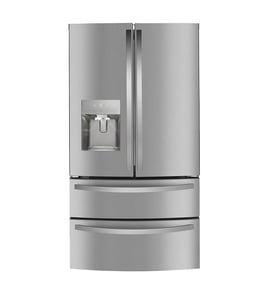




Is there a way to reset a Kenmore Elite refrigerator?
Yes. For Kenmore Elite refrigerator model 25344723105, the most reliable reset is a power reset: unplug the refrigerator, wait about 5 to 10 minutes, then plug it back in. After restoring power, allow up to 4 hours for temperatures to stabilize (especially after an outage or move). See the 25344723105 owner's manual for control and operating details.
Reset options that work most often
- Power reset (recommended): Unplug, wait 5 to 10 minutes, plug back in.
- Breaker reset: Turn the circuit breaker off, wait 5 minutes, then turn it on.
- Control setting check: Make sure the temperature control is not set to OFF.
- Cooling recovery: If the unit was recently disconnected, give it time to cool fully.
What to check right after a reset
A reset clears many temporary control issues, but it will not fix airflow or sealing problems. Check these items first:
- Confirm the plug is fully seated in the outlet.
- Check the house fuse or breaker (use a dedicated circuit when possible).
- Reduce door openings for the next few hours.
- Verify the door closes tightly and the gasket is clean and sealing.
- Make sure interior vents are not blocked by food packages.
Common symptoms and what a reset changes
| Symptom | What a reset can help | What to check if it returns |
|---|---|---|
| Not cooling after power flicker | Clears a “hung” control state | Temperature control setting, door left ajar, warm food load |
| Runs constantly | Restarts normal cycling | Door seal leaks, frequent openings, hot room conditions |
| Frost buildup affecting airflow | May restart defrost timing | Defrost system parts such as the defrost timer 5304518034 |
Why it matters
Resetting is a safe first step because it restores normal operation without replacing parts. If cooling does not improve after the full cool-down period, the issue is usually power supply, airflow, door sealing, or a defrost/cooling component rather than the need for another reset.
Last updated: January 2026
What is the average lifespan of a Kenmore Elite refrigerator?
A Kenmore Elite refrigerator like model 25344723105 typically lasts 10 to 15 years. With consistent maintenance (cleaning condenser coils, keeping door gaskets sealing, and correcting frost or airflow issues early), many units reach the upper end of that range.
Typical lifespan and what affects it
Most refrigerator life is determined by how hard the sealed system and airflow components have to work.
- Dirty condenser coils make the compressor run longer and hotter
- Worn or warped door gaskets let warm, moist air in and increase run time
- Frost buildup from defrost problems restricts airflow and reduces cooling
- Overpacking blocks vents and causes temperature swings
- Poor leveling can lead to doors not sealing consistently
Quick maintenance schedule (simple and effective)
Use this as a practical baseline for a Kenmore Elite refrigerator.
| Task | How often | What you’re preventing |
|---|---|---|
| Clean condenser coils | Every 6 to 12 months | Overheating, long run times |
| Check door seal for gaps | Monthly | Warm air leaks, moisture, frost |
| Confirm temps (fresh food/freezer) | Monthly | Food spoilage, compressor overwork |
| Clear/inspect drain area | As needed | Water puddles, ice buildup |
When repairs start to impact “lifespan” decisions
If cooling performance drops, we focus first on airflow and defrost because those issues can mimic major failures.
- Loud or intermittent fan noise can point to the freezer evaporator fan motor 297309000
- Heavy frost on the evaporator can point to the defrost timer 5304518034 or a defrost control issue
- A door that won’t seal flat can often be corrected by replacing the refrigerator door gasket (black) 5304507206
Why it matters
A refrigerator can physically run longer than 15 years, but efficiency and reliability usually decline when seals leak, coils are dirty, or defrost and airflow problems go unresolved. Keeping temperatures stable reduces wear on the compressor and helps extend service life.
For model-specific operating and care guidance, follow the 25344723105 owner’s manual.
Last updated: January 2026
How many cubic feet is my Kenmore Elite refrigerator?
The cubic-foot capacity for Kenmore Elite refrigerator model 25344723105 is listed in the specifications information for your exact unit. The fastest way to confirm the official capacity rating is to check the 25344723105 owner's manual and the model and serial tag inside the fresh-food compartment.
Where to find the official capacity
Use these spots to get the exact cubic-feet number for your specific configuration:
- The specifications section in the 25344723105 owner's manual
- The model and serial number plate (commonly on the left interior wall)
- Any product specification sheet that came with the refrigerator
- The rating label information printed on the unit (varies by design)
What “cubic feet” means (and what it does not)
Cubic feet is the manufacturer’s total interior volume measurement; it is not the same as the space you can actually fill once shelves, bins, and the ice maker are installed.
| Term you may see | What it means | What you should use it for |
|---|---|---|
| Total capacity (cu. ft.) | Combined interior volume | Comparing refrigerator sizes |
| Fresh food capacity | Refrigerator section volume | Planning everyday storage |
| Freezer capacity | Freezer section volume | Planning frozen-food storage |
Why it matters
Knowing the exact cubic-foot capacity helps when you are comparing replacement refrigerators, planning kitchen fit, or deciding whether storage concerns are organization-related versus an airflow or temperature-control issue.
Last updated: January 2026
Why is my Kenmore Elite refrigerator not cooling enough?
If your Kenmore Elite refrigerator model 25344723105 is not cooling enough, the most common causes are restricted airflow (dirty condenser area, blocked toe grille, poor cabinet clearances), a defrost system problem causing frost buildup, or a failed evaporator fan. Use the 25344723105 owner's manual to confirm airflow clearances and safe power steps before troubleshooting.
Quick checks that fix many “not cold enough” complaints
- Make sure the toe grille at the lower front is not blocked; airflow there is essential for proper operation.
- Verify installation clearances are met (sides and back/top) so heat can leave the cabinet.
- Confirm the room temperature is within the normal operating range (avoid locations below 40 F or above 110 F).
- Clean dust from the condenser area (unplug first).
- Check that doors close and seal fully; a leak can cause warm temps and moisture.
If the freezer is frosting up
A heavy frost blanket on the freezer’s back wall usually points to a defrost failure. On this model, common suspects include the defrost timer, heater, or defrost thermostat.
- If the evaporator is packed with frost, the evaporator fan cannot move cold air.
- A timer that stalls can prevent defrost cycles.
Helpful parts to consider:
- Defrost timer 5304518034
- Defrost heater 216730700
- Refrigerator defrost bi-metal thermostat 216731001
If you do not hear the freezer fan running
The evaporator fan circulates cold air through the freezer and into the fresh food section. If it is not running, temperatures rise even if the compressor runs.
- Listen for a steady fan sound when the unit is running.
- Check for ice obstruction around the fan shroud.
- If the fan is silent and unobstructed, the motor is a common fix.
Part that matches this model:
| Symptom | What it often means | Part to check |
|---|---|---|
| Freezer cold, fridge warm | Air not moving to fresh food | Freezer evaporator fan motor 297309000 |
| Frost buildup, weak airflow | Defrost system not clearing ice | Defrost components above |
Why it matters
Refrigerators cool by moving heat out of the cabinet. When airflow is restricted (blocked toe grille, tight clearances, dirty condenser area) or frost blocks the evaporator, the sealed system cannot shed heat efficiently, so temperatures climb.
Last updated: January 2026