Owner’s manual
 Error Codes


What is the life expectancy of a Kenmore washer?
Most Kenmore washers last 10 to 15 years with normal household use and basic maintenance; that range applies well to Kenmore model 11022932100, which is a traditional top-load design with a mechanical timer and agitator. Heavy weekly use, overloading, and poor draining shorten lifespan the fastest.
Typical lifespan and what changes it
A washer’s service life is mostly driven by load size, cycle frequency, and how well it drains and spins.
- Normal use (3 to 5 loads/week): 10 to 15 years
- Heavy use (daily loads, large families): closer to 8 to 12 years
- Light use (1 to 2 loads/week): often 12 to 18 years
- Best longevity habits: correct water level, balanced loads, and prompt repairs of small leaks
For model-specific operating and feature details (water level, temperatures, rinse options, and speeds), use the 11022932100 owner's manual.
Parts that most often decide “repair vs replace”
On a top-load Kenmore like 11022932100, these parts commonly affect performance as the washer ages:
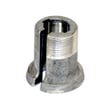
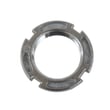
- Agitation issues: worn agitator dog 80040
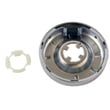
- No spin or loud coupling noise: motor coupling
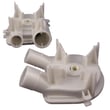
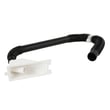
- Won’t drain or drains slowly: drain pump
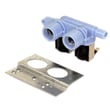
- Won’t fill or fills slowly: inlet valve
- Leaks at the tub or center post: tub gasket or center post seal
Quick cost-to-impact comparison
| Symptom | Common area | Why it matters for lifespan |
|---|---|---|
| Agitator slips or won’t move clothes | Agitator drive | Poor cleaning leads to repeat cycles and extra wear |
| Won’t drain | Drain system | Standing water accelerates odor, corrosion, and bearing wear |
| Won’t spin or bangs around | Drive and suspension | Out-of-balance stress damages the drive system |
| Slow fill or no fill | Water inlet | Long fill times strain the timer and extend cycle time |
Why it matters
If your washer is already near the 10 to 15 year mark, fixing a simple wear item (like agitator dogs or a drain pump) often restores performance quickly; ignoring draining, spinning, or leaking problems typically causes secondary damage to the gear case, basket drive, and seals.
Last updated: February 2026
What is the UL code on the Kenmore 11022932100 washer?
On the Kenmore 11022932100 washer, a UL code indicates the washer detected an unbalanced load and stopped or limited the spin to protect the basket and drive system. Correcting load balance and making sure the washer is level typically clears the code.
What to do first (fast fixes)
- Pause the cycle and open the lid.
- Redistribute items evenly around the basket; avoid one heavy item by itself.
- Remove a few items if the tub is tightly packed.
- Confirm the washer sits solidly on the floor; adjust leveling legs until it does not rock.
- Run a Spin/Drain (or a spin portion of a cycle) to confirm the basket accelerates smoothly.
For model-specific operating tips and cycle behavior, use the 11022932100 owner's manual.
Common causes of UL on this washer
| Cause | What you will notice | What usually fixes it |
|---|---|---|
| Load is off-balance | Thumping, banging, or repeated attempts to spin | Rebalance load; reduce load size |
| Washer not level | Tub walks or cabinet rocks | Level the feet; verify floor is solid |
| Suspension support is weak | Frequent out-of-balance with normal loads | Inspect/replace suspension components |
| Drive components slipping | Basket struggles to reach speed | Inspect drive coupling and clutch-related parts |
When to check parts (if UL keeps coming back)
If UL happens with small, evenly distributed loads and the washer is level, we focus on wear items that affect spin stability:
- Suspension support: washer suspension spring WP63907
- Drive train coupling (motor to transmission): coupling 285753A
- Spin system wear (less common, more involved): drive block, clutch, gear case
Why it matters
Repeated unbalanced spinning is hard on the basket, gear case, and pump system. Fixing the root cause helps the washer spin out water properly, reduces noise and vibration, and prevents repeat cycle interruptions.
Last updated: February 2026
How many cubic feet is a Kenmore Model 110 washer?
Kenmore washer models that start with 110 (including 11022932100) are Whirlpool-built top-load washers; most are in the about 3.2 to 3.5 cu. ft. range, with some variations by design year and tub style. For the exact capacity for your washer, we use the spec listing in the 11022932100 owner's manual.
What “110” means for capacity
The 110 prefix identifies a Kenmore washer platform commonly associated with a traditional top-load design (agitator and deep-fill water levels). Your manual also calls out features like multiple water level settings and a porcelain-on-steel basket, which aligns with this capacity class.
Typical capacity ranges you’ll see
- Standard top-load (agitator): about 3.0 to 3.6 cu. ft.
- Larger traditional top-load: about 3.6 to 4.0+ cu. ft.
- High-efficiency top-load (low-water impeller): often 4.0 to 5.5 cu. ft.
How to confirm the exact cubic feet for 11022932100
Use the model-specific documentation and compare it to what you see on the machine.
- Check the specifications section in the 11022932100 owner's manual
- Look for wording such as “capacity” or “king size capacity”
- Match your washer’s basket style (porcelain-on-steel basket) and agitator type
- If the tub has been replaced, confirm the installed basket matches the original (for example, basket W10389328)
Quick reference table
| Washer type | What you’ll notice | Typical cu. ft. |
|---|---|---|
| Traditional top-load with agitator | Deep water levels, center agitator | 3.0 to 3.6 |
| Larger traditional top-load | Taller/wider tub, larger loads | 3.6 to 4.0+ |
| HE top-load (impeller) | Low-water wash plate, no tall agitator | 4.0 to 5.5 |
Why it matters
Capacity affects load size, cycle time, and water level selection. Using the right load size helps prevent out-of-balance spinning, reduces wear on suspension components, and improves cleaning performance.
Last updated: February 2026
How to identify a Kenmore washer model?
Your Kenmore washer model number is printed on the model and serial number plate; on Kenmore model 11022932100, the manual shows this plate location and it is typically under the lid area on top-load designs. Use the full model number exactly as shown to match the correct washer parts and diagrams in our system.
Where to look on a Kenmore washer
Check these common model tag locations first (clean the area and use a flashlight):
- Under the lid: along the rim of the tub opening or underside of the lid
- Back of the cabinet: near the power cord entry or rear panel
- Control console area: behind the control panel or on the cabinet near it
- Inside the cabinet opening: around the top frame where the lid closes
For this model, the 11022932100 owner's manual calls out the model and serial number plate as a key reference point.
What the model number looks like (and why it matters)
Kenmore washer model numbers are often numeric and may start with 110. Always copy every digit; one missing number can point to a different series with different parts (agitator, drain pump, lid switch, timer).
Quick check table
| What you see | What it usually means | What to do |
|---|---|---|
| 11022932100 | Full model number | Use it to select exact parts |
| Serial number (letters and numbers) | Production identifier | Keep for service history |
| Partial number (missing digits) | Incomplete ID | Recheck the plate and rewrite it |
Tips to read the tag correctly
- Wipe dust and detergent residue off the plate
- Take a photo, then zoom in to confirm digits
- Write the number down exactly, including leading zeros
- Match the model number first, then choose the part
Why it matters
The model number ties your washer to the correct component design. That prevents ordering the wrong replacement part and helps troubleshooting steps in the manual match your exact Kenmore washer configuration.
Last updated: February 2026
How to hard reset a Kenmore Elite washer?
For a Kenmore washer like model 11022932100, a “hard reset” is a safe power reset: unplug the washer (or switch the breaker off) for 1 minute, then restore power and restart a cycle. This clears many temporary control glitches without changing your cycle settings. See the 11022932100 owner's manual for model-specific operating steps.
Hard reset steps (power reset)
- Press Pause/Cancel once to stop the cycle.
- Turn the washer OFF (if your control has a power button).
- Unplug the power cord (or turn the breaker OFF).
- Wait 60 seconds.
- Restore power, then wait 10 seconds.
- Select a normal cycle and press Start.
If it still will not start or complete a cycle
These checks fix the most common “looks dead” or “won’t spin” complaints after a reset:
- Confirm the outlet has power (test with a lamp).
- Make sure the lid is fully closed; a failed lid switch can stop spin.
- Verify both water supply valves are open and hoses are not kinked.
- If it fills but will not drain, check for a drain restriction or a weak pump.
Common parts tied to “won’t spin” or “won’t drain” symptoms
| Symptom | What it often points to | Example part for this model |
|---|---|---|
| Won’t drain, water left in tub | Drain pump or blockage | Washer drain pump WP3363394 |
| Won’t spin, intermittent stop | Lid safety circuit | Washer lid switch WP8054980 |
| Agitates poorly, clothes not moving | Worn agitator dogs | Agitator dog 80040 |
Why it matters
A hard reset restores the washer’s control to a clean starting state after a power flicker, paused cycle, or stuck timer condition. If the same symptom returns quickly, the issue is usually a lid switch, drain problem, or drive component rather than the control itself.
Last updated: February 2026