 Owner’s manual


How do I tell what model my Kenmore dryer is?
Your Kenmore dryer’s model number is printed on the model and serial number label; on model 11074872400, it’s located at the top inside the dryer door well. Once you have that full number, we can match the correct parts, diagrams, and troubleshooting info.
Check these common label locations (start with the door opening):
- Top inside the dryer door well (most common for 110-series dryers)
- Inside the door opening on the cabinet frame
- Back panel of the dryer cabinet
- Behind the lint screen housing area (on some designs)
Use the location diagram and “Product Record” section in the 11074872400 owner’s manual to confirm you are reading the correct label.
Kenmore model numbers are usually a long string of digits. For example, 11074872400 is a complete model number, not just a series name.
| What you see | What it means | What to do next |
|---|---|---|
| Full model number (example: 11074872400) | Exact dryer identity | Use it to look up parts and manuals |
| Only “110.” or “796.” | Series/prefix, not the full model | Keep looking for the full number |
| Serial number | Production identifier | Record it for service and warranty needs |
Small differences in model numbers can change the correct drum support, belt routing, or gas burner parts.
- Write the model number exactly as shown (all digits)
- Record the serial number too
- Take a clear photo of the label before ordering
- Match parts by model, then confirm by part description
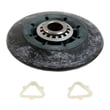
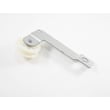
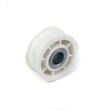
- If you are fixing a noise or drum issue, common wear items include the support WPW10314173 and the dryer idler pulley 279640
Using the exact model number helps us pull the right Kenmore diagrams and ensure parts fit correctly; it also speeds up troubleshooting for issues like no-start, no-heat, or squealing.
Last updated: February 2026
What are common problems with Kenmore dryers?
Common problems on the Kenmore 11074872400 dryer include no heat, long dry times, not starting, the drum not turning, and loud squealing or thumping. Most issues trace back to airflow restrictions (lint and venting), a door or start circuit problem, or normal wear on drum support and drive components.
- Dryer will not run: power supply issue (two breakers/fuses), door not fully closed, failed door switch
- No heat: wrong cycle selection (Air/No Heat), tripped breaker/fuse, gas supply valve closed (gas models)
- Long drying times: lint screen residue, crushed or improper venting, blocked exhaust hood
- Drum not turning: worn idler pulley, worn drum rollers, failed drive motor
- Loud noises: worn drum support rollers, worn idler pulley, damaged blower wheel
For model-specific operating and troubleshooting checks, follow the steps in the 11074872400 owner's manual.
- Confirm power: many dryers use two household fuses/breakers; the drum can run with no heat if one trips.
- Check cycle and settings: avoid Air/No Heat when you expect heat.
- Clean the lint screen correctly: remove lint every load; periodically scrub residue with hot water and a nylon brush, then dry fully.
- Inspect venting: use 4-inch heavy metal vent (not plastic or foil); keep it unkinked and clear.
- Verify door closure: if the door does not latch firmly, the dryer may not start.
| Symptom | Common part to check | Example part for this model |
|---|---|---|
| Won’t start when door closes | Door switch | Dryer door switch WP3406107 |
| Squealing, rumbling, thumping | Drum support rollers, idler | Support WPW10314173, dryer idler pulley 279640 |
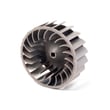
| Poor airflow noise or vibration | Blower wheel | Dryer blower wheel WP697772 |
Airflow and venting problems do more than slow drying; they can cause overheating, shut down heat, and shorten the life of thermostats, fuses, and other components. Keeping the lint screen and vent system clean is the best prevention.
Last updated: February 2026
What is the life expectancy of a Kenmore dryer?
A Kenmore dryer typically lasts 10 to 13 years. With consistent care on your Kenmore 11074872400 (especially lint and vent cleaning), it’s common to reach the high end of that range and avoid early failures of wear parts like rollers, belts, and thermostats.
- Airflow and lint control: clogged lint paths overheat components and shorten life.
- Load size: frequent overloading strains the drive motor, drum supports, and belt.
- Heat system health: restricted venting can trip high-limit protection and damage heating parts.
- Usage frequency: multiple loads per day wears moving parts faster.
- Preventive maintenance: periodic internal cleaning reduces breakdowns.
Use the 11074872400 owner's manual for the exact care steps and safety notes.
| Task | How often | Why it matters |
|---|---|---|
| Clean lint screen | Every load | Keeps airflow strong and drying times normal |
| Clean inside exhaust venting | About every 2 years (more with heavy use) | Reduces overheating and long dry times |
| Clean inside dryer cabinet | About every 2 years (qualified service) | Removes lint buildup near moving and heating parts |
| Check vent material and routing | Anytime you move the dryer | Prevents restrictions that stress the heat system |
If your dryer is noisy, thumping, or squealing, these are common wear items to inspect:
- Support WPW10314173 (drum support roller)
- Dryer idler pulley 279640 (keeps belt tension correct)
- Dryer blower wheel WP697772 (moves air through the drum and vent)
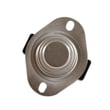
- Dryer operating thermostat WP3387134 (helps regulate operating temperature)
A dryer that runs with restricted airflow or worn drum support parts often takes longer to dry, runs hotter, and cycles more. That extra heat and run time accelerates wear on the motor, thermostats, and gas or electric heating components.
Last updated: February 2026
How do I find the part number for my dryer?
For your Kenmore dryer model 11074872400, the fastest way to get the correct part number is to match the part to your exact model number and the part’s location on the parts diagram. Start by confirming the model number from the label inside the door opening, then look up the part by section (drum, door, heat, controls).
Your model and serial label is located at the top inside the dryer door well. Use that exact model number when searching parts and diagrams. See the 11074872400 owner's manual for the model label location and product record details.
What to write down:
- Model number: 11074872400
- Serial number
- Purchase date (helpful for service records)
If you know what’s happening, you can narrow the part quickly.
Common examples for this model:
- Squealing, thumping, or drum not turning smoothly: check drum support and belt drive parts
- Dryer won’t start: check door switch and start circuit items
- No heat (gas model): check igniter and gas valve coil components
Use these as a reference point when the symptom matches:
| Symptom | Common part to check | Example part for this model |
|---|---|---|
| Dryer won’t start when door closes | Door switch | Dryer door switch WP3406107 |
| Loud rumble or squeal | Drum support roller | Support WPW10314173 |
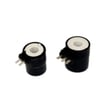
| Gas dryer heats intermittently | Gas valve coils | Dryer valve coil kit 279834 |
Kenmore model numbers can look similar, and small design changes affect fit and wiring. Confirming 11074872400 first helps ensure the part number you order matches the correct mounting points, connectors, and kit contents.
Last updated: February 2026
How to replace a Kenmore dryer thermistor?
On Kenmore dryer model 11074872400, “thermistor” is often used generically to mean a temperature sensor; on this model, the temperature-related sensor you can replace is typically the radiant sensor on the burner assembly (gas heat). Use the wiring and safety steps in the 11074872400 owner's manual before servicing.
On this Kenmore dryer, the common sensors customers confuse with a thermistor include:
- Radiant sensor: proves flame heat at the burner; affects ignition and heating.
- Operating thermostat: cycles heat to regulate temperature.
- Moisture sensor: detects dampness for automatic cycles; does not control burner ignition.
| What the dryer is doing | Most likely part type | Example part on this model |
|---|---|---|
| Ignites then shuts off quickly, or will not keep heating | Temperature sensing at burner | Dryer radiant sensor WP338906 |
| Overheats, short cycles, or runs too hot | Heat cycling control | Dryer operating thermostat WP3387134 |
| Auto cycles end too soon or clothes stay damp in Auto | Moisture detection | Dryer moisture sensor WP3387223 |
- Unplug the dryer; for gas models, shut off the gas supply valve.
- Remove the lower front access panel (or front panel, depending on configuration).
- Locate the burner tube; the radiant sensor mounts on or near the burner housing and faces the flame.
- Disconnect the wire connector from the sensor.
- Remove the mounting screw(s), transfer the sensor, and reinstall.
- Reconnect wiring, reassemble panels, restore gas and power.
- Run a timed heat cycle for 3 to 5 minutes.
- Confirm the burner ignites and stays on in normal cycles.
- Verify strong airflow at the exhaust; restricted venting causes overheating and repeated heat failures.
Replacing the correct sensor restores safe, consistent heating. A radiant sensor failure can stop ignition even when the motor runs and airflow is normal.
Last updated: February 2026








