Installation guide
 Owner’s manual
 Error Codes


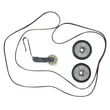
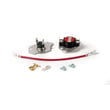
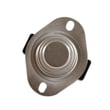
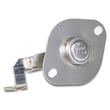
How do I know if my Kenmore dryer thermal fuse is blown?
A blown thermal fuse on your Kenmore dryer model 11067522600 commonly shows up as no heat (the drum may still tumble) or a no-start condition. The sure way to confirm is a continuity test with the dryer unplugged; an open reading means the fuse has blown. See the 11067522600 owner's manual for model-specific troubleshooting checks.
- Drum tumbles but clothes stay cold and damp (no heat)
- Dryer will not run at all
- Dryer stops mid-cycle and will not restart until it cools
- You recently had poor airflow (clogged lint screen or vent)
- Unplug the dryer (or shut off the breaker) before opening any panels.
- Access the thermal fuse (location varies by design; follow the 11067522600 installation guide for safe access and power-disconnect steps).
- Remove at least one wire from the fuse terminal.
- Set a multimeter to continuity or lowest ohms.
- Touch probes to the fuse terminals.
- Good fuse: continuity (beep or near 0 ohms)
- Blown fuse: no continuity (open or OL)
A thermal fuse usually opens because the dryer overheated from restricted airflow. Before running the dryer again, we recommend:
- Clean the lint screen and housing
- Inspect the vent hose for kinks or crushing
- Clear lint buildup in the vent duct to the outside
- Confirm strong airflow at the exterior vent hood
| Symptom | Common cause | What to check first |
|---|---|---|
| Tumbles, no heat | House fuse/breaker issue on electric dryers | Two fuses/breakers, reset/replace as needed |
| Won’t start | Door switch or timer issue | Door closes firmly; consider dryer door switch WP3406107 |
| No heat, intermittent | Thermostat or heater problem | Consider dryer operating thermostat WP3387134 or dryer element 279838 |
The thermal fuse is a safety device; bypassing it can create unsafe overheating. Fixing the airflow problem helps prevent repeat failures and protects the heating system.
Last updated: February 2026
How do I tell what model my Kenmore dryer is?
Your Kenmore dryer’s model number is printed on the model and serial number label; on model 11067522600, that label is located at the top inside the dryer door well. Write down the full model number and serial number so you can match the correct parts, diagrams, and specifications.
Check these spots in order:
- Top inside the dryer door well (most common for this model)
- Around the door opening frame (near the latch area)
- Back panel (if the label has been moved or replaced)
For the exact label location and how it’s referenced in the documentation, use the 11067522600 owner's manual.
Kenmore model numbers are usually a long string of digits. For this dryer, the full model number is 11067522600.
- Ensures the part fits your exact dryer configuration
- Prevents ordering the wrong electrical or heating components
- Helps match the correct troubleshooting steps and cycle features
Use this checklist to avoid common mix-ups:
- Copy the model number exactly as printed (no missing digits)
- Record the serial number too (helps with production variations)
- Match the model number on your dryer to the one on the parts list page
- If the label is worn, take a clear photo with good lighting
Some parts vary by model revision, so confirming 11067522600 first saves time.
| Part type | Example for this model | Why model match matters |
|---|---|---|
| Drum drive | Dryer drum belt 341241 | Belt length and routing must match the idler and drum |
| Heat system | Dryer element 279838 | Wattage and mounting style must match the heater box |
| Door safety | Dryer door switch WP3406107 | Switch style and terminals must match the harness |
If the label is unreadable or gone, we use the next best identifiers:
- The control panel layout and cycle knob style
- The door style and lint screen location
- The wiring connection type (cord vs direct wire) noted in the 11067522600 installation guide
Last updated: February 2026
How to tell if a dryer start switch is bad?
A bad start switch on Kenmore dryer model 11067522600 usually shows up as a dryer that will not run even though the door is closed, a cycle is selected, and the PUSH TO START button is pressed firmly. The most reliable check is a continuity test with a multimeter.
Before testing the switch, we rule out the common “won’t start” causes listed in the 11067522600 owner's manual:
- Confirm the dryer door closes fully (a failed door switch can mimic a bad start switch).
- Make sure a cycle is selected (not sitting in an Off area).
- Press and hold PUSH TO START firmly.
- Check power: electric dryers need a 240-volt supply; a tripped breaker can stop the motor.
- Check both household fuses/breakers (many electric dryers use two).
Unplug the dryer first. Then follow the access steps in the 11067522600 installation guide to safely reach the console area.
- Remove the control panel/console cover to access the start switch terminals.
- Label and remove the wires from the switch.
- Set the meter to continuity (or lowest ohms).
- Test across the switch terminals:
- Button not pressed: meter should read OL/infinite (no continuity).
- Button pressed: meter should read 0 to 1 ohm or beep (continuity).
- If readings do not change when pressed, the start switch is bad.
| Symptom | More likely cause | What to check next |
|---|---|---|
| Nothing happens when you press start | Start switch or door switch | Test door switch first, then start switch |
| Dryer hums but drum does not turn | Belt or motor issue | Inspect dryer drum belt 341241 and idler pulley |
| Drum turns but no heat | Heating circuit issue | Check thermal cut-off and heater components |
A failed start switch prevents the motor circuit from energizing, so the dryer will not run even when everything else is set correctly. Testing it early saves time and helps you avoid replacing parts like the timer or motor unnecessarily.
Last updated: February 2026
Is it worth replacing the heating element in a dryer?
Yes, it’s usually worth replacing the heating element in your Kenmore dryer model 11067522600 when the dryer runs but has no heat, because the repair cost is typically far less than replacing the entire dryer and it restores normal drying performance.
Replacing the heater is a strong choice when the dryer tumbles normally and airflow is good, but clothes stay cold or take much longer to dry.
- The drum turns, but there’s no heat
- The dryer is otherwise in good shape (no loud bearing noise, no burning smell, no repeated shutdowns)
- You’ve confirmed the home power supply is correct (electric dryers need full 240V)
- The vent path is clear and not crushed (restricted venting can cause overheating and repeat failures)
- You want a repair that’s usually straightforward for a DIYer with basic tools
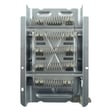
For this model, the common replacement part is the dryer element 279838.
Your 11067522600 can tumble with no heat if one house fuse trips or one breaker opens. The manual also notes that an L2 code points to a power supply issue that can keep the heater from turning on, and an AF code points to vent restriction. Use the 11067522600 owner’s manual and the 11067522600 installation guide for the exact troubleshooting steps and diagnostic notes.
- Verify both dryer breakers are on (or both fuses are good)
- Confirm the dryer is plugged in and the door fully closes
- Clean the lint screen and check the vent for blockage or crushing
- If heat cuts out, inspect safety devices (thermal cut-off, high-limit thermostat)
| Situation | Replace the element? | Why |
|---|---|---|
| Dryer runs, no heat, vent is clear | Yes | Most cost-effective fix |
| Breaker trips or L2 code appears | Fix power first | Heater may be fine |
| AF code or very weak airflow | Fix vent first | Prevents repeat overheating |
| Multiple worn drum support symptoms | Consider a kit too | Reduces future breakdowns |
If you’re already opening the cabinet, it’s also common to refresh wear items with the dryer repair kit 4392065.
A working heating system depends on correct 240V power and proper airflow. Fixing venting and power issues first helps the new heating element last longer and keeps drying times normal.
Last updated: February 2026
What are signs of a bad dryer heating element?
If your Kenmore dryer model 11067522600 runs but won’t heat, takes much longer to dry, or gives off a hot or “burning” odor, the heating element is a top suspect. Confirm by checking element continuity with a multimeter after verifying the home power supply and airflow per the 11067522600 owner's manual.
- Dryer tumbles normally but produces no heat
- Clothes stay damp after a full cycle, or drying time increases noticeably
- Heat is intermittent (some loads dry, others do not)
- A burning smell or visible scorching near the heater housing
- You see a broken coil or a coil touching the metal housing (shorted element)
Electric dryers like this one need a full 240V supply; if one house fuse trips, the drum can still turn but you get no heat.
Before replacing parts, check:
- Both dryer breakers/fuses are on and not tripped
- The exhaust vent is open and not crushed or blocked
- The lint screen and lint duct area are clear
- The cycle is a heated cycle (not air fluff)
| What you notice | More likely cause | What to check next |
|---|---|---|
| Tumbles, no heat | Power supply issue or heater circuit fault | Reset both breakers; then test heater continuity |
| Long dry times, some heat | Vent restriction | Inspect vent length, turns, and blockage |
| No heat after overheating event | Safety device opened | Check thermal cut-off and high-limit thermostat |
If the element tests open or shorted, replace the heater. If the element tests good, the safety devices are the next most common no-heat cause.
- Dryer element 279838 (heater coil assembly)
- Dryer thermal cut-off fuse kit 279816 (opens if overheating occurs)
- Dryer high-limit thermostat WP3977767 (limits heater temperature)
- Dryer operating thermostat WP3387134 (regulates normal cycling heat)
Running a dryer with restricted airflow or a shorted heater can overheat the heater circuit and repeatedly blow safety fuses. Fixing venting and confirming correct voltage helps the new part last.
Last updated: February 2026