Installation guide
 Owner’s manual


What is the most common problem with a KitchenAid dishwasher?
The most common issue we see with KitchenAid dishwashers like model KUDS30FXSSA is poor wash results or water left in the tub, usually tied to restricted water flow, a clogged drain path, or a failing pump. Start with basic checks from the KUDS30FXSSA installation guide before replacing parts.
- Dirty dishes or gritty residue: spray arm holes blocked, filter area dirty, low water fill
- Standing water after the cycle: drain hose restriction, air gap/disposal blockage, weak drain pump
- Not drying well: heater circuit issue, rinse aid problem, door not closing fully
- Won’t start or stops mid-cycle: door not latching, power supply issue, control problem
- Leaks at the front: door seal wear, door not centered/level
- Confirm the door closes tightly and latches.
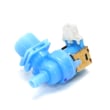
- Verify the water supply is turned on and the unit is filling.
- Run the shortest cycle and check for water in the bottom of the tub after about 2 minutes.
- Inspect the drain setup for kinks or restrictions; confirm the drain connection is secure.
- If the door rubs or doesn’t align, re-check centering and leveling (a common cause of leaks and latch issues).
| Symptom | Most likely system | Part that often solves it (when failed) |
|---|---|---|
| Standing water | Drain system | Dishwasher drain pump WPW10348269 |
| Poor cleaning, weak spray | Wash/circulation system | Dishwasher sump and motor assembly WPW10780877 |
| Not heating or poor drying | Heating system | Dishwasher heater W10703867 |
| Won’t start, clicks but won’t run | Door closure | Dishwasher door latch WPW10653840 |
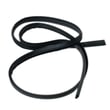
| Leaks at bottom/front | Door sealing | Dishwasher door seal, lower WPW10497235 |
A dishwasher can look “broken” when the real problem is a simple restriction (drain hose, fill issue) or a door alignment problem. Catching that early prevents repeat clogs, leaks, and unnecessary control board replacements.
Last updated: February 2026
What's the average lifespan of a KitchenAid dishwasher?
A KitchenAid undercounter dishwasher like model KUDS30FXSSA typically lasts 10 to 14 years. Lifespan depends most on how often you run it, water quality, and whether routine care (like cleaning and leak prevention) is kept up.
Most dishwashers reach their full service life when the wash system stays clean, the door seals stay watertight, and the unit drains correctly.
Common factors that shorten lifespan:
- Hard water scale buildup (can reduce heating and cleaning performance)
- Clogged drain path or slow draining
- Door not latching tightly (can stop cycles and stress components)
- Overloading racks, which can damage rack hardware over time
- Skipping rinse aid, which can increase spotting and mineral deposits
We recommend these habits for KUDS30FXSSA:
- Use rinse aid consistently for drying and to reduce hard-water deposits
- Run hot water at the sink before starting a cycle (helps early wash performance)
- Keep the drain area clear of labels, bones, and glass fragments
- Load so spray arms can spin freely and water can reach all surfaces
- Fix leaks quickly so moisture does not damage wiring or controls
The installation instructions highlight basic checks that prevent unnecessary wear.
| Symptom | What to check first | Parts often involved |
|---|---|---|
| Won’t start | Door fully closed and latched; breaker/fuse; water on | Dishwasher door latch WPW10653840 |
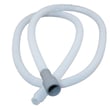
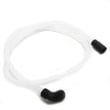
| Not draining | Drain path and hose routing; disposer knockout (if applicable) | Dishwasher drain hose 8269144A, dishwasher drain pump WPW10348269 |
| Poor drying | Rinse aid level; cycle selection; water temperature | Dishwasher heater W10703867 |
Knowing the typical lifespan helps you decide whether to maintain, repair, or replace. On a 10 to 14 year dishwasher, a drain or latch repair is often worthwhile, while repeated major motor issues can signal end-of-life.
For model-specific operating and care guidance, follow the KUDS30FXSSA owner’s manual.
Last updated: February 2026
How to fix rubber seal on KitchenAid dishwasher?
On KitchenAid dishwasher model KUDS30FXSSA, a loose or leaking rubber door seal is usually fixed by fully reseating the gasket into the door channel, then closing and latching the door so the seal “sets” evenly. Use the steps and diagrams in the KUDS30FXSSA installation guide.
- Turn off power at the breaker.
- Open the door and inspect the rubber seal for twists, gaps, or sections pulled out of the channel.
- Starting at one end, press the seal into the channel a few inches at a time using your thumbs (no sharp tools).
- Work evenly around the perimeter so the seal sits at the same depth all the way around.
- Close the door and latch it; keep it closed for several hours so the gasket relaxes into position.
- The seal is not folded over or “rolled” outward.
- Corners are fully seated (corners are the most common leak points).
- The door closes without needing extra force.
- The tub opening is clean where the seal contacts it (wipe off detergent film and debris).
- The dishwasher is centered and level so the door meets the tub evenly.
A door can leak even with a good seal if the door is misaligned or the latch is not pulling the door tight.
| Symptom | Most likely cause | What we do next |
|---|---|---|
| Leak at bottom corners | Seal not seated or door not centered | Reseat seal; check centering and leveling |
| Door pops open or won’t stay latched | Worn latch | Replace the dishwasher door latch WPW10653840 |
| Door feels heavy or drops fast | Door balance issue | Inspect door balance link and springs |
| Water drips during drain | Drain routing or connection issue | Verify drain hose routing and clamps |
A properly seated gasket and correctly aligned door prevent leaks that can damage flooring and help the wash system maintain the right water level and spray pressure for better cleaning.
Last updated: February 2026