Owner’s manual
 View engine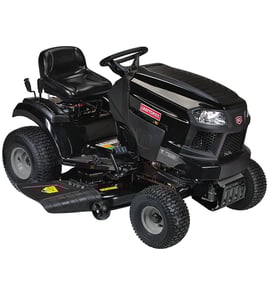


How to find Craftsman model number?
On a Craftsman riding lawn tractor like model 917276905, the model number is typically printed on a product label located on the tractor frame under the seat, or on the underside of the seat itself. Confirm the full model number before ordering parts.
Check these common label locations first:
- On the frame rails directly under the seat (lift the seat up)
- On the underside of the seat pan
- Near the rear fender area under the seat (around the seat mounting bracket)
- On a label near the rear axle area (less common, but possible)
For diagrams and model identification details tied to this tractor, use the 917276905 owner’s manual.
Record the full ID information exactly as shown on the label:
- Model number (for example: 917276905)
- Serial number (helps confirm production run)
- Any product number or engine model/type/code listed (useful for engine parts)
- Wipe the label clean so every digit is readable
- Copy numbers exactly (including commas, dashes, or spaces if shown)
- Take a clear photo for reference when ordering
These are not the same thing. Use the model number to find the correct parts list, then select the part you need.
| Item | What it identifies | Example format |
|---|---|---|
| Model number | The tractor version | 917276905 |
| Part number | A specific replacement part | 130969 |
| Part ID | Sears PartsDirect identifier for a part page | 592855201 |
Craftsman tractors can look similar across multiple model numbers, but belts, blades, pulleys, and electrical parts can vary by deck size and build. Using the exact model number helps ensure the replacement part fits and installs correctly.
Last updated: January 2026
Is it worth repairing a lawn mower engine?
For the Craftsman lawn tractor model 917276905, repairing the engine is worth it when the problem is maintenance-level (fuel, spark, air, belts) and the tractor is otherwise solid; it’s usually not worth it when the repair cost is around 50% or more of the tractor’s replacement value or the engine has major internal damage.
- Repair it if it’s a no-start, rough-run, or power-loss issue tied to tune-up items (spark plug, air filter, fuel filter, stale fuel).
- Repair it if the tractor’s deck, steering, and transmission still operate normally.
- Repair it if you can diagnose the issue confidently and parts are readily available.
- Replace the tractor (or consider an engine swap only if you’re committed) if compression is low, it smokes heavily, or it has severe knocking.
- Replace the tractor if the transmission is also failing; stacked major repairs rarely pay off.
Your 917276905 owner’s manual includes a full troubleshooting chart and maintenance schedule that helps you separate “simple fix” engine problems from major failures. Use the 917276905 owner’s manual to match symptoms like “won’t start,” “loss of power,” or “runs rough” to likely causes.
Many engine complaints are actually caused by drive or deck load issues. If the tractor bogs down when you engage the blades, inspect the blade-drive system and belt condition.
- Check for debris buildup under the mower deck (extra load).
- Verify the blade-drive belt routing and tension.
- Inspect idler pulleys for wobble/noise.
If you find belt wear or glazing, a replacement such as lawn tractor blade drive belt, 5/8 x 148-5/8-in 587686701 can restore normal blade speed and reduce engine strain.
| Situation | Typical recommendation | Why |
|---|---|---|
| Tune-up or fuel issue | Repair | Low cost, high success rate |
| Belt/pulley drag loading engine | Repair | Fixes “bogging” without engine work |
| Major internal engine damage | Replace/repower only if justified | Labor and parts add up fast |
| Engine + transmission problems | Replace | Total cost usually exceeds value |
An engine repair decision is really a “total tractor health” decision. On a riding mower, a strong engine won’t help if the deck, belts, or transaxle are near end-of-life.
Last updated: January 2026
What are the parts of a tractor engine?
On the Craftsman 917276905 front-engine lawn tractor, the engine is a 26.0 HP, 725cc, 2-cylinder gasoline engine; it includes internal moving parts (pistons, crankshaft, valves) plus the fuel, ignition, lubrication, cooling-airflow, and exhaust systems that keep it running. For model-specific diagrams and service intervals, use the 917276905 owner’s manual.
These are the components most tied to compression, power, and oil consumption:
- Cylinder block and cylinder heads: form the combustion chambers
- Pistons and piston rings: compress the air-fuel mixture and seal the cylinder walls
- Connecting rods: link pistons to the crankshaft
- Crankshaft and bearings: convert piston motion into rotating power
- Valve train (valves, springs, rocker arms): controls intake and exhaust flow
- Gaskets and seals: prevent oil leaks and compression loss
These parts are outside the engine internals but are essential for starting and running:
- Fuel delivery: tank, fuel line, fuel filter, carburetor
- Ignition: spark plug(s), ignition coil, ignition switch
- Lubrication: crankcase oil, dipstick, oil drain valve and drain tube
- Cooling airflow: air filter, blower housing, cooling fins, air screen
- Exhaust: muffler and muffler guard
| System | What it controls | Common symptom when faulty |
|---|---|---|
| Fuel delivery | Starting, power under load | Hard start, surging, stalls |
| Ignition | Spark and combustion timing | No-start, misfire, backfire |
| Air intake/cooling | Power and engine temperature | Loss of power, overheating |
| Lubrication | Wear protection | Knocking, rapid wear, oil leaks |
Separating “internal engine” issues (compression, valves, rings) from “support system” issues (fuel, spark, airflow) helps you troubleshoot faster and avoid replacing the wrong parts.
Last updated: January 2026
What kind of engine does a Craftsman riding lawn mower have?
For Craftsman tractor model 917276905, we can confirm it’s a gasoline, internal-combustion riding-tractor engine and the tractor is labeled as a 26.0 HP model in the 917276905 owner’s manual. The manual text we have doesn’t identify the engine manufacturer or engine model.
The model-specific manual provides the horsepower label and key operating specs, but it does not list an engine brand.
- Fuel type: gasoline
- Engine type: internal-combustion (not electric)
- Tractor labeling: 26.0 HP
- Oil viscosity guidance is provided (varies by temperature)
- Spark plug type is listed in the manual’s product specifications section
Because Craftsman model numbers don’t always encode the engine make, the most reliable way is to read the engine identification label on the engine itself.
- Look for an engine ID tag on the blower housing, valve cover, or near the starter
- Record the engine model, type, and code (or spec number)
- Use that engine ID when selecting tune-up parts (spark plug, air filter, fuel filter)
- If the label is dirty, wipe it gently so the numbers stay readable
| Item | What we can verify for 917276905 | Where it comes from |
|---|---|---|
| Engine type | Gasoline internal-combustion | Manual |
| Horsepower label | 26.0 HP | Manual |
| Engine make/model | Not identified in the manual text | Engine ID tag |
The engine make and model determine the correct maintenance parts and settings (spark plug, air filter, oil type, and fuel system parts). Confirming the engine ID helps prevent ordering the wrong parts even when the tractor model number is correct.
Last updated: January 2026