Owner’s manual
 Error Codes



What does er 1f mean on kenmore 10664942401 refrigerator?
On a Kenmore 10664942401 top-mount refrigerator, an ER 1F (ER IF) code points to an ice fan (freezer fan) airflow problem. The freezer cannot move cold air correctly around the ice maker area, so ice production slows or stops until airflow is restored.
What to check first (quick fixes)
- Power reset: Unplug the refrigerator for 5 minutes, then plug it back in.
- Freezer vents: Make sure packages are not blocking air vents; blocked vents cause warm spots and poor circulation.
- Ice buildup: Look for frost or ice blocking the fan cover or air passages; heavy frost usually indicates a defrost issue.
- Door habits: Limit frequent door openings; warm, humid air increases frost and airflow restrictions.
- Temperature settings: Adjust in small steps and wait 24 hours between changes (this model family uses that guideline).
Likely causes and the parts that commonly relate
If the code returns after airflow is clear, these are the most common repair paths:
| Symptom you notice | Most likely issue | What it affects |
|---|---|---|
| Loud buzzing or no fan sound in freezer | Evaporator fan not running | Airflow to ice maker and fresh food section |
| Heavy frost on freezer back wall | Defrost system problem | Fan gets blocked by ice |
| Ice maker has water but no/slow ice | Airflow issue near ice maker | Ice mold cannot freeze fast enough |
Model-specific parts on this page that may be involved:
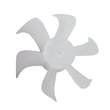
- Evaporator motor WPW10189703 (drives freezer airflow)
- Defrost bi-metal WP4387503 (helps control defrost heating)
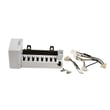
- Ice maker assembly 4317943 (if airflow is good but ice maker still will not cycle)
Why it matters
The ice fan and evaporator airflow keep the ice maker area cold enough to freeze water quickly. When airflow is restricted (blocked vents, frost buildup, failed fan motor), temperatures rise locally and the refrigerator may trigger ER 1F to protect performance.
Reference for your model
For control settings, airflow guidance, and ice maker on/off operation (wire shutoff arm), use the owner's manual.
Last updated: February 2026
What is a top mount freezer?
A top-mount freezer is the classic refrigerator layout where the freezer compartment is on top and the fresh-food (refrigerator) compartment is below. Your Kenmore 10664942401 is a top-mount design, which uses shared airflow between sections, so keeping vents clear helps both compartments cool properly (see the owner's manual).
How a top-mount refrigerator cools
In a top-mount unit, cold air is produced in the freezer area and then circulates to the refrigerator section through vents.
- Cool air enters through the bottom of the freezer section and moves upward
- Most air recirculates through freezer vents and under the freezer floor
- Some air flows into the refrigerator section through the top vent
- Blocking vents with food can cause temperature swings and moisture issues
- Odors can transfer between sections because air circulates between both compartments
What you can expect from this layout
Top-mount refrigerators are popular because they are simple, efficient, and easy to organize for everyday use.
| Feature | What it means for you |
|---|---|
| Freezer on top | Frozen foods are at eye level |
| Refrigerator below | Fresh foods are easy to access without bending as much |
| Shared airflow | One cooling system affects both sections |
| Vent-dependent performance | Packing food against vents can reduce cooling |
Why it matters
Understanding the top-mount design helps with troubleshooting. If the freezer is cold but the refrigerator is warm, the issue is often airflow related (blocked vents, frost buildup, or a fan problem) rather than a lack of cooling overall.
Last updated: February 2026
What is the life expectancy of a Kenmore refrigerator freezer?
Most Kenmore top-mount refrigerators like model 10664942401 last 12 to 15 years with normal use. Keeping the condenser area clean, maintaining good airflow around the cabinet, and fixing cooling or door-seal problems quickly helps you reach (and often exceed) that typical lifespan; see the owner's manual for model-specific care and operating guidance.
What affects how long it lasts
A refrigerator’s life is mostly determined by heat management, door sealing, and how hard the sealed system has to work.
- Ventilation and airflow: blocked vents or tight clearances make the compressor run longer.
- Dirty condenser coils: raises operating temperature and wear.
- Door gasket condition: air leaks cause longer run times and frost issues.
- Defrost performance: repeated frost buildup strains the evaporator fan and cooling system.
- Water and ice maker health (if equipped): leaks can cause corrosion and electrical issues.
Maintenance checklist (high impact)
We recommend these habits to extend the service life of a top-mount refrigerator:
- Vacuum and brush condenser coils regularly.
- Keep food packages from blocking air vents inside the freezer and fresh-food section.
- Clean door gaskets; if they stick, clean the gasket and contact surface and apply a thin coat of paraffin wax (as described in the manual).
- Confirm doors close tightly and the refrigerator is level so the doors self-close.
- Address unusual noises early (fan, clicking, or buzzing) before they become failures.
Typical lifespan vs. what you may see
| Usage/condition | Typical outcome | What you’ll notice |
|---|---|---|
| Normal use + basic cleaning | 12 to 15 years | Stable temps, normal run cycles |
| Poor airflow or dirty coils | Shorter lifespan | Hot cabinet sides, long run times |
| Door seal or defrost issues | Shorter lifespan | Frost buildup, temp swings |
Why it matters
A refrigerator that runs longer to hold temperature uses more energy and puts extra wear on the compressor, evaporator fan, and defrost components. Small fixes like leveling the cabinet and keeping gaskets clean can prevent bigger cooling-system stress.
Last updated: February 2026
What is the top part of a fridge called?
On a Kenmore top-mount refrigerator like model 10664942401, the top section is the freezer compartment. It is designed to keep foods frozen and, on some models, it also supplies ice for an ice maker.
What the freezer does (and what you will find there)
The freezer is the coldest compartment; it is built for long-term frozen storage and for making ice when an ice maker is installed.
- Keeps food at freezing temperatures for longer storage
- Houses freezer features such as a freezer shelf and pull-out freezer floor (varies by configuration)
- Provides the cold environment needed for ice production
- Shares airflow with the fresh food section through internal vents
Freezer vs. refrigerator section: quick comparison
| Section | Typical temperature range | Main purpose |
|---|---|---|
| Freezer (top) | 0°F to 5°F | Frozen food storage, ice making |
| Refrigerator (bottom) | 34°F to 40°F | Fresh food storage |
Why it matters
Knowing the correct name helps when you are using the controls, reading troubleshooting steps, or ordering parts for the right compartment. For example, ice maker and airflow issues are usually tied to the freezer area.
Related parts and documentation
- For compartment layout, features, and control use, follow the owner's manual.
- If you are troubleshooting ice production on this model, the ice maker assembly - refrigerator ice maker by whirlpool 4317943 is a common replacement part when the ice maker stops cycling or stops producing cubes.
Last updated: February 2026