Owner’s manual



How do I reset my LG dryer?
To reset your LG dryer model DLEX2650W, we recommend doing a simple power reset: turn the dryer off, disconnect power for a few minutes, then restore power and try a cycle again. This clears many temporary control glitches without replacing parts.
- Press Power to turn the dryer off.
- Unplug the dryer, or switch OFF the dryer’s circuit breaker.
- Wait 3 to 5 minutes.
- Restore power (plug back in or switch the breaker ON).
- Press Power, select a cycle, and press Start/Pause.
For model-specific control panel behavior and cycle selection details, use the DLEX2650W manual.
A reset helps when the control is “stuck”, but it will not correct a failed component. Check these common causes next:
- No heat or poor drying: airflow restriction (lint screen, venting) or a heating circuit issue.
- Stops mid-cycle: overheating from restricted venting or a temperature-sensing problem.
- Will not start: door not fully closed, or a door switch issue.
- Error code showing: use the code to narrow the failure.
Helpful next steps:
- Clean the lint screen and confirm strong airflow at the outside vent.
- If the dryer will not start and the door feels “loose”, inspect the door switch; see dryer door switch EBF61496102.
- If you see an error code, match it using LG dryer error codes.
| Symptom | Likely area to check | Example compatible part for DLEX2650W |
|---|---|---|
| Won’t start (door-related) | Door switch circuit | Dryer Door Switch EBF61496102 |
| Long dry times | Airflow and temperature sensing | Dryer Thermistor AGM30045804 |
| No heat (electric models) | Heating circuit | Dryer Heating Element 5301EL1001J |
Resetting is a fast first step that can save time and avoid unnecessary part replacement. If the problem returns quickly, using the symptom (no heat, no start, error code) helps us pinpoint whether you need a cleaning, a wiring check, or a specific LG dryer part.
Last updated: January 2026
What is the most common problem with LG dryers?
For LG dryers like model DLEX2650W, the most common repair issue is no heat or weak heat, which is most often tied to the heating circuit (especially the heating element) and, less often, a safety device such as a thermal fuse. Use the DLEX2650W manual to confirm your dryer’s symptom checks and access panels.
- Heating problem (no heat or long dry times): clothes stay damp, cycle ends normally but laundry is still wet
- Safety shutdown from overheating: dryer runs but stops heating until the cause is fixed
- Noisy operation: thumping, squealing, or rumbling as the drum turns
- Airflow restriction: hot cabinet, burning smell, or very long dry times
- Sensor-related drying issues: auto cycles end too soon or run too long
Because DLEX2650W is an electric LG dryer, these model-matched parts are common starting points when troubleshooting heat, airflow, and temperature control:
- Dryer heating element 5301EL1001J
- Dryer high-limit thermostat 6931EL3003D
- Dryer thermistor AGM30045804
- Dryer lint filter 5231EL1003B
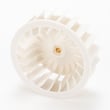
- Dryer blower wheel 5835EL1002A
| Symptom | Most likely area | Example model-matched part |
|---|---|---|
| Runs but no heat | Heating circuit | 5301EL1001J |
| Heats then stops, long dry times | Overheat protection or airflow | 6931EL3003D, 5231EL1003B |
| Auto cycle dries poorly | Temperature sensing | AGM30045804 |
| Loud rumble/thump | Drum support | 4581EL2002L |
Heat and airflow problems can look the same from the outside, but the fix is very different. Checking airflow (lint screen, blower, venting) first helps prevent repeat failures of heating and thermostat parts.
If your dryer is not heating, we recommend reviewing electric dryer wont heat troubleshooting video for a step-by-step diagnostic flow.
Last updated: January 2026
Are LG ventless dryers any good?
LG ventless dryers can be a very good choice when you need flexible installation and efficient drying in a smaller space. For the LG DLEX2650W specifically, we cannot confirm from the model-specific information here that it is a ventless design; many ventless models dry well but typically take longer per load than vented dryers.
Ventless (often heat pump or condenser) dryers recirculate air and manage moisture internally instead of pushing it outdoors.
- Great for apartments, closets, and locations without an exterior vent
- Usually use less energy than traditional vented electric dryers
- Often have longer cycle times, especially with heavy loads
- Require regular filter and heat-exchanger (if equipped) cleaning to keep performance strong
- Can feel warmer or more humid in the laundry area if maintenance is neglected
| Feature | Ventless LG dryer | Vented electric dryer |
|---|---|---|
| Installation | No exterior vent needed | Needs vent to outside |
| Drying time | Typically longer | Typically faster |
| Energy use | Typically lower | Typically higher |
| Maintenance focus | Filters, condenser/heat exchanger | Lint screen, vent duct |
Even a high-quality ventless dryer will disappoint if loads are too large or airflow and lint handling are neglected.
- Load size: smaller loads dry more evenly
- Fabric mix: heavy items (towels, jeans) slow cycles
- Spin speed from washer: higher spin reduces dry time
- Sensor drying: keep moisture sensor bars clean
- Routine cleaning: lint screen and internal lint paths
If you are seeing long dry times on the DLEX2650W, start with the basics in the DLEX2650W manual, then check common airflow and sensing items.
- Clean the lint screen every load; replace a damaged screen such as the dryer lint filter 5231EL1003B
- Inspect and clean the exhaust path and ducting (for vented setups)
- Confirm the drum is tumbling normally (belt and idler issues can reduce drying)
- If heat seems weak or inconsistent, heating and temperature-sensing parts may need testing
Choosing ventless vs vented affects installation options, energy use, and cycle time expectations. Matching the dryer type to your space and maintaining lint and airflow components is what keeps drying performance “good” over the long run.
Last updated: January 2026
Why do LG dryers take so long to dry?
LG dryers like model DLEX2650W usually take too long to dry because airflow is restricted (most common), the load or cycle choice is mismatched, or the dryer is not sensing moisture correctly. Start by checking the lint screen and the entire vent path, then verify heat and sensor operation using the DLEX2650W dryer manual.
- Clean the lint screen before every load; wash it with warm water if you use dryer sheets (film can block airflow).
- Confirm strong airflow at the outside vent hood while the dryer runs.
- Shorten and straighten the vent run; crushed flex duct and long runs slow drying.
- Avoid overloading; tightly packed items trap moisture.
- Match the cycle to the load (sensor dry for mixed loads, timed dry for small loads or single items).
If airflow is good but drying is still slow, these model-compatible parts can affect heat and moisture sensing:
- Dryer lint filter 5231EL1003B (torn, warped, or clogged screen reduces airflow)
- Dryer moisture sensor 6500EL3001A (dirty or failing sensor can end cycles wrong or run too long)
- Dryer thermistor AGM30045804 (incorrect temperature feedback can reduce heat)
- Dryer heating element 5301EL1001J (weak heat output increases dry time)
- Dryer blower wheel 5835EL1002A (loose or damaged wheel reduces air movement)
| What you notice | Most likely cause | What to do first |
|---|---|---|
| Clothes hot but still damp | Vent restriction | Check vent hood and duct for lint buildup |
| Clothes barely warm | Heating problem | Verify heat on a timed cycle; then inspect heating parts |
| Cycle runs a long time, inconsistent results | Moisture sensing issue | Clean sensor bars; inspect moisture sensor and harness |
| Lint on clothes, weak airflow | Lint screen or housing restriction | Clean/inspect lint screen and lint duct area |
Long dry times are usually an airflow problem; restricted venting can also overheat the dryer and shorten the life of thermostats, the heating element, and the blower components.
Last updated: January 2026