 Installation guide
 Owner’s manual


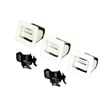
How do I tell what model Kenmore dryer I have?
To tell what Kenmore dryer model you have, we look for the model number on the appliance’s ID label, then match that exact number when ordering parts or checking specifications. For example, this page is for Kenmore model 11075132411.
Most Kenmore dryers have the model/serial label in one of these spots:
- Inside the dryer door opening (on the door frame or cabinet front)
- On the back panel of the dryer
- Near the lint screen housing (depending on the design)
- On the side of the cabinet opening behind the door
If you have the Use and Care Guide for your unit, the model family is often listed there as well; see the 11075132411 owner's manual.
Kenmore model numbers are long on purpose. The full model number is what we use to pull the correct parts diagrams, wiring, and gas burner setup for your exact dryer.
- Write the model number exactly as shown (include all digits)
- Also record the serial number (helps with production date and revisions)
- Use the full model number when searching parts, not just “Kenmore 110”
| What you have | What to use when searching |
|---|---|
| A label that starts with 110 | Use the full 11-digit model (example: 11075132411) |
| A label that starts with 796 | Use the full 796 model number |
| Missing or unreadable label | Use the manual and compare control panel features, then confirm with parts diagrams |
Use these practical checks to narrow it down:
- Check the door opening area for a second sticker or etched plate
- Look for a folded tech sheet (often inside the console or lower front panel on many dryers)
- Compare your control panel layout and door style to the parts list for the closest match
- If your dryer will not start and you are troubleshooting while identifying the unit, follow the startup checks in the 11075132411 installation guide (door closed, hold Start 3 seconds, power and breaker OK)
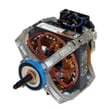
Using the exact model number prevents ordering the wrong Kenmore gas dryer parts (like a belt, door switch, timer, or igniter) and helps ensure the correct installation and venting requirements are followed.
Last updated: February 2026
How much does it cost to replace a heating element in a Kenmore dryer?
For a Kenmore gas dryer like model 11075132411, a “heating element” is not the usual repair; heat is produced by the gas burner system. Typical out-of-pocket cost to restore heat ranges from about $30 to $300 for parts, and about $150 to $400 total if a technician does the diagnosis and repair (parts plus labor).
On gas models, “no heat” repairs usually involve ignition and safety components, not an electric heater coil. Common fixes include:
- Cleaning lint buildup and checking airflow (often the root cause of overheating and shutdowns)
- Replacing the igniter if it will not glow or it glows but never lights
- Replacing the radiant sensor if the igniter never gets power
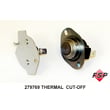
- Replacing thermostats or thermal cut-offs if the burner shuts down early
- Replacing the gas valve coils or gas valve if the flame starts then quits
Helpful model-specific references: 11075132411 owner’s manual, 11075132411 installation guide.
Prices vary by brand and whether you replace a single part or a kit.
| Repair scenario | Typical parts cost | Typical labor cost | Common symptom |
|---|---|---|---|
| Ignition component replacement | $30 to $80 | $120 to $250 | No flame, drum tumbles |
| Thermostat or cut-off replacement | $15 to $60 | $120 to $250 | Heats briefly then stops |
| Gas valve or burner assembly repair | $150 to $300 | $150 to $300 | Intermittent heat or no ignition |
We recommend these quick checks first because they can prevent repeat failures:
- Confirm the dryer runs on a heated cycle (not “Air Only”) and the door fully closes
- Verify strong airflow at the outside vent hood
- Clean the lint screen and inspect the vent duct for crushing or blockage
- If the dryer shows an L2 code during the first heated cycle, address the home power supply issue noted in the installation diagnostics
On gas dryers, replacing the wrong “heater” part wastes money. Correct diagnosis focuses on the burner ignition circuit, thermostats, and airflow so the dryer heats safely and consistently.
Last updated: February 2026
What is the average lifespan of 11075132411?
The average lifespan of a Kenmore gas dryer like model 11075132411 is 13 years with normal household use and routine maintenance (lint removal, good venting, and periodic inspection of wear parts). Following the care steps in the 11075132411 owner's manual helps you reach that service life.
A dryer usually lasts longest when airflow stays strong and heat is controlled correctly.
- Keep the lint screen and exhaust duct clear to prevent overheating and long dry times
- Avoid overloading; it strains the drum support system and drive components
- Use the right cycle; excessive high heat accelerates wear on thermostats and seals
- Address unusual noises early (thumping, squealing, scraping)
- Maintain proper installation conditions (dry location, correct temperatures)
Many dryers are still worth repairing at 10 to 15 years because the most common failures are replaceable wear items.
| Symptom | Common wear area | Example part for this model |
|---|---|---|
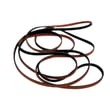
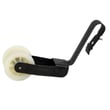
| Drum will not turn | Belt or idler pulley | Belt 341241 |
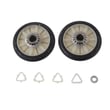
| Squealing or rumbling | Drum support rollers (often serviced as a kit) | Dryer repair kit 4392065 |
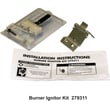
| No heat or intermittent heat | Ignition and heat sensing parts | Igniter 279311, radiant sensor WP338906 |
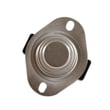
| Overheating or shuts off | Thermostats, restricted venting | Operating thermostat WP3387134 |
Knowing the typical 13-year lifespan helps you decide whether to repair or replace. If your 11075132411 is under that age and the cabinet and drum are in good shape, replacing a belt, thermostat, or igniter often restores reliable drying for years.
Last updated: March 2026








