Owner’s manual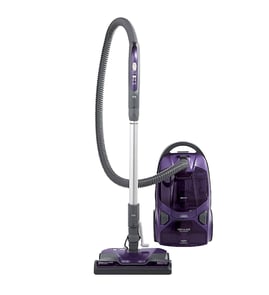

Where to find model number on Kenmore canister vacuum?
On your Kenmore canister vacuum model 11623513301, the model number is printed on the model and serial number plate on the vacuum. We use that plate information to match the correct parts list and the right owner’s instructions.
Check these common locations for the model and serial number plate:
- On the canister body (often near the rear or bottom)
- Near the bag compartment area (inside the cover on some versions)
- On the underside of the canister, close to the wheels
- Near the cord rewind area or cord storage path
If you see multiple numbers, use the full model number exactly as shown on the plate.
Most Kenmore canister vacuums use a small printed plate or sticker that includes both fields.
| Label item | What it’s used for | Example format |
|---|---|---|
| Model number | Identifies the exact vacuum design for parts and diagrams | 116.23513 (series) or 11623513301 (full) |
| Serial number | Identifies the production unit | Letters and numbers |
Kenmore canister vacuums often share similar housings, but parts like the dust bag, exhaust filter, motor safety filter, hose, and wand connections can vary by model series. Using the model number from the plate prevents ordering the wrong replacement part.
- Write down the model number and serial number from the plate
- Compare the model number to your paperwork
- Use the model number to confirm you are viewing the correct diagrams in the owner's manual
Last updated: February 2026
How long do Kenmore canister vacuums last?
A Kenmore canister vacuum like model 11623513301 typically lasts 10 to 15 years with normal household use and routine maintenance. Heavy use, clogged filters, and running with a full bag can shorten life; regular bag and filter changes usually extend it.
Most canister vacuums fall into these real-world ranges:
- 8 to 12 years: average use with basic upkeep
- 10 to 15 years: consistent maintenance (bags, filters, belt checks)
- 15+ years: lighter use plus timely replacement of wear items
- 3 to 8 years: heavy use with poor airflow (clogs, dirty filters, overfilled bags)
| Usage and care level | What it looks like | Typical outcome |
|---|---|---|
| Light use + good maintenance | Bags changed before “packed,” filters kept clean | Longest service life |
| Average use + mixed maintenance | Occasional filter/bag delays | Average service life |
| Heavy use + poor airflow | Frequent clogs, hot motor smell, weak suction | Shortened service life |
Airflow and heat are the big drivers of vacuum life. We recommend:
- Change the dust bag before it is completely full (packed bags restrict airflow).
- Replace or clean the motor safety filter on schedule.
- Replace the exhaust filter when it looks gray, dusty, or airflow drops.
- Clear clogs in the hose, wand, and nozzle as soon as suction changes.
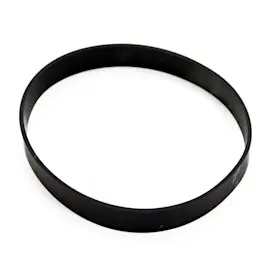
- Inspect the Power-Mate belt and brush roll; a slipping belt reduces cleaning and strains the system.
- Keep the vacuum’s exterior vents and attachments clean and unobstructed.
For the maintenance intervals and the exact procedures for bag and filter changes, use the owner's manual.
These symptoms usually mean a major service is needed or the vacuum is nearing replacement:
- Suction stays weak even after a new bag and clean filters
- Burning smell, repeated overheating, or frequent shutoffs
- Nozzle brush roll stops often (after belt and clog checks)
- Loud grinding or high-pitched motor noise
A canister vacuum’s motor depends on steady airflow for cooling. When bags and filters are neglected, airflow drops, heat rises, and motor wear accelerates. Staying ahead of routine maintenance is the simplest way to get the full expected lifespan.
Last updated: February 2026
What is a canister hoover?
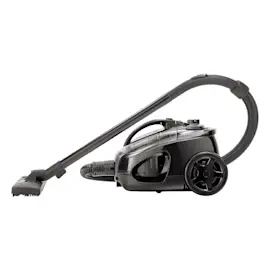
A canister hoover (canister vacuum) is a vacuum cleaner where the motor and dust bag sit in a separate canister that rolls behind you, connected to a hose and wand. On Kenmore model 11623513301, this design helps you reach under furniture and clean tight areas more easily.
A typical canister vacuum system has a few main sections that work together:
- Canister: houses the motor, dust bag, and filters
- Hose and handle: carries suction from the canister to the wand
- Wands: extend your reach for floors, stairs, and under furniture
- Floor nozzle or Power-Mate: does the actual floor cleaning (carpet or hard floors)
- Attachments: crevice tool, dusting brush, floor brush, and others depending on the kit
For model 11623513301, the owner's manual shows the parts and features, assembly steps, and how the hose, wands, and floor head connect.
Canister vacuums trade the all-in-one upright body for a separate canister plus hose and wand.
| Feature | Canister vacuum | Upright vacuum |
|---|---|---|
| Reach under furniture | Better (hose and wand) | Usually limited |
| Weight in your hand | Lighter (wand only) | Heavier (whole unit) |
| Stairs | Often easier | Often harder |
| Storage | More pieces to store | One main piece |
Knowing you have a canister-style design helps with troubleshooting and maintenance. For example, suction problems are often tied to the dust bag, motor safety filter, exhaust filter, or a hose/wand blockage, not just the floor nozzle.
- Keep the dust bag properly installed and replace it when full
- Make sure the motor safety filter is seated correctly behind the dust bag
- Replace or clean the exhaust filter on schedule
- Check the hose for twisting or clogs before pulling the canister
- Use the correct handle switch setting (FLOOR vs CARPET) for the surface you are cleaning
Last updated: February 2026
Are all vacuum hoses the same size?
No. Vacuum hoses are not all the same size; the hose diameter, end-cuff style, and length vary by vacuum type and brand. For Kenmore model 11623513301, the correct fit is the hose designed for this canister and its wand and attachments (see the owner's manual).
Even when two hoses look similar, these differences affect fit and performance:
- Inside diameter (ID): common household sizes are often around 1.25 in to 1.5 in
- End connections: friction-fit, button-lock, twist-lock, or proprietary cuffs
- Electrical contacts: some canister hoses carry power for a Power-Mate style nozzle
- Length: longer hoses can reduce airflow if the diameter is small
- Handle/airflow controls: some hoses include a suction control valve at the handle
We recommend matching the hose to the connection points on your vacuum and accessories.
- Confirm your model number is 11623513301 (on the vacuum’s model/serial label)
- Compare the hose-to-canister connection style and latch
- Check whether your setup uses a powered floor nozzle (Power-Mate style); powered systems typically need a compatible electrified hose
- If you are replacing the hose because of low suction, also check for clogs and a full dust bag
| What you’re matching | What to look for | Why it matters |
|---|---|---|
| Canister inlet | Same cuff shape and lock style | Prevents air leaks and pop-offs |
| Wand end | Same diameter and retention method | Keeps tools from falling off |
| Powered nozzle use | Electrical connection present (if applicable) | Allows brush roll to run |
| Hose length | Similar to original | Helps maintain airflow |
A hose that is slightly off in diameter or cuff design can leak air, reduce suction, or fail to connect securely. On a canister vacuum like the Kenmore 11623513301, correct hose fit also helps the bag/hose airflow system work as intended.
Last updated: February 2026
What's the best canister vacuum cleaner?
The best canister vacuum cleaner is the one that matches your floors, filtration needs, and comfort preferences. If you already own Kenmore model 11623513301, the “best” result usually comes from using the correct attachments, settings, and maintenance steps listed in the owner's manual.
Focus on performance features that change real-world cleaning results:
- Flooring mix: hard floors, area rugs, or wall-to-wall carpet
- Cleaning head type: straight-suction floor tool vs. powered nozzle for carpets
- Filtration: bagged systems and sealed filtration help with dust control
- Reach and handling: hose length, wand reach, and swivel steering for tight spaces
- Maintenance cost: bags, filters, and belts (if equipped) over time
Your Kenmore canister’s manual includes operating and care sections that directly affect pickup and airflow. Use it to dial in day-to-day performance:
- Use the attachment use chart to match tools to floors and above-floor cleaning
- Follow the vacuuming tips and recommended sweeping pattern for more complete pickup
- Keep airflow strong by checking for clogs and keeping air passages clear
- Replace the vacuum bag before it overfills to prevent suction loss
- Change the motor safety filter and exhaust filter on schedule
| Home situation | Best canister setup | Why it matters |
|---|---|---|
| Mostly hard floors | Floor tool, controlled suction | Prevents scatter and protects surfaces |
| Mostly carpet | Powered nozzle (if equipped) | Agitation lifts embedded debris |
| Pets | Strong airflow plus good brush action | Improves hair pickup and reduces tangles |
| Allergies/dust sensitivity | Bagged, good filtration, fresh filters | Reduces dust blowback |
Most “bad vacuum” complaints come from restricted airflow (full bag, clogged hose, dirty filters) or using the wrong tool for the surface. Correct setup and routine care typically restore strong suction and better cleaning.
Last updated: February 2026