Owner’s manual


How do you reset the PF code on a Kenmore 11097731700 Elite dryer?
The PF code on your Kenmore Elite 11097731700 means a power failure interrupted the cycle. To clear it, close the door and press and hold START to restart the dryer. If you want to stop the cycle instead, press STOP twice (per the control instructions in the owner's manual).
What PF means (and what to check first)
PF is not a failed part by itself; it is the dryer telling you it lost power mid-cycle. Before restarting, we recommend these quick checks:
- Make sure the dryer is plugged in firmly
- Check the house breaker or fuse for the dryer circuit
- If you recently moved the dryer, confirm the outlet is working
- If the display comes back but the dryer will not run, reselect the cycle and options
- If PF returns repeatedly, avoid using extension cords or loose adapters
Reset steps for model 11097731700
Use the option that matches what you want to do:
- Resume drying: Close the door, then press and hold START until the dryer starts.
- End the cycle: Press STOP twice.
- Pause (temporary): Open the door or press STOP once; close the door and press and hold START to continue.
If PF keeps coming back
Repeated PF messages usually point to an unstable power supply or an interruption during operation.
| What you notice | Most likely cause | What we do next |
|---|---|---|
| PF after a storm or outage | Utility interruption | Restart with START and rerun the load |
| PF happens when the dryer starts heating | Weak connection at outlet or breaker | Check plug fit and breaker condition |
| PF appears randomly mid-cycle | Intermittent power drop | Confirm outlet power stability |
Why it matters
A power interruption can leave clothes damp and can also stop the dryer long enough that you must reselect cycle settings. Clearing PF correctly gets the dryer running again without guessing at parts.
Last updated: February 2026
What does F2 mean on a Kenmore dryer?
On Kenmore Elite dryer model 11097731700, an F2 code is a service fault indicating the dryer detected a control-related problem (commonly a stuck key or user interface issue). Start with a power reset; if the code returns, the dryer typically needs service-level diagnosis.
Quick reset steps (first thing we do)
- Turn the dryer off.
- Unplug the power cord (or switch the breaker off).
- Wait 30 seconds.
- Restore power and wait another 30 seconds.
- Start a cycle and watch for the code to return.
What the manual says about “F” codes
In the troubleshooting section, the dryer groups F1, F2, and F20 as service codes. If the reset does not clear the code, focus on control and console checks using the owner's manual.
What to check before replacing parts
- Make sure the buttons are not physically stuck (debris, detergent residue, or a warped console overlay).
- Press each key once; confirm it clicks and releases normally.
- Verify the dryer is on a stable power supply (loose plug or intermittent power can trigger odd behavior).
- If the dryer also shows PF (power failure), address power interruptions first.
- If the dryer will not start at all, confirm door closure and basic power checks in the manual.
Common symptoms and what they point to
| Symptom | Most likely area | What we do next |
|---|---|---|
| F2 appears immediately at power-up | User interface or control sensing a stuck key | Inspect console keys; reset; run diagnostics |
| F2 appears mid-cycle | Intermittent key signal or control issue | Check harness connections; look for moisture/heat damage |
| Dryer otherwise runs normally but F2 returns | Early control failure or UI mismatch | Use diagnostic routine; plan for control/console repair |
Why it matters
An F2 code can stop cycles, prevent starting, or cause unpredictable operation. Clearing it quickly helps protect the electronic control and keeps drying performance consistent.
Last updated: February 2026
What is the average lifespan of 11097731700?
A Kenmore Elite gas dryer like model 11097731700 typically lasts 13 years with normal household use. Keeping airflow strong (clean lint screen and venting) and replacing wear items like the idler pulley and blower wheel on time helps you reach that lifespan.
What affects lifespan the most
- Vent restriction (long runs, crushed duct, clogged vent hood) raises heat and wear
- Lint buildup inside the cabinet increases overheating risk
- High-use households (multiple loads daily) shorten service life
- Worn drum support parts (rollers, belt, idler) add strain to the drive motor
- Heat system condition (igniter, coils, sensors) affects drying time and cycling
Maintenance schedule we recommend
The care guidance in the owner's manual calls out periodic lint removal beyond the lint screen.
| Task | How often | Why it matters |
|---|---|---|
| Clean lint screen | Every load | Maintains airflow and drying performance |
| Clean exhaust vent run | About every 2 years (more with heavy use) | Reduces heat stress and long dry times |
| Remove lint inside dryer cabinet (qualified service) | About every 2 years | Prevents overheating and component wear |
Parts that commonly wear during a dryer’s life
If your 11097731700 starts squealing, thumping, or taking longer to dry, these are common wear or airflow-related items to check:
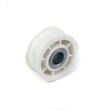
- Dryer idler pulley 279640 (belt tension and smooth drum rotation)
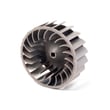
- Dryer blower wheel WP697772 (moves air through the drum and vent)
- Dryer thermistor WP8577274 (helps regulate temperature)
- Dryer thermal cut-off kit WP8573713 (safety device that can open if overheating occurs)
Why it matters
A dryer can run for years past its average lifespan, but restricted airflow and ignored wear noises usually turn into bigger repairs (motor strain, overheating, repeated thermal cutoffs). Staying ahead of venting and wear parts keeps drying times consistent and extends service life.
Last updated: March 2026