Owner’s manual
 Error Codes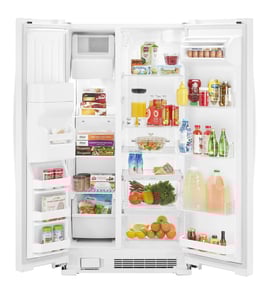


Are GE side-by-side refrigerators good?
Yes. GE side-by-side refrigerators like model GSHF5KGXGCWW are a solid choice when you want easy access to both fresh food and frozen items, plus convenient features like an in-door ice and water dispenser. Overall performance depends most on proper temperatures, airflow, and routine maintenance.
What “good” usually means for a side-by-side
A side-by-side design is typically a good fit when you value organization and everyday convenience.
- Narrow door swing can work better in tighter kitchens than many French-door models
- Separate freezer and fresh-food compartments make it easy to sort foods
- In-door ice and water dispenser adds convenience (and adds parts that need occasional service)
- Adjustable shelves and bins help you customize storage
- Normal operating sounds are expected on many models (fans, ice maker cycling)
What to do to keep performance strong
We recommend these basics for GE side-by-side refrigerators, including GSHF5KGXGCWW:
- Set and confirm temperatures; aim for 37°F in the refrigerator and 0°F in the freezer
- Keep vents clear; avoid blocking air returns with large containers
- Replace the water filter on schedule to maintain flow and taste
- Clean door gaskets and make sure doors seal fully
- If ice production is slow, confirm the water supply valve is fully open and the line is not kinked
For model-specific operating details (controls, filter, dispenser use, and normal sounds), use the GSHF5KGXGCWW owner's manual.
Common “good vs not so good” tradeoffs
| Area | What’s good | What can be annoying |
|---|---|---|
| Storage | Easy organization, quick access | Freezer side can be narrower for wide boxes |
| Dispenser | Convenient ice and water | Can be noisy during ice harvest or dispensing |
| Maintenance | Straightforward routine care | Filter and dispenser parts may need periodic replacement |
Parts that often affect day-to-day satisfaction
If your main complaint is slow water flow, odd taste, or dispenser performance, these are common starting points:
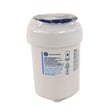
- GE refrigerator water filter MWFP (water taste and flow)
- Water inlet valve (low flow to dispenser and ice maker)
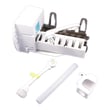
- Ice maker components (slow or inconsistent ice)
- Door seals and alignment (temperature stability)
Why it matters
A “good” refrigerator is one that holds steady temperatures and moves air correctly. When temperatures drift or airflow is restricted, you can see symptoms like soft ice cream, thawing, warm spots, or heavy frost, even if the unit is otherwise in good condition.
Last updated: January 2026
How to reset a GE side-by-side refrigerator?
To reset a GE side-by-side refrigerator like model GSHF5KGXGCWW, we recommend a simple power reset first: unplug the refrigerator for about 2 minutes, then plug it back in and allow up to 24 hours for temperatures to fully stabilize. For filter-related alerts, use the control-panel filter reset.
Quick reset methods (most common)
- Power reset (clears minor glitches): Unplug for 2 minutes, then plug back in.
- Breaker reset: Turn the refrigerator circuit breaker OFF for 2 minutes, then ON.
- Filter indicator reset: Press and hold RESET FILTER for 3 seconds (this resets the reminder light, not cooling performance).
- Exit showroom mode (if applicable): Unplug and plug back in; if cooling still does not start, check the control settings in the GSHF5KGXGCWW owner's manual.
What to check after a reset
- Confirm the refrigerator is actually getting power (interior lights, display on).
- Make sure temperature controls are not set to OFF.
- Give the unit time; normal cooling recovery can take up to 24 hours after power is restored.
- If the dispenser or icemaker is acting up, verify the water supply is on and the filter is not clogged.
Reset type: what it affects
| Reset type | What it fixes | What it does not fix |
|---|---|---|
| Power reset (unplug) | Minor control-board glitches, stuck display | Failed parts (fan motor, sensor, compressor) |
| RESET FILTER (3 seconds) | Filter reminder light | Low water flow caused by a clogged filter |
| Temperature control to OFF then back | Stops and restarts cooling on some models | Cooling issues caused by frost buildup or airflow problems |
Why it matters
A reset is a fast way to clear minor electronic bugs and restore normal operation, but it will not correct mechanical problems like a failed evaporator fan motor, a bad temperature sensor, or restricted water flow from a clogged filter.
If you are resetting because of slow water flow or a “replace filter” light, replacing the GE refrigerator water filter MWFP is the most common fix.
Last updated: January 2026
What is the most common problem with GE refrigerators?
The most common problem we see with GE refrigerators, including model GSHF5KGXGCWW, is a cooling problem (refrigerator or freezer not cold enough). In many cases, the root cause is restricted airflow or a defrost-related issue, but simple maintenance checks often solve it.
Most common symptoms customers notice
- Fresh food section warm but freezer seems OK
- Freezer warming up or ice cream soft
- Frost buildup on the freezer back wall
- Fan noise changes, or no fan sound when the door switch is pressed
- Ice maker and water dispenser performance drops when temperatures rise
Quick checks that fix many “not cooling” complaints
- Confirm control settings: Make sure neither control is set to OFF (on many GE units, turning controls OFF does not remove power to the light circuit). See the GSHF5KGXGCWW owner's manual.
- Clean condenser coils: Dusty coils make the compressor run hotter and reduce cooling.
- Check door sealing: A torn or loose gasket leaks warm air and drives frost and temperature swings.
- Listen for the evaporator fan: If the fan is not running, cold air will not circulate.
- Look for heavy frost: Heavy frost often points to a defrost system problem.
Parts commonly involved when cooling is the issue
| Problem pattern | Common suspect part | Example part for this model |
|---|---|---|
| Warm temps with poor airflow | Evaporator fan motor | Refrigerator evaporator fan motor WR60X10307 |
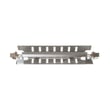
| Frost buildup, then warming | Defrost heater or defrost thermostat | Refrigerator defrost heater WR51X10055, refrigerator defrost bi-metal thermostat WR50X10065 |
| Temps fluctuate or read wrong | Temperature sensor | GE profile refrigerator temperature sensor WR55X10025 |
Why it matters
Cooling problems can quickly lead to food spoilage and can also cause secondary issues like weak ice production and slow water dispensing. Catching airflow, coil, and defrost problems early helps protect the compressor and sealed system.
Last updated: January 2026