Installation guide
 Owner’s manual

Are Whirlpool washer parts interchangeable?
Many Whirlpool washer parts are not interchangeable across models; for Whirlpool LSQ9200PQ4, we recommend matching parts by the exact model number and using factory-specified replacements so fit, performance, and safety features (like the lid switch) work correctly. Use the LSQ9200PQ4 owner's manual to confirm the correct part and procedure.
What “interchangeable” really means
Parts can look similar but still differ in mounting points, electrical connectors, or calibration. On direct-drive top-load Whirlpool washers like LSQ9200PQ4, small differences can cause no-spin, no-drain, leaks, or excessive vibration.
Common examples on LSQ9200PQ4
- A lid switch can have a different harness plug or actuator length
- A drain pump can have different port orientation or mounting tabs
- A motor coupling can vary by design revision
- A clutch can change how the basket accelerates into spin
- An inlet valve can differ by flow rate or solenoid configuration
How we recommend you confirm compatibility
Use this quick checklist before ordering:
- Verify the full model number: LSQ9200PQ4
- Compare the part name and identifier to the model’s parts list
- Match electrical parts by connector style and wire count
- Match water parts by port size and hose routing
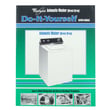
- Follow installation notes (for example, inlet hose and drain hose setup) in the LSQ9200PQ4 installation guide
Parts that are often model-specific (and why)
| Part type | Why it may not interchange | Example for LSQ9200PQ4 |
|---|---|---|
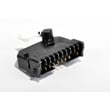
| Safety switch | Actuator and wiring must match | Washer lid switch assembly WP8318084 |
| Drive/drain | Mounting and flow/drive geometry varies | Washer drain pump WP3363394 |
| Drive train | Tolerances affect agitation and spin | Washer motor coupling 285753A |
Why it matters
Using the correct Whirlpool-specified part helps your LSQ9200PQ4 run as designed and prevents repeat failures caused by poor fit, miswiring, or incorrect water handling.
Last updated: February 2026
What is the capacity of a Whirlpool washer?
The Whirlpool LSQ9200PQ4 is a standard, full-size top-load washer; washers in this direct-drive style run about 3.2 to 3.5 cu. ft. of tub capacity. For the exact published capacity for your specific unit, confirm it in the LSQ9200PQ4 owner's manual.
Typical capacity by washer type
Use these ranges to compare Whirlpool washer sizes and choose the right load size.
- Compact top load: 1.5 to 2.8 cu. ft.
- Standard top load (LSQ9200PQ4 style): 3.2 to 3.5 cu. ft.
- Large-capacity top load: 4.0 to 6.0+ cu. ft.
- Front load: 4.0 to 5.5+ cu. ft.
| Washer type | Typical capacity (cu. ft.) | What it handles best |
|---|---|---|
| Compact top load | 1.5 to 2.8 | Small loads, tight spaces |
| Standard top load | 3.2 to 3.5 | Everyday mixed loads |
| Large top load | 4.0 to 6.0+ | Bulky items, fewer loads |
| Front load | 4.0 to 5.5+ | Larger loads with high efficiency |
How to load a standard top-load washer for best cleaning
Even with the right capacity, loading technique affects results.
- Load items loosely; don’t pack them down.
- Keep the load below the top row of holes in the basket.
- Mix large and small items to reduce off-balance spinning.
- For bulky items (blankets, comforters), wash one at a time if agitation is restricted.
- If the washer won’t spin or drains slowly, check common direct-drive issues such as a worn coupling or pump (for example, washer motor coupling 285753A or washer drain pump WP3363394).
Why it matters
Capacity affects how well the agitator can circulate water and detergent through fabrics. Overloading a top-load washer causes poor agitation, more vibration, and extra wear on the drive system.
Last updated: February 2026
What is the most common problem with Whirlpool washers?
The most common Whirlpool washer complaint is won’t drain or won’t spin. On the Whirlpool LSQ9200PQ4 top-load washer, this is often caused by a lid not fully closing (lid switch not engaging), a drain hose installation issue, or excessive suds that slow draining and spinning. See the LSQ9200PQ4 owner's manual for the model-specific checks.
Quick checks we recommend first (LSQ9200PQ4)
- Confirm the lid is fully closed; this washer will not agitate or spin with the lid open.
- Reduce suds: measure detergent carefully, especially with soft water.
- Check the drain hose for clogs and confirm the standpipe height is correct (not over 96 in. above the floor).
- Make sure the drain hose is not sealed or taped into the standpipe; it needs an air gap.
- Verify the cycle control knob is aligned to a cycle; turn slightly to the right and pull to start.
- Confirm both hot and cold faucets are on; check inlet hose kinks and inlet screen clogs.
Parts that commonly fix “won’t spin/drain” symptoms
If the basic checks above look good, these are common wear items on direct-drive Whirlpool top-load washers like the LSQ9200PQ4:
| Symptom | Most likely area | Example part for LSQ9200PQ4 |
|---|---|---|
| Won’t spin, stops when lid opens | Lid safety circuit | Washer lid switch assembly WP8318084 |
| Hums, won’t spin or agitate | Drive connection | Washer motor coupling 285753A |
| Won’t drain, water left in tub | Pump or blockage | Washer drain pump WP3363394 |
Why it matters
A washer that cannot drain or spin leaves clothes soaking wet and can make the cycle seem “stuck.” Fixing the root cause (lid switch, drain path, or drive coupling) prevents repeat failures and reduces strain on the drive motor and clutch.
Last updated: February 2026