 Installation guide
 Owner’s manual



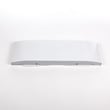
How to find model number on a Frigidaire washer?
On the Frigidaire GLTF2940FS1 washer, the model number is printed on the washer serial plate at the top, inside the door opening. Open the door and look along the upper edge of the door frame area; the plate lists both the model and serial numbers.
- Open the washer door fully
- Look at the top of the door opening (not the glass)
- Find the serial plate or label inside the opening
- Record both the model number and serial number
- Keep the numbers with your paperwork for future parts and service needs
| Label item | What it’s used for | Example for this washer |
|---|---|---|
| Model number | Matching parts and diagrams | GLTF2940FS1 |
| Serial number | Identifying production details | Unique to your unit |
| Purchase date (you add this) | Warranty and records | Your date |
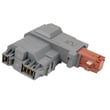
We use the exact model number to match the correct Frigidaire washer parts, diagrams, and repair instructions. Even small model variations can change which door lock, control board, or drain pump fits.
Write the model and serial number in your GLTF2940FS1 owner’s manual so it’s easy to find when ordering parts or troubleshooting.
Last updated: February 2026
How to rebalance a Frigidaire washer?
To rebalance your Frigidaire GLTF2940FS1 washer, we focus on correcting the most common causes of out-of-balance spinning: an uneven load and an unlevel washer. Redistribute the laundry, then level the cabinet so it sits solidly on all four legs for smoother, quieter operation.
- Pause the cycle and open the door.
- Redistribute items evenly; mix large and small pieces.
- If the load is very small, add 1 to 2 similar items to help balance.
- If the load is overloaded, remove a few items.
- Restart the cycle and listen for improved spin stability.
The installation instructions for this washer call out that excessive noise and vibration are prevented by properly leveling the washer. Place a level on top, adjust the leveling legs front-to-rear and side-to-side, then press on alternate corners to confirm the washer is solid on the floor on all four legs. See the GLTF2940FS1 installation guide for the leveling procedure.
- Washer is level front-to-back
- Washer is level side-to-side
- Cabinet is stable corner-to-corner
- Leveling legs are not extended more than necessary
| Symptom during spin | Most likely cause | What we recommend |
|---|---|---|
| Banging or walking | Load out of balance | Rearrange load; add 1 to 2 similar items |
| Shaking every cycle | Washer not level | Re-level and confirm all 4 legs are solid |
| Wet clothes after spin | Overload or imbalance | Reduce load; redistribute items |
A balanced load and a level washer protect key components (tub support, shocks, and bearings), reduce noise, and help the washer reach full spin speed so clothes come out less wet. For additional operating tips, use the GLTF2940FS1 owner's manual.
Last updated: February 2026
How long do Frigidaire front load washers last?
A Frigidaire front load washer like model GLTF2940FS1 typically lasts 11 years with normal household use and routine care. Consistent cleaning and avoiding overloads are the biggest factors that keep the motor, drain system, and door seal working longer.
Front load washer life is driven more by moisture control and load habits than by brand alone.
- Maintenance routine (door seal, dispenser, drum cleaning)
- Load size (frequent overloading shortens bearing, shock, and motor life)
- Water quality (hard water can leave residue and increase wear)
- Ventilation (keeping the door ajar reduces odor and seal deterioration)
- Drain performance (slow draining strains the pump and can trigger no-spin issues)
| What you notice | Usually means | What to do next |
|---|---|---|
| Water in folds of the door boot at end of cycle | Normal wash action | Wipe the boot dry; leave door cracked open |
| Won’t start or stops mid-cycle | Power, door, drawer, or overheated motor | Follow the checks in the GLTF2940FS1 owner’s manual |
| Won’t spin consistently | Small/unbalanced load, door not fully closed | Rebalance load; confirm door latches |
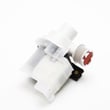
| Standing water or slow drain | Drain restriction or weak pump | Check for clogs; consider the washer drain pump 137221600 |
- Wipe the bellows/door boot dry after the last load of the day.
- Run a periodic cleaning cycle (hot wash with an appropriate washer cleaner).
- Use the correct detergent amount; excess soap leaves residue.
- Avoid chronic overloading; it increases vibration and wear on shocks.
- If the motor overheats, allow the built-in cool-down period (up to about 30 minutes) before restarting.
Most early “failures” in front load washers are really moisture, residue, or draining problems that snowball into odors, no-spin complaints, and premature wear. A simple routine keeps performance steady and helps you reach the expected service life.
Last updated: February 2026


